Board Exam: What You Need to Know About India’s Key School Exams
When students in India finish Class 10 or Class 12, they face their first real make-or-break moment: the board exam, a standardized, state-recognized assessment that determines promotion, college eligibility, and sometimes career paths. Also known as school leaving examination, it’s not just a test—it’s a gatekeeper to higher education, coaching institutes, and even job opportunities later on. Unlike school tests, board exams are uniform across the country for a given board, graded strictly, and carry weight far beyond the classroom.
There are three main players: CBSE, the Central Board of Secondary Education, which runs exams for over 20,000 schools nationwide and aligns closely with national entrance tests like JEE and NEET, ICSE, the Indian Certificate of Secondary Education, known for its detailed syllabus and focus on English and critical thinking, and state boards, each run by individual states, often using regional languages and simpler content, but with limited recognition outside their borders. If you’re aiming for engineering or medicine, CBSE is the most direct path—its syllabus mirrors JEE and NEET patterns, and most coaching centers design their material around it. State boards, while easier to pass, can leave you struggling to catch up later. ICSE gives you strong language and analytical skills, but its depth can be overwhelming if you’re targeting competitive exams.
What’s tested? Not just memory. Board exams now focus on application, especially in CBSE, where questions are designed to see if you understand concepts, not just repeat them. The shift away from rote learning is real—but only if your school keeps up. Many rural schools still teach to the exam, not to the subject. That’s why mastering NCERT textbooks is non-negotiable. Top scorers don’t buy extra guides—they live inside NCERT. They solve every example, rework every exercise, and know the textbook like their own name. The board exam isn’t about how much you memorize. It’s about how clearly you can explain what you know.
You’ll find stories here of students who cracked JEE after struggling in state board exams. Of others who switched from ICSE to CBSE mid-way and turned things around. Of teachers in village schools who turned board prep into a daily routine—even without coaching. These aren’t magic stories. They’re about consistency, smart choices, and knowing which board actually serves your goals. Whether you’re preparing for your first board exam or helping someone else through it, the posts below give you the real talk: what works, what doesn’t, and how to turn pressure into progress.
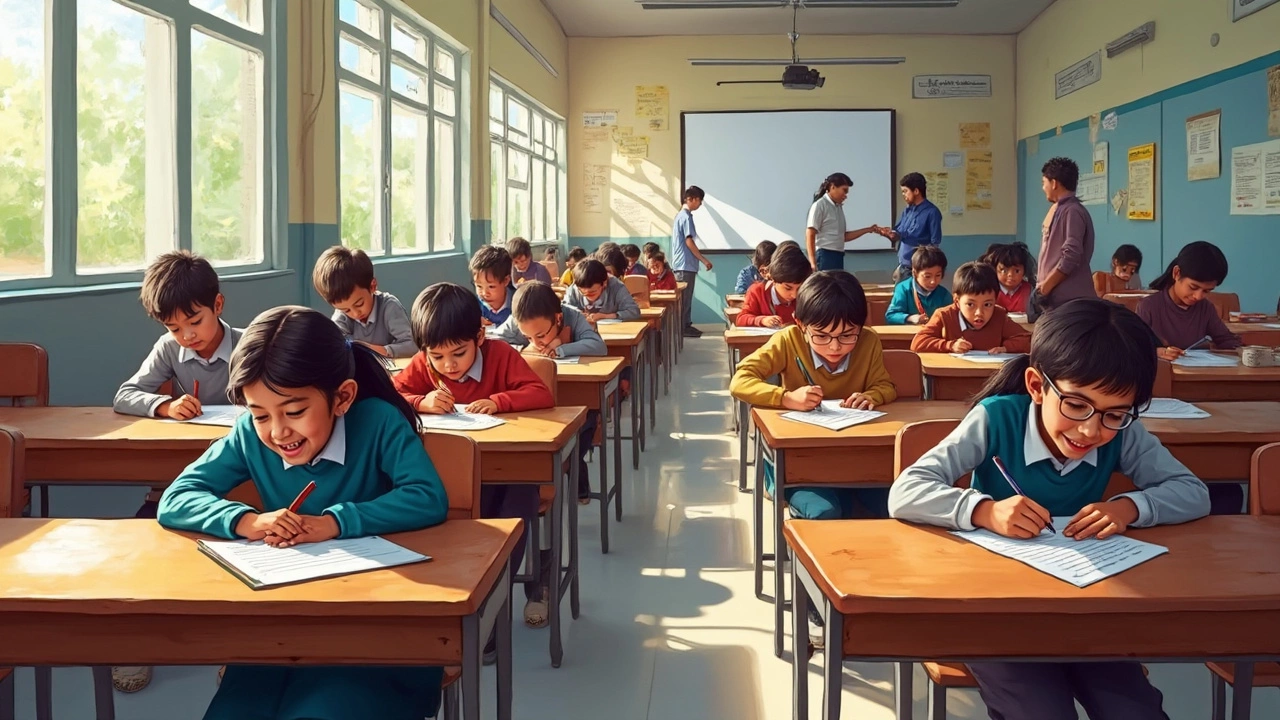
Is the CBSE Paper the Same All Over India? Simple Truths Behind Board Exams
Wondering if every CBSE student across India gets the exact same exam paper? This article untangles the facts around CBSE examination papers, their distribution, and the logic behind it. We dig into how the process works, what safeguards are in place, and bust a few myths. You'll pick up smart insights, including tips for handling CBSE exams regardless of where you study. It's all straight talk—no jargon, just the info students and parents actually want to know.