Paper Pattern: What It Is and How It Shapes Your Exam Success
When you open your exam paper, what you see isn’t just questions—it’s a paper pattern, the structured layout of questions, marks distribution, and section divisions that define how an exam is designed and scored. Also known as exam pattern, it tells you where to focus, how much time to spend, and what topics are worth the most effort. A paper pattern isn’t random. It’s built by exam boards to test specific skills, balance difficulty, and separate top performers from the rest. If you don’t know the pattern, you’re studying blindfolded.
Think of it this way: paper pattern is the map. Without it, you might study everything—but miss what actually matters. For example, in NEET, biology carries 50% of the marks, so a paper pattern that gives 90 out of 180 marks to biology isn’t an accident—it’s the rule. Same with JEE: physics and math are heavy, but chemistry is the tie-breaker. CBSE’s board exams follow a clear 1-mark, 2-mark, 3-mark, and 5-mark structure, where every mark has a purpose. State boards? They often test rote memory. ICSE? More theory depth. Knowing these differences isn’t just helpful—it’s survival.
It’s not just about subjects. The paper pattern, the structured layout of questions, marks distribution, and section divisions that define how an exam is designed and scored. Also known as exam pattern, it tells you where to focus, how much time to spend, and what topics are worth the most effort. also controls how you answer. Are there internal choices? Do you need to write long answers or just bullet points? Is there negative marking? These aren’t small details—they change how you practice. One student might spend weeks solving 10-mark questions, only to find the real exam has ten 1-mark MCQs. That’s not bad luck. That’s not knowing the pattern.
And it’s not just for NEET or JEE. Even government exams like SSC CGL or RRB NTPC have paper patterns that favor speed over depth. If you’re used to long-form answers from school, you’ll get crushed. Meanwhile, distance education programs and online courses now design their assessments to match real-world skills—not just textbook recall. The paper pattern is shifting, and so should your prep.
What you’ll find below are real stories from people who cracked exams by mastering the pattern—not just the syllabus. You’ll see how a single change in how they approached the paper turned a failing score into a top rank. No theory. No fluff. Just what worked, what didn’t, and why.
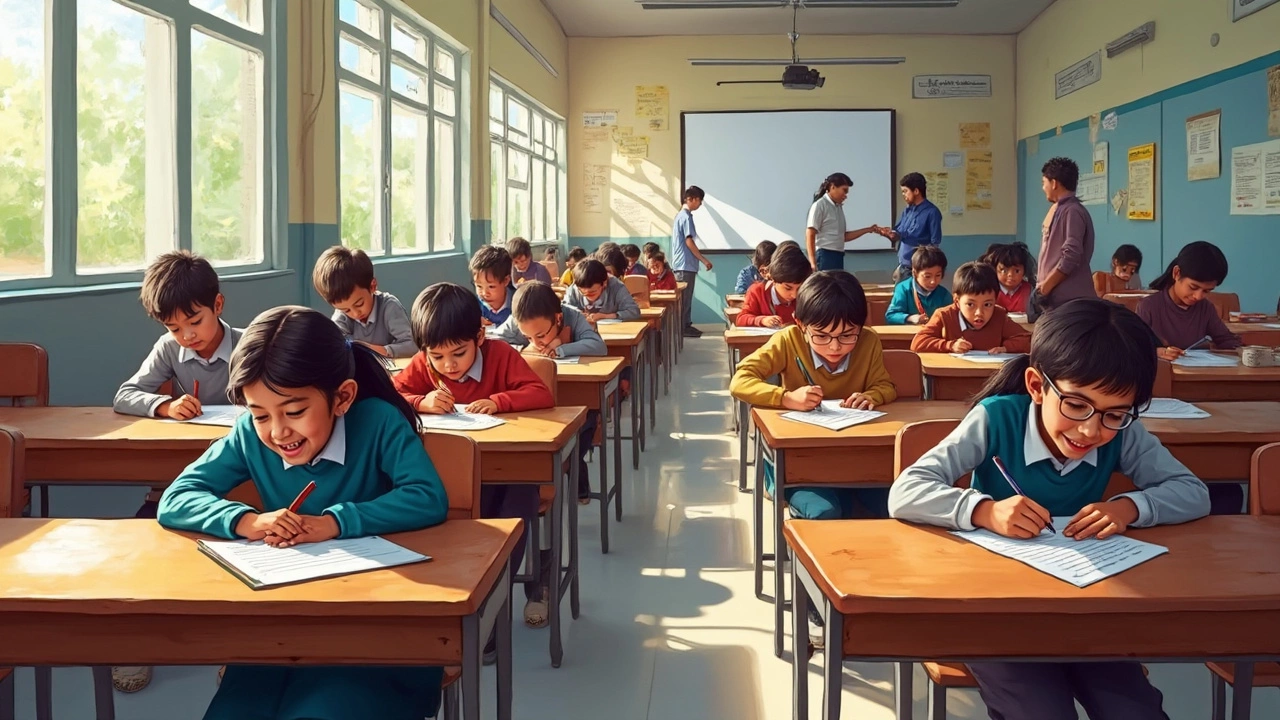
Is the CBSE Paper the Same All Over India? Simple Truths Behind Board Exams
Wondering if every CBSE student across India gets the exact same exam paper? This article untangles the facts around CBSE examination papers, their distribution, and the logic behind it. We dig into how the process works, what safeguards are in place, and bust a few myths. You'll pick up smart insights, including tips for handling CBSE exams regardless of where you study. It's all straight talk—no jargon, just the info students and parents actually want to know.