Physics Teacher: What It Takes to Teach Physics in Rural India
When you think of a physics teacher, a person who explains how the physical world works—from motion to electricity to gravity—often in under-resourced village schools. Also known as a science educator, this role isn’t just about textbooks. It’s about turning a chalkboard into a window to the universe, even when there’s no lab, no internet, and sometimes no stable electricity. In India’s villages, the physics teacher is often the only bridge between students and careers in engineering, medicine, or tech. Many of these teachers don’t have degrees from top universities, but they have grit, creativity, and a deep understanding of what their students need to survive competitive exams like NEET, India’s national medical entrance exam where physics makes up one-third of the test and JEE, the engineering entrance exam that decides who gets into IITs and other top colleges.
Teaching physics in a village school means working with what you have. A rubber band and a ruler become tools to explain tension and force. A bicycle wheel demonstrates angular momentum. A battery from a broken flashlight powers a simple circuit to show current flow. These teachers don’t wait for government support—they improvise. They copy diagrams from old books, record voice explanations on mobile phones, and send students home with printed worksheets because the school can’t afford printed textbooks. And yet, they produce top scorers. In fact, many of the students who crack NEET and JEE come from schools where the physics teacher was the only consistent adult pushing them to think deeper than memorization.
The job doesn’t come with bonuses or promotions. It comes with 12-hour days, multiple grade levels in one room, and the quiet pressure of knowing that one lesson might change a child’s future. These teachers often tutor students after school for free, using their own money to buy extra notebooks or batteries. They’re not just teaching physics—they’re teaching resilience, problem-solving, and belief in possibility. And when a student from a village school gets into an IIT or becomes a doctor? That’s the real reward.
You’ll find stories here about how these teachers adapt, innovate, and inspire. From using WhatsApp groups to explain Newton’s laws to students without internet access, to turning monsoon rains into lessons on fluid dynamics. You’ll see how one physics teacher in Uttar Pradesh helped 17 students clear NEET in a single year. You’ll learn what tools actually work in classrooms with no projectors, and how NCERT books are the secret weapon behind every success story. These aren’t grand theories—they’re real, daily battles fought with chalk, courage, and conviction.
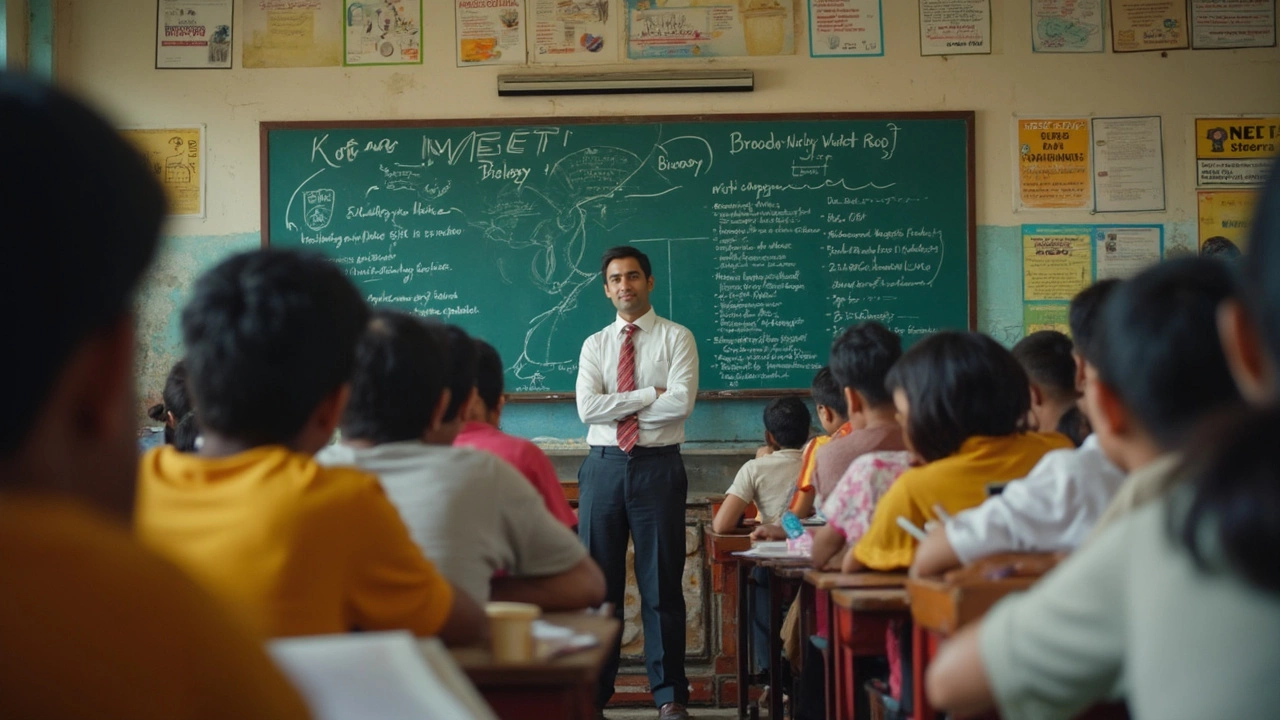
Is NV Sir Good for NEET? Honest Insights for Medical Aspirants
Wondering if NV Sir is the right mentor for NEET? This article breaks down his teaching style, strengths, and what students can really expect from his classes. Get the inside scoop with real-life tips, insights from his past students, and practical info about his NEET coaching approach. Find out what makes him stand out in the crowded world of Kota educators. No frills, just straight facts for NEET aspirants.