Technical College: What It Is, Who It’s For, and What You Can Really Learn
When people think of college, they often picture four years of lectures, exams, and student loans. But a technical college, a focused institution that trains students in hands-on skills for specific trades and technical careers. Also known as polytechnic, it is where you learn to fix machines, write code, manage electrical systems, or build structures—not just talk about them. These schools aren’t for everyone, but for the millions in rural India who need a fast, affordable path to a stable job, they’re often the only realistic option.
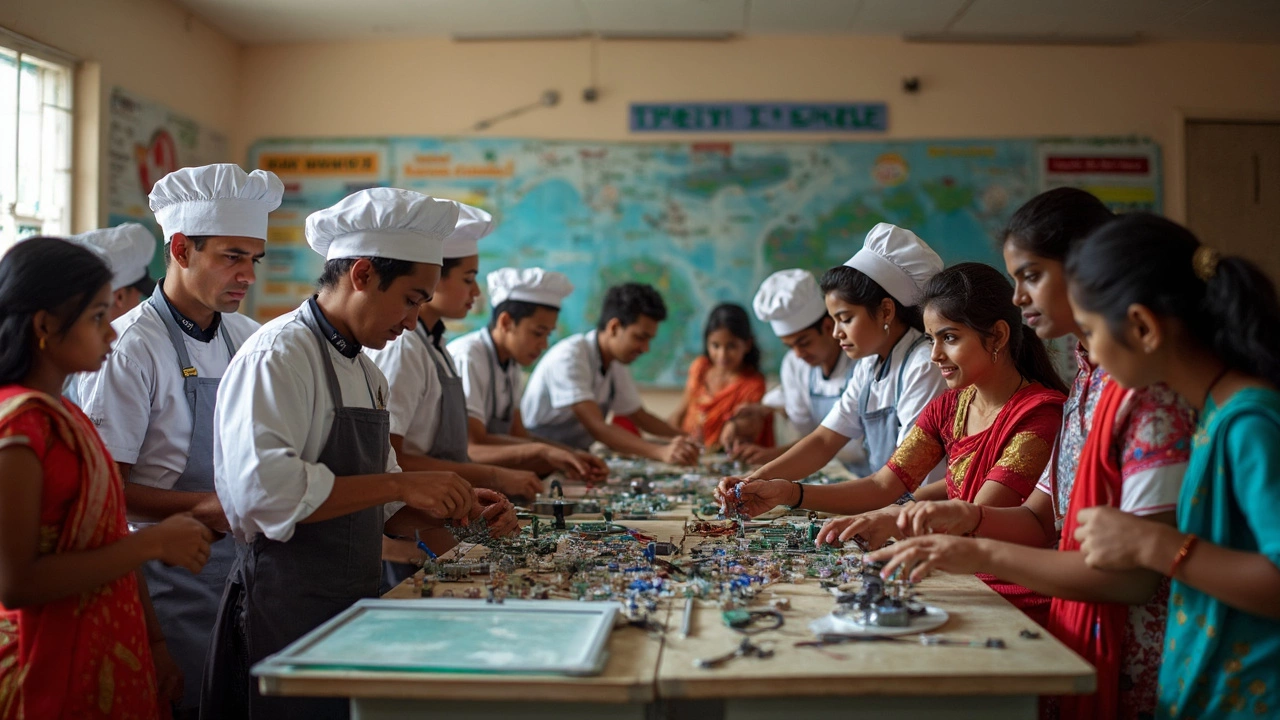
Technical colleges don’t waste time on theory without practice. You’ll spend more time in labs and workshops than in lecture halls. You’ll learn diploma courses, short-term, career-focused programs that lead directly to employment in fields like electronics, mechanical engineering, or computer applications that take two or three years—not four. Many of these programs are approved by the All India Council for Technical Education (AICTE), meaning they’re recognized by employers across India. And unlike traditional universities, technical colleges often partner with local industries to place students in jobs before they even graduate. This is especially important in villages, where jobs are scarce and the cost of higher education is a barrier.
These schools also serve people who don’t fit the traditional student mold. Someone who left school early, needs to start earning right away, or wants to switch careers after working in agriculture can find a second chance here. A technical college doesn’t care if you scored 90% in class 10 or 50%. It cares if you can wire a circuit, operate a CNC machine, or debug a simple program. That’s why you’ll find posts here about skill-based learning, practical, outcome-driven education that prioritizes hands-on ability over memorization, self-taught coders, and people learning Python at 50. The same mindset applies: if you can do the work, you can get the job.
And it’s not just about engineering. Technical colleges now offer courses in IT support, digital marketing, renewable energy systems, and even agricultural technology. These aren’t fancy degrees—they’re tools. Tools that let someone in a village fix a solar panel, run a small workshop, or start a local tech service. That’s why the best posts on this site connect technical education to real life: how to learn coding alone, what jobs actually need programming, which exams are worth the stress, and how to pick the right path without wasting time or money.
You won’t find fluff here. No promises of overnight success. Just clear facts: what technical colleges teach, who they help, and how they fit into the bigger picture of education in rural India. Below, you’ll find real stories from people who chose this path—some who cracked JEE without coaching, others who taught themselves to code, and a few who found stable government jobs after a diploma. This isn’t about prestige. It’s about power—the power to earn, to build, and to change your future without waiting for someone else to give you permission.
What's Another Name for Vocational School? Your Guide to Skill-Based Learning
Curious if vocational school goes by other names? This article unpacks all the alternative terms—like trade school and technical college—so you won’t get lost in jargon. We’ll explore what these schools offer, share practical tips for picking the right one, and uncover what kind of jobs you can land after attending. From hands-on training to fast-tracking your career, it’s all here. Find out how these schools could shape your future.