Recent POST





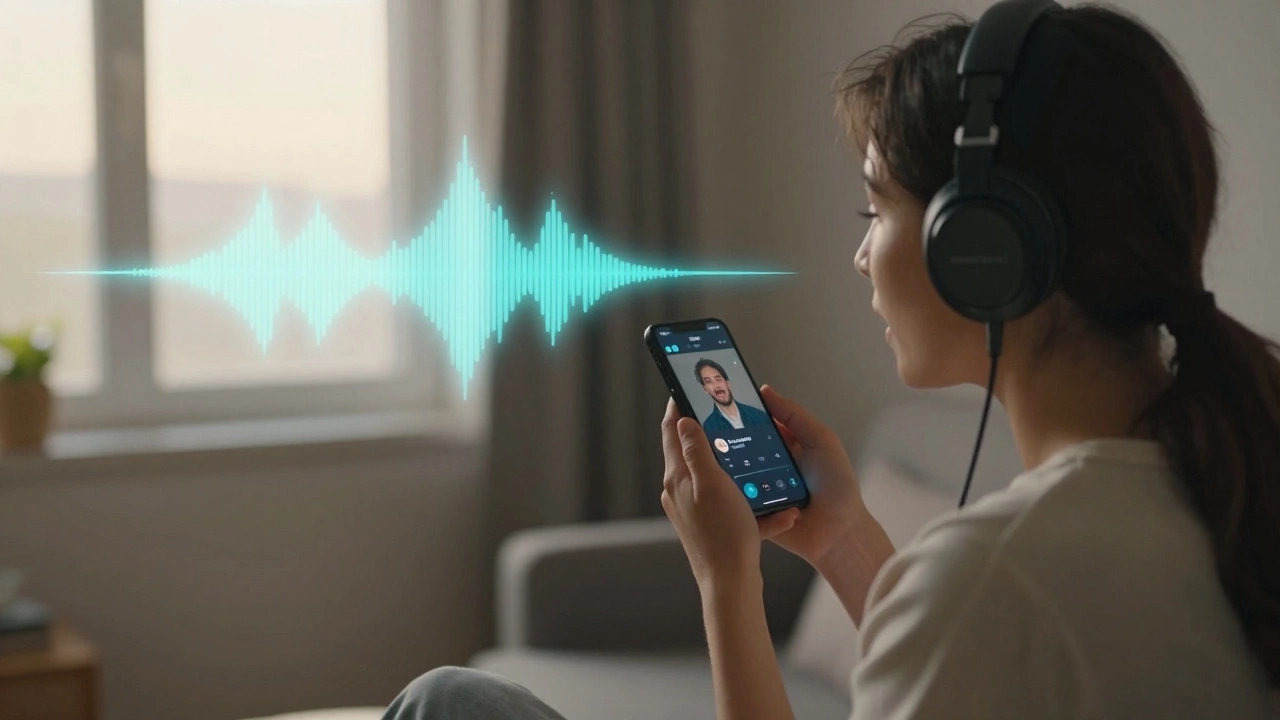
If you’re trying to get better at speaking English, apps can be your most powerful tool-but only if you pick the right one. There are dozens out there promising fluency in weeks, but most just repeat vocabulary drills or force you into robotic role-plays. The truth is, speaking English well isn’t about memorizing phrases. It’s about hearing real speech, reacting naturally, and getting feedback that actually helps. So which apps deliver that?
It’s not about the app-it’s about how you use it
Many people download an English app, do five minutes a day, and wonder why they’re still stuck. The problem isn’t the app. It’s the mindset. If you treat it like a game or a chore, you won’t improve. Real progress happens when you treat each session like a real conversation-with real stakes. That means speaking out loud, even if you’re alone. It means letting yourself stumble. It means listening closely to how native speakers actually talk, not how textbooks say they should.
Apps that work best don’t just quiz you. They force you to respond. They give you real audio from real people. And they don’t let you hide behind typing. If you’re not speaking, you’re not practicing speaking.
Top app for real conversation: ELSA Speak
ELSA Speak stands out because it doesn’t just check your grammar-it listens to your pronunciation like a human tutor would. Using AI trained on thousands of native speaker recordings, it picks up subtle errors: the way you say "th" in "think," whether you stress the right syllable in "photograph," or if you’re dropping the "g" in "running."
It gives you instant feedback with visual waveforms showing how your speech compares to a native speaker’s. You can record yourself saying a sentence, then replay it side-by-side. You’ll hear the difference immediately. No other app makes pronunciation this visual and actionable.
It’s not perfect-sometimes it misjudges accents-but it’s the most accurate tool for fixing the small mistakes that make you hard to understand. Over 10 million users use ELSA Speak to fix their accent, and most report noticeable improvement in under 30 days with daily 10-minute sessions.
Best for live practice: HelloTalk
If you want to talk to real people-not AI-HelloTalk is the only app that comes close. It connects you with native English speakers who want to learn your language. You text, voice message, or even do live voice calls. You correct each other. You swap slang. You learn how people actually talk in casual settings.
One user from Brazil started using HelloTalk to practice English before her visa interview. Within six weeks, she was having 20-minute conversations with a native speaker from Canada. She didn’t just learn phrases-she learned how to interrupt politely, how to respond to jokes, how to say "I didn’t catch that" without sounding awkward.
The catch? You have to be consistent. You can’t just wait for someone to message you. You need to reach out daily. But the payoff is real: you start thinking in English instead of translating from your native language.

Best for structured speaking drills: Speechling
Speechling gives you something no other app does: human feedback on every recording you make. You record a sentence, and within 24 hours, a certified language coach gives you a voice note back-pointing out what you did well and what to fix. It’s like having a private tutor who’s always available.
They use a method called "shadowing": you listen to a native speaker, then repeat right after them. This trains your mouth and ears at the same time. After 30 days of shadowing just five sentences a day, users report speaking more fluently and with less hesitation.
It’s not flashy. There are no games or streaks. But if you want to speak clearly and confidently, Speechling’s method is backed by research from the University of Edinburgh on how motor memory improves speech.
Best for listening and mimicking: YouTube + Audible
Wait-this isn’t an app? Actually, it’s better than one. YouTube has millions of real English conversations: vlogs, interviews, podcasts, even ASMR. Pick a speaker you like-maybe a YouTuber like Emma Chamberlain or a TED speaker like Simon Sinek-and listen to one short clip every day. Then pause and repeat what they said out loud. Mimic their rhythm, their pauses, their tone.
For longer content, Audible’s English audiobooks are gold. Listen while walking, cooking, commuting. Don’t just hear the words-try to say them silently in your head as they’re spoken. This builds your internal voice in English.
One student from India improved his speaking score on the IELTS by 1.5 points in two months just by shadowing TED Talks daily. He didn’t use a single language app. He just listened, repeated, and recorded himself.
Why most apps fail you
Many apps promise "fluent in 30 days" by showing you flashcards or multiple-choice quizzes. But speaking isn’t a multiple-choice test. You can’t pick the right answer when someone asks you, "What did you do this weekend?" You have to think, feel, and respond-fast.
Apps that rely on typing, matching, or ticking boxes train your brain to wait for options. Real speaking doesn’t give you choices. It demands spontaneity. That’s why the best tools don’t give you answers-they give you chances to speak, listen, and be corrected.

What to do tomorrow
Don’t wait for the perfect app. Start now. Here’s your simple plan:
- Download ELSA Speak and do one pronunciation exercise today-just five minutes.
- Find one native speaker on HelloTalk and send a voice message saying, "Hi, I’m learning English. Can we chat for 5 minutes?"
- Watch one 3-minute YouTube video in English. Pause every sentence and repeat it out loud.
Do this for seven days. Then check your recordings. You’ll hear a difference-even if it’s small.
What to avoid
Don’t waste time on apps that:
- Only let you type answers
- Use cartoon avatars to "practice"
- Promote "learn English while sleeping"
- Require you to pay for basic speaking features
These are gimmicks. Real speaking practice costs nothing but time and courage.
It’s not about perfection-it’s about progress
You don’t need to sound like a native speaker. You just need to be understood. And that happens one real conversation at a time. The best app is the one you use every day-not the one with the most features.
Start small. Speak out loud. Listen closely. Repeat. That’s all it takes.
Can I really improve my English speaking with just an app?
Yes-if you use the app the right way. Apps like ELSA Speak, HelloTalk, and Speechling give you real speaking practice, not just quizzes. Improvement comes from speaking daily, getting feedback, and listening to native speakers. It’s not magic-it’s repetition with purpose.
Is HelloTalk free to use?
Yes, HelloTalk is free to download and use. You can text, voice message, and even do voice calls without paying. The premium version removes ads and gives you extra translation tools, but the free version works perfectly for speaking practice. The key is to message people regularly-you won’t get replies if you don’t reach out first.
How long until I see results?
Most people notice a difference in 2-4 weeks with daily practice. You’ll start understanding faster, speaking without pausing to translate, and feeling less nervous. After 60 days, many users report being able to hold 10-minute conversations without prep. The faster you speak daily, the faster you improve.
Should I use more than one app?
Yes, but not all at once. Use ELSA Speak for pronunciation, HelloTalk for real conversations, and Speechling for structured feedback. Pick one primary app and add one or two others. Too many apps lead to distraction. Focus on quality over quantity.
What if I’m too shy to speak out loud?
Start by speaking to yourself in the mirror. Say simple things like, "I’m going to the store," or "What did I eat for breakfast?" Record yourself. Listen back. Then try whispering. Gradually, speak louder. You don’t need an audience to practice speaking-you just need to make the sound. The more you do it, the less scary it becomes.
Are there any apps for advanced speakers?
Absolutely. Advanced learners should focus on nuance. Use Speechling to practice idioms and phrasal verbs with native feedback. Watch unscripted YouTube vlogs and shadow speakers who talk fast. Try debating topics on HelloTalk with native speakers. The goal isn’t to learn new words-it’s to sound natural, expressive, and confident.