Recent POST






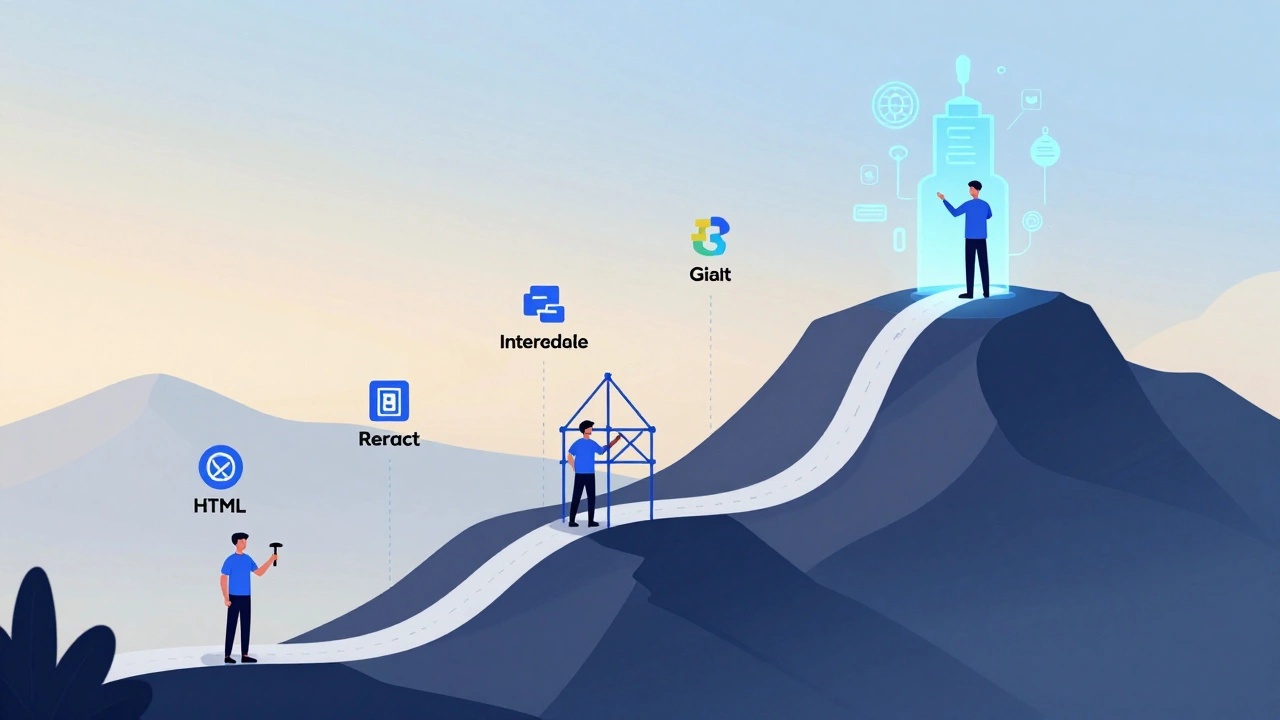
Coding Journey Simulator
Month 1: Foundations
Variables, loops, conditionals, functions.
Goal: Write simple scripts & logic puzzles.Months 2–3: Projects
HTML, CSS, DOM manipulation, APIs.
Goal: Build a weather app or portfolio site.Months 4–6: Frameworks
React/Vue, Node.js, Git, Databases.
Goal: Full-stack applications & version control.Months 7–12: Job Ready
Algorithms, system design, interviews.
Goal: Pass technical interviews & land a role.You’ve probably seen the headlines. "I learned Python in 24 hours." "From zero to hired developer in three months." It’s tempting to believe that if you just grind hard enough, you can master a complex skill overnight. But here is the truth: learning to code isn’t about speed; it’s about consistency and depth. So, how fast can you actually learn? The answer depends entirely on what you mean by "learn."
If your goal is to understand basic logic and write a simple script, you could do that in a weekend. If you want to build a functional website, give yourself two to three months of dedicated study. If you’re aiming for a full-time software engineering job, you are looking at six to twelve months of intense, structured effort. Let’s break down these timelines so you can set realistic expectations and avoid burnout.
Defining What "Learning to Code" Actually Means
Before we talk about time, we need to define the destination. "Coding" is a broad term that covers everything from writing a one-line command to architecting a massive distributed system. Most beginners get stuck because they don’t know which level they are targeting.
| Proficiency Level | What You Can Do | Estimated Time (Full-Time Study) |
|---|---|---|
| Novice | Understand variables, loops, and conditionals. Write simple scripts. | 2-4 weeks |
| Intermediate | Build static websites or simple apps. Use frameworks like React or Django. | 3-6 months |
| Job-Ready | Build full-stack applications. Pass technical interviews. Collaborate with teams. | 6-12 months |
| Advanced | Optimize performance, design systems, mentor others. Specialize in niche areas. | 2+ years |
Most people asking "how fast can I learn" are aiming for the Job-Ready level. That is the sweet spot where you can earn money or automate significant parts of your current job. Everything below that is hobbyist territory; everything above requires professional experience.
The Variables That Dictate Your Speed
Your personal timeline will vary based on three main factors: your background, your daily commitment, and your learning method. Ignoring these variables leads to frustration when you compare yourself to someone else’s highlight reel.
1. Prior Experience and Transferable Skills
If you have never touched a computer beyond browsing the web, you are starting from scratch. However, if you have experience with Excel macros, basic HTML, or even complex logical puzzles, you already have transferable skills. Math helps with algorithmic thinking. Writing helps with documentation and clear variable naming. Design experience helps with front-end development. These don’t make coding "easy," but they shorten the initial curve where you are just trying to understand how computers process instructions.
2. Daily Commitment vs. Total Hours
This is the most critical factor. Coding is not something you can cram. Unlike memorizing dates for a history exam, programming requires building mental models. If you study four hours every day for three months, you will retain more than if you study 20 hours once a week for three months. Consistency builds muscle memory in your brain. Aim for 1-2 hours daily rather than binge-learning on weekends.
3. Structured Learning vs. Random Tutorials
Watching random YouTube videos is entertaining but inefficient. You end up with "tutorial hell"-where you can follow along but can’t build anything on your own. A structured path, whether through a Coding Bootcamp or a well-curated online course curriculum, ensures you learn concepts in the right order. You learn functions before you learn object-oriented programming. You learn SQL before you try to connect a database to an app. Skipping steps creates gaps that slow you down later.

A Realistic Month-by-Month Roadmap
Let’s assume you are studying part-time (15-20 hours per week) and aiming for a junior developer role. Here is what a typical journey looks like.
Month 1: The Foundations
In the first month, you are learning the syntax of a language. For most beginners, this means JavaScript or Python. You will learn:
- Variables and data types (strings, numbers, booleans).
- Control flow (if/else statements, loops).
- Functions and scope.
- Basic debugging techniques.
By the end of this month, you should be able to write a program that calculates a tip, sorts a list of names, or plays a simple text-based game. You won’t build a website yet, but you will understand how code executes line by line.
Months 2-3: Building Projects
Now you move from theory to practice. If you chose JavaScript, you start learning HTML and CSS to build the visual side of the web. You create interactive elements: buttons that change color, forms that validate input, and dynamic content that updates without reloading the page.
This is where many people quit. It gets harder. You will encounter bugs that take hours to fix. This is normal. The key is to build small projects. A to-do list app. A weather dashboard using a public API. A personal portfolio site. Each project reinforces the concepts from Month 1 while introducing new tools.
Months 4-6: Specialization and Frameworks
To get hired, you need to use industry-standard tools. For front-end roles, this usually means learning a framework like React or Vue.js. For back-end roles, you might explore Node.js, Python/Django, or Ruby on Rails. You also learn version control with Git, which is essential for collaborating with other developers.
During this phase, you build larger, more complex applications. Think e-commerce sites, social media clones, or real-time chat apps. You start thinking about architecture: how to organize your code, how to secure user data, and how to make your app fast.
Months 7-12: Job Preparation
Learning to code is only half the battle. The other half is learning how to work as a developer. You practice data structures and algorithms for technical interviews. You refine your GitHub profile to showcase your best projects. You network with other developers and apply for jobs. This phase varies greatly depending on the job market, but having a strong portfolio significantly increases your chances.
Pitfalls That Slow You Down
Even with a perfect plan, there are traps that can derail your progress. Avoiding them is just as important as studying.
Tutorial Hell
You watch a tutorial, copy the code, and feel productive. But when you open a blank file, you freeze. This happens because you didn’t struggle with the problem-solving process. To escape tutorial hell, pause the video after each concept and try to implement it yourself. Then, build a project that isn’t covered in any tutorial. Struggle is where learning happens.
Shiny Object Syndrome
You spend two weeks on Python, then hear that JavaScript is more popular, so you switch. Then you see AI is hot, so you jump to machine learning. This context switching kills momentum. Pick one stack (e.g., JavaScript + React + Node.js) and stick with it for at least six months. Depth beats breadth in the beginning.
Imposter Syndrome
You will always feel like you don’t know enough. Senior developers still look up basic syntax daily. Remember that coding is a skill of continuous learning, not a finite body of knowledge to be mastered. Compare yourself to who you were last month, not to who someone else is today.
Can You Learn Faster with Classes?
Self-study is free and flexible, but it lacks accountability. Coding Classes or bootcamps provide structure, mentorship, and peer support. They can compress the timeline by keeping you focused and providing immediate feedback on your code. However, they are expensive and intensive. If you have the discipline to self-study, you can achieve the same results for less money. If you thrive in a classroom environment, a class might be worth the investment.
Conclusion: Start Today, Not Tomorrow
So, how fast can you learn coding? You can learn the basics in weeks, build useful apps in months, and land a job in a year. The speed is less important than the direction. Don’t wait for the perfect moment or the perfect resource. Open your laptop, pick a language, and write your first line of code. The clock starts now.
Is it too late to learn coding in my 30s or 40s?
Absolutely not. Age is not a barrier to learning to code. In fact, older learners often bring valuable soft skills like communication, problem-solving, and domain expertise from previous careers. Many successful developers started coding later in life. Focus on your consistency and passion rather than your age.
Do I need a math degree to learn coding?
No, you do not need advanced math for most coding jobs. Basic arithmetic and logical thinking are sufficient for web development, mobile apps, and many business applications. Advanced math is only required for specialized fields like machine learning, data science, or game physics.
Which programming language is the easiest to learn first?
Python and JavaScript are generally considered the easiest for beginners. Python has a clean, readable syntax that resembles English. JavaScript is essential for web development and runs directly in your browser, allowing for immediate visual feedback. Choose based on your goals: Python for data/backend, JavaScript for web/frontend.
Can I learn to code in 30 days?
You can learn the basics of a language in 30 days if you study full-time. However, becoming job-ready typically takes 6-12 months. A 30-day sprint is great for understanding fundamentals, but don’t expect to build complex applications or land a job in that timeframe.
Is self-teaching better than taking a coding bootcamp?
It depends on your learning style and budget. Self-teaching is cheaper and flexible but requires high discipline. Bootcamps offer structure, mentorship, and career support but are expensive and time-intensive. Both paths can lead to successful careers if you put in the work.