Recent POST



Personal Coding Goal Planner
Your Goal
What do you want to achieve with coding? Choose the goal that matters most to you.
Current Experience
What's your coding experience level?
Your Learning Plan
Here's what we recommend for your goal and experience level.
Recommended Language
Your recommended language will appear here...
Time Estimate
Your estimated timeline will appear here...
First Milestone
Your first achievable goal will appear here...
You’re 50. Your kids are in college. Your career’s been steady for two decades. Then one day, you watch a friend’s startup get bought for millions-and they didn’t go to college for computer science. They taught themselves to code. You think: Is 50 too old to learn coding? The answer isn’t yes or no. It’s how you start.
Age doesn’t slow down learning-it changes how you learn
When you’re 20, you can spend 12 hours straight on a coding challenge because your brain still thinks all-nighters are a good idea. At 50, your brain works differently. It doesn’t need to grind. It needs context. It needs purpose. And that’s actually an advantage.
Studies from the University of California show that adults over 50 retain problem-solving skills better than younger learners when the material connects to real-life goals. A 55-year-old learning Python to automate spreadsheets at their accounting job doesn’t just memorize syntax-they understand why it matters. That’s deeper learning. Not faster, but more durable.
People who start coding later don’t waste time chasing trends. They don’t get distracted by the latest JavaScript framework. They ask: What problem am I trying to solve? That focus cuts through the noise.
Real people, real starts: Stories from over 50
Meet Linda, 58, from Wellington. She spent 30 years as a librarian. After retiring, she got bored. She signed up for a free six-week intro to Python course at her local community center. Within three months, she built a tool that auto-sorted book donations by genre and condition. The library still uses it.
Then there’s Raj, 62, a former high school math teacher in Auckland. He started learning JavaScript after his grandson showed him how to build a simple game. Now he teaches weekly Zoom classes for retirees. His students? All over 55. None had touched code before. All of them now have personal projects they’re proud of.
These aren’t outliers. They’re typical. In 2025, over 37% of students in adult coding bootcamps in New Zealand were over 50. That’s up from 12% in 2020.
You don’t need a degree. You need a goal.
Most people think coding means becoming a software engineer at Google. That’s not the only path-and it’s not the most useful one for someone starting later in life.
Here are realistic goals for people over 50:
- Automate repetitive tasks at work (Excel, email sorting, data entry)
- Build a personal website to showcase your art, writing, or business
- Fix or customize your own smart home gadgets
- Create a simple app to track health metrics or family schedules
- Help your grandkids with their school projects
You don’t need to learn React, Docker, or cloud architecture. You need to learn enough to solve one thing that matters to you. Start small. Build something that makes your daily life easier. That’s how you stay motivated.

Where to start: No fluff, just clear paths
Here’s what actually works for beginners over 50:
- Start with Python-it reads like plain English. No curly braces, no cryptic symbols. It’s the most forgiving language for beginners.
- Use free, guided platforms like freeCodeCamp, Codecademy’s free tier, or the New Zealand Ministry of Education’s Code for Life program. These walk you through projects, not theory.
- Learn by doing, not watching. Don’t sit through 10 hours of videos. Open a code editor. Type one line. Break it. Fix it. Repeat.
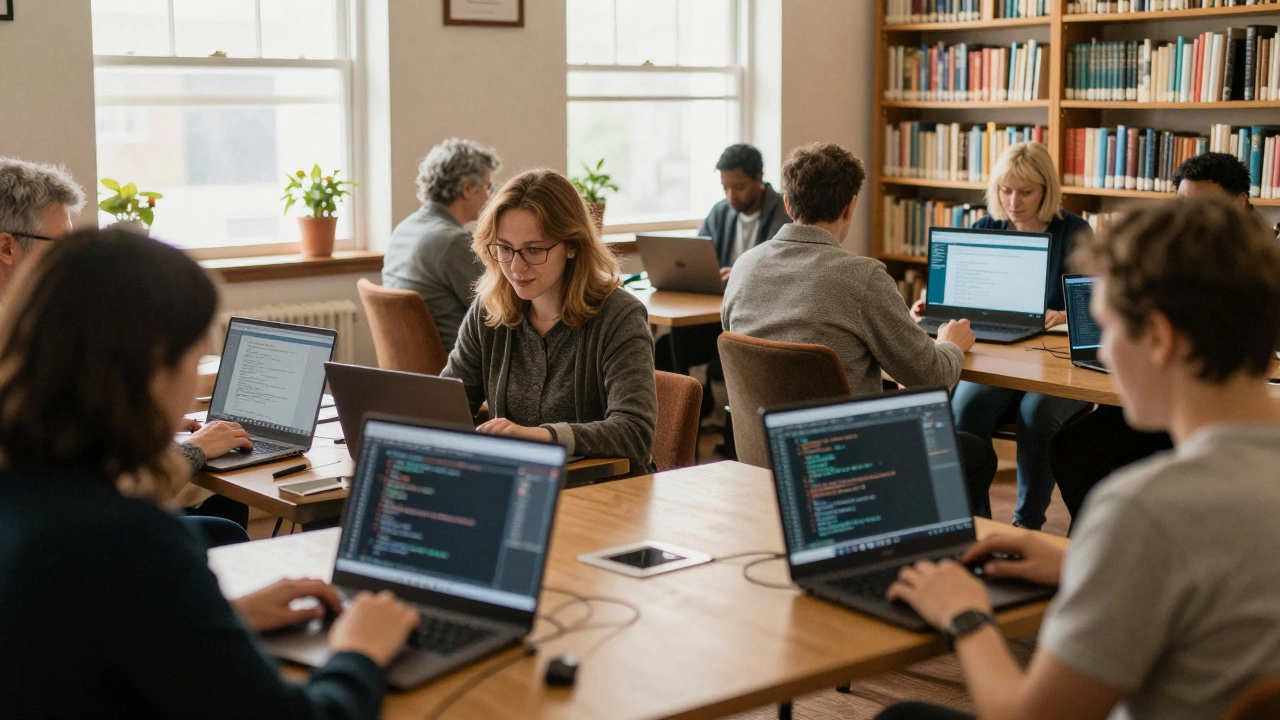
- Join a local group. Libraries in Wellington, Christchurch, and Dunedin run free coding circles for adults. You’ll find others who started at 52, 57, 61. You’ll realize you’re not alone.
- Set a tiny goal. “This week, I’ll write a script that renames 100 photos in my folder.” Done? Celebrate. That’s progress.
One man in Hamilton, 67, learned to write a script that auto-fills his weekly grocery list based on what’s in his fridge. He uses it every Monday. He says: “I didn’t become a programmer. I became someone who doesn’t waste time typing the same thing over and over.”
What you’ll face-and how to beat it
Yes, you’ll feel awkward. You’ll get stuck on an error message that says “SyntaxError: invalid syntax.” You’ll think, “I’m too old for this.”
Here’s what actually helps:
- Don’t compare yourself to 20-year-olds. They’re learning for exams. You’re learning for joy, freedom, or control.
- Use voice-to-code tools. Tools like GitHub Copilot or free AI assistants can suggest code as you type. You don’t have to memorize everything.
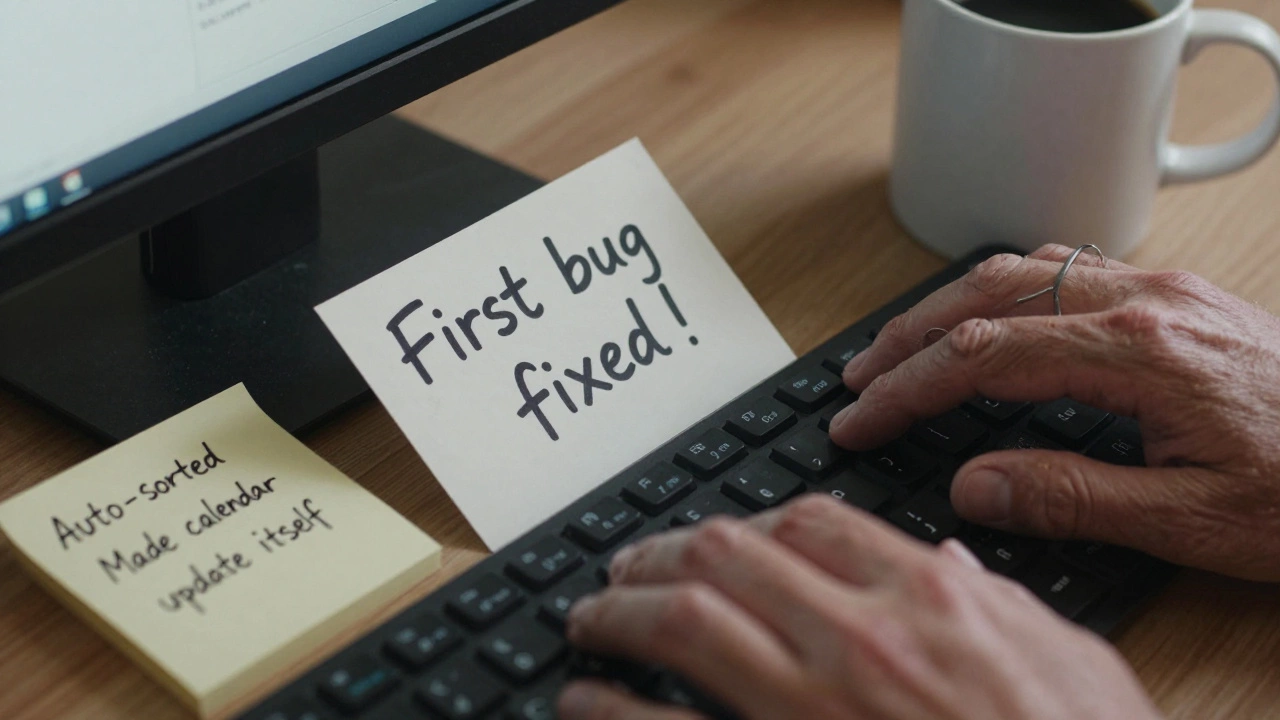
- Keep a “win log”. Write down every small victory: “Fixed my first bug,” “Made my calendar auto-update.” Read it when you feel stuck.
- Ask for help. Online forums like Reddit’s r/learnpython or Stack Overflow are full of people happy to help. No one will laugh. Most have been there.
The biggest obstacle isn’t age. It’s fear. Fear that you’ll fail. Fear that you’ll look silly. But here’s the truth: people over 50 who learn to code rarely regret it. What they regret is waiting.
What coding can give you-beyond the job
Some people think coding is about getting hired. But for most over-50 learners, it’s about something quieter:
- Control. You stop relying on IT departments to fix your problems.
- Creativity. You’re not just consuming tech-you’re shaping it.
- Connection. You join a global community of tinkerers, hobbyists, and problem-solvers.
- Confidence. If you can learn this now, what else can you do?
One woman in Tauranga, 71, started coding to build a website for her vintage clothing shop. She didn’t sell more clothes. But she started getting emails from strangers saying, “I saw your site. I felt like I was in your garage.” She cried. She’d created something that mattered-not because it made money, but because it connected.
Final thought: You’re not behind. You’re just starting.
There’s no expiration date on curiosity. The people who say “it’s too late” are the ones who never started. The ones who do? They’re the ones rewriting the rules.
You don’t need to be the youngest. You don’t need to be the fastest. You just need to begin.
Open your laptop. Type print("Hello, world"). Hit enter. That’s it. You’re a coder now.
Is it really possible to learn coding at 50 with no experience?
Yes. Thousands of people over 50 have learned to code with zero background. They didn’t become software engineers-they became people who could automate tasks, build personal websites, or help their families. The key isn’t talent. It’s starting with a clear, personal goal and sticking with small, consistent steps.
How long does it take to get good at coding after 50?
You can build your first useful tool in 4 to 8 weeks if you spend just 30 minutes a day. Getting comfortable with basic scripting takes 3 to 6 months. Mastery? That’s not the goal. Most people over 50 don’t aim to be experts. They aim to solve one problem that makes their life easier-and that’s achievable much faster than you think.
Should I take a formal course or learn on my own?
Start with free, project-based platforms like freeCodeCamp or Codecademy’s beginner tracks. They’re designed for adults with no background. If you get stuck, then consider a local community class or a low-cost online course. Formal degrees or expensive bootcamps aren’t necessary unless you want to switch careers-which most over-50 learners don’t.
What’s the best programming language for someone over 50?
Python is the best starting point. It uses simple, readable language. You can automate Excel, rename files, or build a simple website without complex setups. Other languages like JavaScript or Ruby are also beginner-friendly, but Python has the most support for real-world tasks that matter to older learners.
Will I be able to find a job if I learn coding at 50?
It’s possible, but most people over 50 don’t learn coding to get a new job. They learn it to gain control, solve personal problems, or stay mentally active. If you do want to work, roles like technical support, data entry automation, or freelance web fixes are more realistic than high-pressure software engineering roles. Your life experience is an asset-you understand user needs better than most 25-year-olds.
I’m worried I’ll forget everything. What should I do?
You will forget things. Everyone does. That’s why you keep notes. Write down every command that works for you. Save your projects-even the messy ones. Revisit them every few months. You’ll be amazed at how much you remember. And if you forget? Google it. Every coder, no matter their age, looks things up. That’s not weakness. That’s how the job works.