Recent POST


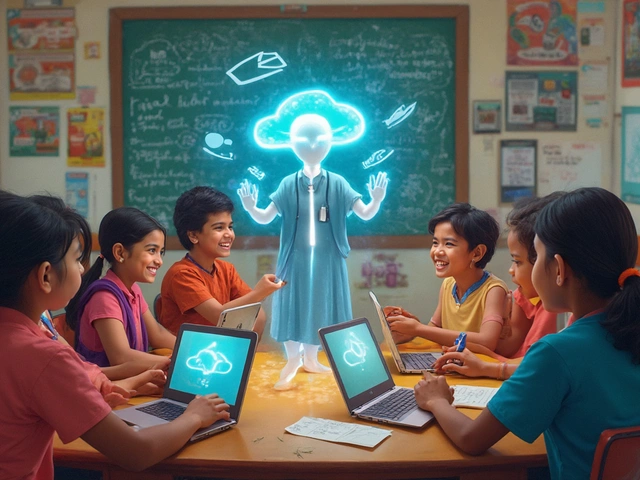



Personalized Coding Learning Path Generator
Have you ever stared at a screen full of colorful text and felt like you were looking at an alien language? You are not alone. For years, the tech world has sold us a myth: that only mathematical geniuses with photographic memories can become programmers. If you have been wondering is coding hard to learn, the short answer is no-but it does require a shift in how you think. It is less about memorizing complex formulas and more about solving puzzles.
In 2026, the landscape of learning to code has changed dramatically. With AI assistants handling the tedious parts and online platforms offering interactive coding classes that adapt to your pace, the barrier to entry is lower than ever. However, the journey still demands patience, curiosity, and a willingness to fail repeatedly. This guide breaks down exactly what makes coding difficult, why it might actually be easier for you than you think, and how to structure your learning path for success.
The Myth of the "Natural" Programmer
We need to address the biggest mental block first: the idea that you either have "the gift" or you don't. This belief persists because early computer science education was often academic and abstract. But modern coding is practical. Think of learning to code like learning a new spoken language. When you started learning English (or your native tongue), did you start by writing Shakespearean sonnets? No. You learned words, then phrases, then simple sentences. Eventually, you could express complex ideas.
Coding works the same way. The difficulty people report usually comes from trying to build a Facebook clone on day one. That is like trying to write a novel before you know how to spell. The real challenge isn't intelligence; it's managing frustration. When your code doesn't work, it’s easy to feel stupid. In reality, debugging-the process of finding errors-is just 50% of the job. Even senior engineers spend half their day fixing mistakes. Embracing this reality removes the pressure to be perfect immediately.
Why Does Coding Feel Hard at First?
If coding is just logic, why do so many beginners quit after two weeks? There are three specific hurdles that make the initial phase feel steep:
- Syntax Sensitivity: Computers are literal. Miss a semicolon in JavaScript, and the whole program crashes. This precision feels unnatural compared to human conversation, where we forgive typos.
- Abstract Thinking: You must hold multiple concepts in your head at once. You need to understand data flow, user interface design, and server communication simultaneously. This cognitive load can cause mental fatigue.
- The "Tutorial Hell" Trap: Many learners watch hours of video tutorials but cannot write code without following along. This creates a false sense of competence. The moment they try to build something original, they freeze because they haven't practiced problem-solving, only pattern recognition.
Understanding these friction points helps you navigate them. Instead of fighting against the syntax, use tools like VS Code which highlight errors in real-time. To combat abstract thinking, break problems into tiny, manageable steps. And to escape tutorial hell, force yourself to build small projects after every lesson, even if they are ugly or broken.
The Role of Modern Tools and AI
Let’s talk about the elephant in the room: Artificial Intelligence. In 2026, AI coding assistants like GitHub Copilot or Cursor are standard tools. Some argue this makes coding too easy, while others fear it will replace developers. The truth lies in between. AI handles the boilerplate-the repetitive, boring code that everyone hates writing. This allows beginners to focus on the logic and architecture.
However, relying solely on AI is dangerous. If you don’t understand why the AI generated a certain piece of code, you won’t know how to fix it when it fails. Think of AI as a co-pilot, not the pilot. It suggests routes, but you need to know how to fly the plane. Using AI correctly accelerates learning by providing instant explanations and examples, turning hours of research into seconds of clarification.
Choosing Your First Language
One of the most common questions is, "Which language should I start with?" The answer depends on your goals, but some languages are friendlier for beginners due to their readability and community support.
| Language | Best For | Difficulty Level | Key Feature |
|---|---|---|---|
| Python | Data Science, Automation, Backend | Low | Reads like English; huge library ecosystem |
| JavaScript | Web Development, Interactive UIs | Medium | Runs in every browser; immediate visual feedback |
| HTML/CSS | Web Structure & Design | Very Low | Not technically programming, but essential foundation |
Python is often recommended as the best starting point because its syntax is clean and concise. It forces you to focus on logic rather than getting bogged down in curly braces and memory management. On the other hand, JavaScript offers instant gratification. You can change a button color or add an animation and see the result immediately in your web browser. This visual feedback loop keeps motivation high. Avoid starting with C++ or Java unless you have a specific reason, as their complexity can overwhelm new learners.
Effective Learning Strategies
Knowing what to learn is only half the battle. How you learn determines whether you stick with it. Here are proven strategies to accelerate your progress:
- The 20-Minute Rule: Commit to coding for just 20 minutes a day. Consistency beats intensity. Ten hours once a month is less effective than 30 minutes every day. Your brain needs sleep to consolidate new neural pathways related to logic and syntax.
- Project-Based Learning: Stop watching passive videos. Build things. Start with a calculator, then a to-do list, then a personal portfolio website. Each project teaches you new concepts organically. When you get stuck, that’s when the real learning happens.
- Join a Community: Coding can be isolating. Joining forums like Stack Overflow, Reddit’s r/learnprogramming, or local meetups provides social accountability. Seeing others struggle with the same issues normalizes the difficulty.
- Read Other People’s Code: Once you’re comfortable, look at open-source projects on GitHub. Reading code is different from writing it. It helps you understand different styles and solutions to common problems.
Also, consider enrolling in structured coding classes. While self-study is viable, a good course provides a curriculum that prevents you from skipping fundamental concepts. Look for courses that offer code reviews from instructors. Feedback is the fastest way to improve.
Common Pitfalls to Avoid
Even with the right strategy, beginners often fall into traps that stall their progress. Be aware of these red flags:
- Comparing Yourself to Experts: Remember, you are comparing your behind-the-scenes struggles with someone else’s highlight reel. A senior developer with ten years of experience has seen thousands of errors. You haven’t yet. Give yourself grace.
- Imposter Syndrome: This feeling that you are a fraud who will be "found out" is universal in tech. It never fully goes away, but you learn to work alongside it. Action cures fear. The more you code, the less you feel like an imposter.
- Ignoring Fundamentals: Jumping straight into frameworks like React or Django before understanding basic JavaScript or Python concepts leads to shaky foundations. Master the basics first. Frameworks change; fundamentals remain constant.
Is It Worth the Effort?
Beyond the technical skills, coding teaches you computational thinking. You learn to break large, scary problems into small, solvable parts. This skill applies to finance, marketing, healthcare, and almost any industry. In 2026, digital literacy is no longer optional; it’s a baseline requirement for career advancement.
Moreover, the job market remains robust for skilled developers. According to recent labor statistics, demand for software roles continues to outpace supply, especially for those who can combine coding skills with domain expertise. Whether you want to switch careers, automate your current job, or build a startup, coding gives you agency over your professional life.
How long does it take to learn coding?
The timeline varies based on your goal. To learn the basics of a language like Python, expect 1-3 months of consistent daily practice. To become job-ready for an entry-level position, plan for 6-12 months of dedicated study, including building a portfolio of projects. Mastery is a lifelong journey, but employability is achievable within a year for most motivated learners.
Do I need to be good at math to code?
For most web development and general application coding, advanced math is not required. Basic arithmetic and logical reasoning are sufficient. Math becomes important only if you specialize in fields like data science, machine learning, game physics, or cryptography. Don't let math anxiety stop you from starting.
Are free resources enough to learn coding?
Yes, absolutely. Platforms like freeCodeCamp, The Odin Project, and official documentation for languages like Python and JavaScript provide high-quality, comprehensive content. Paid courses offer structure and mentorship, which can speed up learning, but they are not strictly necessary if you are disciplined and resourceful.
What is the hardest part about learning to code?
The hardest part is usually the initial frustration of debugging and the feeling of being overwhelmed by the vast amount of information. Overcoming the urge to quit when things don't work immediately is the biggest psychological hurdle. Persistence and developing a systematic approach to problem-solving are key.
Can I learn coding without a computer science degree?
Absolutely. The tech industry values skills and portfolios over degrees. Many successful developers are self-taught or graduated from coding bootcamps. Employers care more about what you can build and solve than where you studied. Focus on demonstrating your abilities through real-world projects.