Recent POST





MBBS Total Cost Estimator
Estimate your total financial commitment for an MBBS degree by selecting a college type and adjusting variables below.
So, you’ve cleared the mental hurdle of deciding to become a doctor. You’re ready to grind through Physics, Chemistry, and Biology for two years straight. But then comes the question that keeps parents up at night and makes students stare at their calculators until they blur: What is the fees of MBBS in India?
It’s not a simple number. It’s a range so wide it feels like a trap. One student pays ₹50,000 a year; another pays ₹25 lakhs. Same degree, same title, wildly different bank balances. Why? Because "MBBS" isn't one product. It’s three distinct markets: Government colleges, Deemed Universities, and Private Colleges. Each has its own pricing logic, hidden costs, and admission mechanisms.
| College Type | Annual Tuition Range (INR) | Admission Basis | Hostel & Misc Costs (Approx.) |
|---|---|---|---|
| Government Medical Colleges | ₹10,000 - ₹1,50,000 | All India Quota (AIQ) + State Quota via NEET | ₹20,000 - ₹60,000 |
| Deemed Universities | ₹10,00,000 - ₹30,00,000+ | 85% All India, 15% Management/NRI | ₹1,00,000 - ₹2,50,000 |
| Private Medical Colleges | ₹5,00,000 - ₹15,00,000 | State Counselling (Fee Cap varies by state) | ₹50,000 - ₹1,50,000 |
The Golden Ticket: Government Medical Colleges
If you want the lowest fees, this is the only game worth playing seriously. Government medical colleges are subsidized by the state or central government. The education is heavily funded, which means your tuition covers just a fraction of the actual cost of training a doctor.
In most states, the annual tuition for an MBBS seat in a government college ranges from ₹10,000 to ₹50,000. In some high-cost cities like Mumbai or Delhi, it might touch ₹1 lakh, but that’s rare. Compare this to the cost of a single semester in a top-tier deemed university, and you’ll see why the competition here is brutal. You aren’t just competing against smart students; you’re competing against everyone who wants financial sanity.
But there’s a catch. Getting in requires a sky-high rank in NEET UG. For General category candidates, securing a government seat often demands a score above 600-650 marks, depending on the state. For reserved categories, the cutoffs are lower but still competitive. If you don’t crack the cut-off, you’re looking at the private sector, where the price tag jumps exponentially.
The Middle Ground: Private Medical Colleges
Private colleges are regulated by state governments, which sets a cap on fees. This is crucial because, without caps, private colleges could charge whatever they wanted. In states like Maharashtra, Karnataka, and Kerala, the fee structure is relatively transparent and capped by the Fee Fixation Committee.
Typically, you’re looking at ₹5 lakhs to ₹10 lakhs per year. Some premium private colleges in metro cities might push towards ₹15 lakhs. Remember, this is just tuition. Add hostel, mess, transport, and lab fees, and your annual outflow hits ₹7-12 lakhs easily. Over 4.5 years (plus internship), that’s a significant investment.
Here’s the thing about private colleges: quality varies. A government college with a massive patient load offers hands-on clinical exposure that many new-age private colleges struggle to match. However, established private institutions with attached hospitals can offer excellent infrastructure and smaller batch sizes, allowing for more personalized attention from professors.
The Luxury Tier: Deemed Universities
Deemed universities operate outside the strict fee regulations of state governments. They have autonomy over their curriculum and fees. This freedom comes with a price tag that makes eyes water. We’re talking ₹10 lakhs to ₹30 lakhs per year. Yes, thirty lakhs. And that’s before you buy a stethoscope.
Why pay this much? Often, it’s about location and brand value. Many deemed universities are located in major metropolitan areas or have strong international collaborations. They also tend to have better research facilities and modern infrastructure. But does the extra money guarantee a better doctor? Not necessarily. It guarantees comfort, perhaps better networking opportunities, and less bureaucratic hassle. But clinical skills? Those come from seeing patients, not from fancy lecture halls.
Admission to deemed universities happens through MCC (Medical Counseling Committee) counseling. 85% of seats are filled based on All India Rank, while the remaining 15% are management or NRI quotas. If you have the funds but missed the government cutoff, this is your backup plan. Just ensure you check the fee structure carefully-some colleges charge additional "development fees" or "donations" upfront.

Hidden Costs That Sneak Up On You
Tuition is just the headline number. The real budget needs to account for the invisible expenses. Let’s break down what else eats into your savings:
- Books and Equipment: Anatomy textbooks alone can cost ₹5,000-₹10,000. You’ll need dissection kits, scrubs, shoes, and eventually, diagnostic tools. Budget ₹20,000-₹30,000 annually for these essentials.
- Living Expenses: If you’re studying away from home, rent, food, and transport add up. In metros like Bangalore or Hyderabad, living costs can rival tuition in cheaper private colleges. Expect ₹15,000-₹25,000 per month depending on lifestyle.
- Internship Stipend: During your final year (internship), you usually earn a stipend. In government colleges, this can be decent (₹10,000-₹30,000/month). In private colleges, it’s often negligible or zero. Don’t count on earning money during your studies unless you’re in a well-paying government setup.
- Postgraduate Preparation: After MBBS, if you aim for MD/MS, you’ll likely join coaching classes. These courses cost between ₹50,000 to ₹2 lakhs. Factor this into your long-term educational budget.
How to Calculate Your Real Cost
Don’t just look at the brochure. Do the math for the full duration. Here’s a quick formula:
Total Cost = (Annual Tuition × 4.5) + (Annual Living Costs × 5) + One-time Charges (Admission, Security Deposit, Books)
For a government college, this might total ₹5-8 lakhs over five years. For a mid-range private college, expect ₹30-50 lakhs. For a deemed university, you’re looking at ₹75 lakhs to ₹1.5 crores. Can you afford the interest on an education loan for the latter? Most banks offer loans up to ₹1 crore for medical studies, but the EMI post-graduation can be heavy if you don’t secure a high-paying job immediately.

Does Paying More Mean Better Education?
This is the million-dollar question. Studies and alumni feedback suggest no direct correlation between fees and clinical competence. A student from a rural government college often develops stronger diagnostic instincts due to higher patient loads and fewer technological crutches. Meanwhile, a student from a premium deemed university might excel in research papers and soft skills but lack confidence in handling complex emergency cases independently.
Your choice should depend on your career goals. Want to serve in public health or work in government hospitals later? Government college is ideal-it aligns with your future ecosystem. Planning to go abroad for residency or work in corporate healthcare chains? The brand name and English-medium environment of deemed universities might give you a slight edge in interviews.
Financial Aid and Scholarships
Before you rule out expensive options, check for scholarships. The National Eligibility cum Entrance Test (NEET) opens doors to various schemes:
- Central Sector Scheme: Covers tuition for students from economically weaker sections (EWS) admitted to private colleges.
- State Scholarships: States like Tamil Nadu and Kerala offer substantial subsidies for local students.
- Bank Loans: Educational loans under the Credit Guarantee Fund Scheme for Education and Training Institutions (CGFSETI) require minimal collateral for amounts up to ₹7.5 lakhs.
Apply early. Deadlines for scholarship applications often coincide with admission counseling rounds. Missing them can mean paying full fees even if you qualify.
Final Thoughts: Balance Ambition with Reality
Choosing an MBBS seat is a balance between ambition and affordability. Don’t let debt crush your enthusiasm before you even start. If you can crack NEET with a high rank, fight for a government seat-it’s the best ROI in Indian education. If your rank falls short, weigh the long-term financial burden of private or deemed colleges against your family’s capacity to absorb the cost.
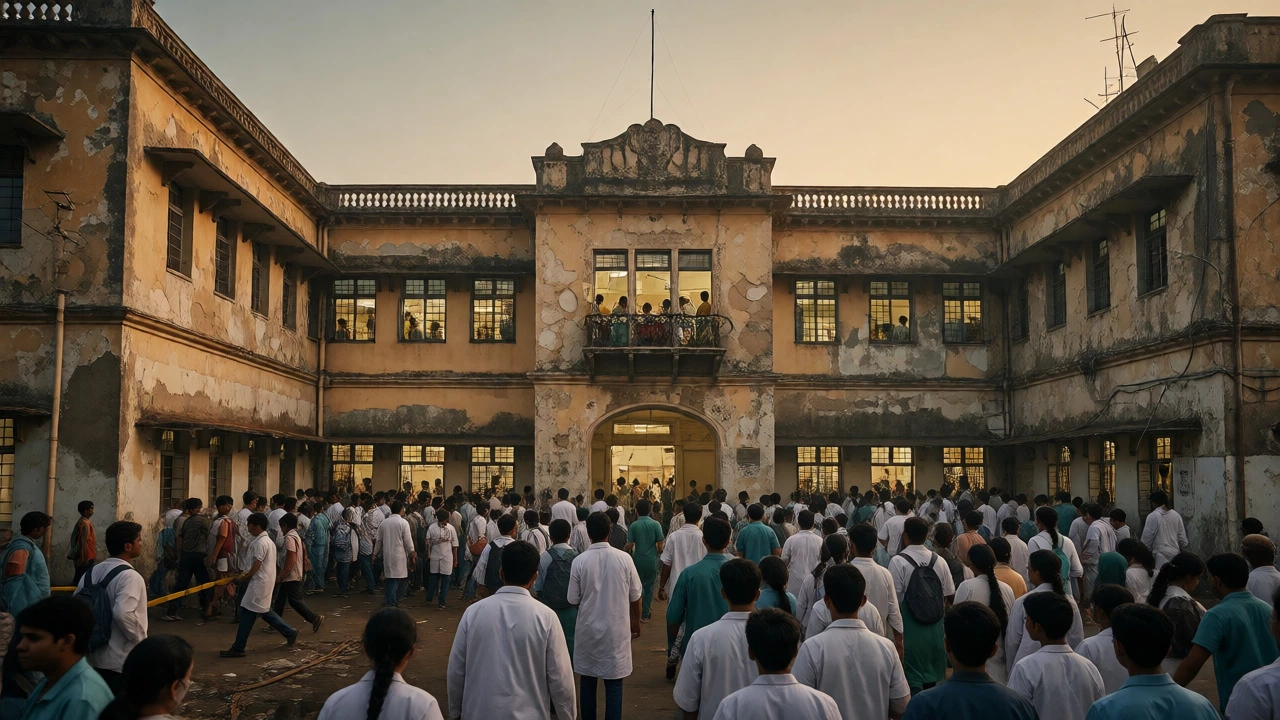
Remember, the degree doesn’t change. Whether you study in a crumbling government hospital or a sleek private campus, you’ll graduate as an MBBS doctor. The difference lies in your experience, your network, and your bank balance. Choose wisely, because this decision impacts not just your next four years, but potentially the first decade of your professional life.
Is MBBS free in India?
No, MBBS is not completely free, but it is highly subsidized in government colleges. Students pay nominal tuition fees ranging from ₹10,000 to ₹1 lakh per year, which is significantly lower than private institutions. Additional costs for books, hostel, and personal expenses still apply.
Which is cheaper: Government or Private MBBS colleges?
Government medical colleges are much cheaper. Annual fees typically range from ₹10,000 to ₹50,000. In contrast, private colleges charge between ₹5 lakhs to ₹15 lakhs per year, and deemed universities can charge upwards of ₹10 lakhs to ₹30 lakhs annually.
Are there hidden charges in private MBBS colleges?
Yes, common hidden charges include admission fees, caution deposits, development fees, library charges, and mandatory equipment purchases (like laptops or specific textbooks). Always ask for a detailed fee breakdown during counseling to avoid surprises.
Can I get an education loan for MBBS in India?
Yes, most nationalized banks offer education loans for medical studies. Loans up to ₹7.5 lakhs generally do not require collateral under government schemes. For higher amounts, collateral may be needed. Interest rates vary, so compare offers from multiple banks.
Do private colleges provide good clinical exposure compared to government ones?
Generally, government colleges offer superior clinical exposure due to higher patient volumes and diverse case studies. Private colleges are improving, especially those with large attached hospitals, but government setups remain the gold standard for practical training in most regions.