Digital Classrooms: What They Are and How They’re Changing Rural Education in India
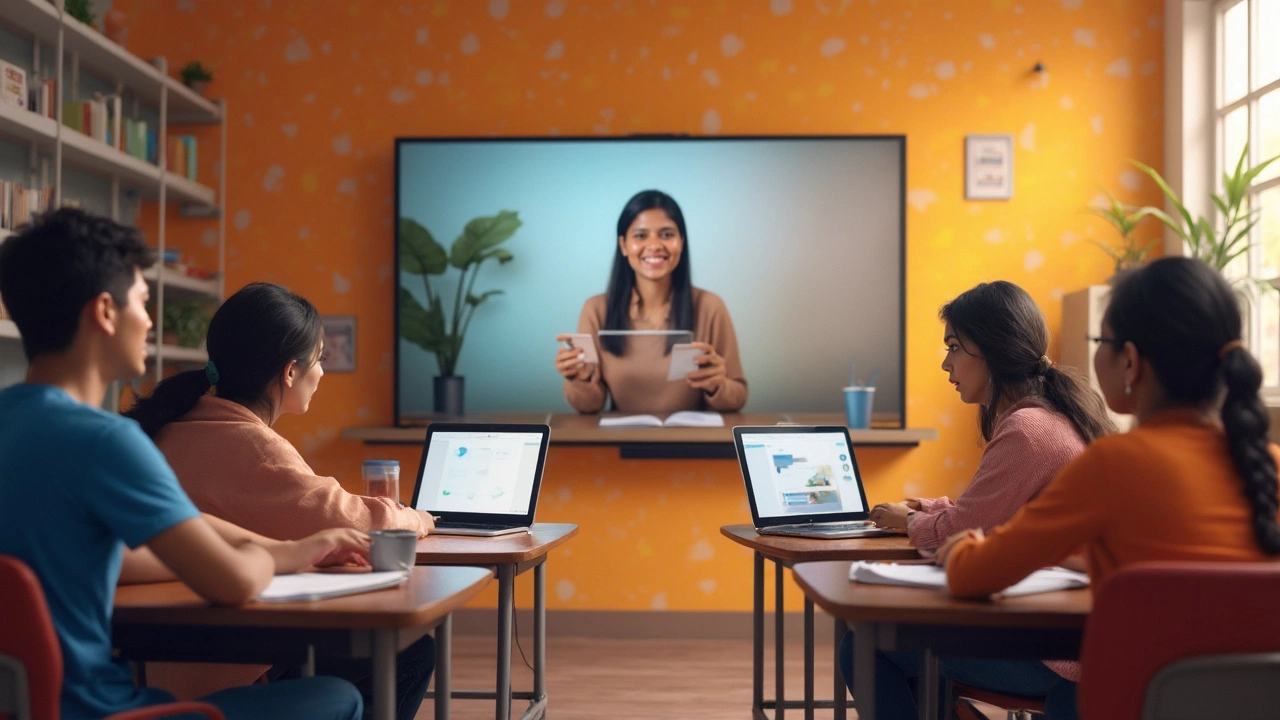
When we talk about digital classrooms, a learning environment where technology like tablets, projectors, and internet access replaces traditional chalkboards and paper-based lessons. Also known as e-learning setups, they’re not just about screens—they’re about giving students in remote villages the same chance to learn as kids in cities. This isn’t science fiction. In villages across Bihar, Odisha, and Madhya Pradesh, teachers are using tablets to show videos of biology experiments, playing audio lessons in local dialects, and tracking student progress with simple apps—all without needing a PhD in tech.
What makes digital classrooms, a learning environment where technology like tablets, projectors, and internet access replaces traditional chalkboards and paper-based lessons. Also known as e-learning setups, they’re not just about screens—they’re about giving students in remote villages the same chance to learn as kids in cities. work isn’t the hardware. It’s the shift in how knowledge is delivered. A teacher in a village school with no science lab can now show a 3D model of the human heart. A student who missed class because they had to help with farming can replay a lesson on a shared phone. These aren’t luxury upgrades—they’re survival tools for education in places where textbooks are old, teachers are stretched thin, and electricity is still a privilege.
And it’s not just about access. online learning, education delivered remotely using digital tools, often without requiring students to be physically present in a school. Also known as remote education, it’s what lets a student in Jharkhand follow the same NEET prep course as one in Delhi. classroom technology, tools like smart boards, audio-visual aids, and learning apps used to enhance teaching and student engagement. Also known as educational technology, it’s turning passive listening into active doing. You’ll see posts here about people teaching themselves Python at 50, cracking JEE without coaching, and learning English for free—all made possible because someone, somewhere, built a digital bridge to their village.
But here’s the real question: Are digital classrooms just fancy gadgets, or are they actually fixing the broken system? The answer is in the data. Schools that use even basic digital tools see higher attendance, better test scores, and fewer dropouts. Teachers who get training on how to use these tools stop feeling overwhelmed and start feeling empowered. It’s not about replacing teachers—it’s about giving them superpowers.
What you’ll find below isn’t a list of tech specs or product reviews. It’s real stories from people who’ve lived this change. From how CBSE is pushing digital learning forward, to why self-taught coders in rural India are landing jobs without ever stepping into a college, to how distance education is becoming the only option for millions who can’t afford to move. These aren’t hypotheticals. They’re happening right now—in villages you’ve never heard of, with students you’ve never met, using tools that cost less than a monthly phone bill.
Are Virtual and eLearning the Same? Unpacking the Differences
People love using 'virtual learning' and 'eLearning' like they're interchangeable, but these two have distinct meanings in the world of online education. This article breaks down the differences, with concrete examples and straight talk. You'll see where they overlap, how they work, and how to decide what suits your needs. There are tips on picking the best format and some eye-opening facts along the way. No jargon, just the facts you need to make smarter education choices.