Recent POST






English Fluency Skill Balancer
Select your current proficiency level to generate a balanced daily routine based on the "Input/Output" model.
Beginner
A1 - A2Intermediate
B1 - B2Advanced
C1 - C2Recommended Focus
Note: Input (Blue) builds the foundation. Output (Red) refines fluency. Adjust time allocation accordingly.
Daily Action Plan
💡 Pro Tip
Consistency beats intensity. 15 minutes daily is better than 5 hours once a week.
You’ve probably heard it a thousand times: "Just speak more!" But if you’re like most people trying to improve English, that advice feels useless when your brain freezes mid-sentence. You know the grammar rules. You have the vocabulary list. Yet, the moment a native speaker asks you a question, you panic. Why? Because language isn’t just one skill-it’s four distinct muscles that need separate training.
Most learners treat these four areas as a single blob called "English." That’s why progress stalls. To actually get fluent, you need to isolate each component and attack them individually. Whether you are prepping for an IELTS exam or just want to order coffee without hesitation, here is the breakdown of the four critical skills and how to fix them.
The Input Side: Listening and Reading
Think of language acquisition like filling a bucket before pouring from it. If the bucket is empty, nothing comes out. The two input skills-Listening and Reading-are where you gather the raw data your brain needs to process the language. Most people neglect reading because they think it doesn’t help with speaking. Wrong. Reading builds the structural intuition that allows you to predict what comes next in a sentence.
When you read, you aren’t just decoding words; you are absorbing patterns. Consider the difference between passive reading (skimming news headlines) and active reading. Active reading means stopping at a phrase that sounds natural and asking, "Why did they use 'make' instead of 'do' here?" This analytical approach rewires your brain to recognize correct collocations automatically. Without this foundation, your speech will always sound translated rather than native.
Listening is trickier because it requires real-time processing. You can’t pause a conversation like you can pause a book. Many learners rely on subtitles, which creates a false sense of security. Your eyes are doing the work, not your ears. Try this: listen to a podcast segment once with no text. Then listen again while reading the transcript. Finally, listen a third time without text. This three-step loop forces your auditory cortex to map sounds to meaning directly, bypassing the translation layer in your head.
The Output Side: Speaking and Writing
Once you have enough input, you need to output. This is where Speaking and Writing come into play. These are active production skills. They require you to retrieve information quickly and structure it under pressure.
Speaking is often the scariest part for learners because it involves performance anxiety. You worry about judgment, accent, and speed. But here is the secret: fluency is not about perfection; it is about flow. Native speakers make mistakes constantly. They say "um," they restart sentences, and they use slang incorrectly sometimes. The goal is communication, not academic precision. To improve, you need low-stakes practice environments. Talk to yourself in the shower. Record voice notes describing your day. Do not edit yourself in real-time. Let the errors happen. Correction comes later during review, not during execution.
Writing, on the other hand, gives you time to think. It is the best place to experiment with new vocabulary and complex grammar structures. When you write an email or a journal entry, you can pause, check a dictionary, and restructure a sentence. This deliberation helps cement rules in your long-term memory. A great hack is to write down what you plan to say in a meeting or date, then memorize the key phrases. This bridges the gap between the slow pace of writing and the fast pace of speaking.

Balancing the Four Skills
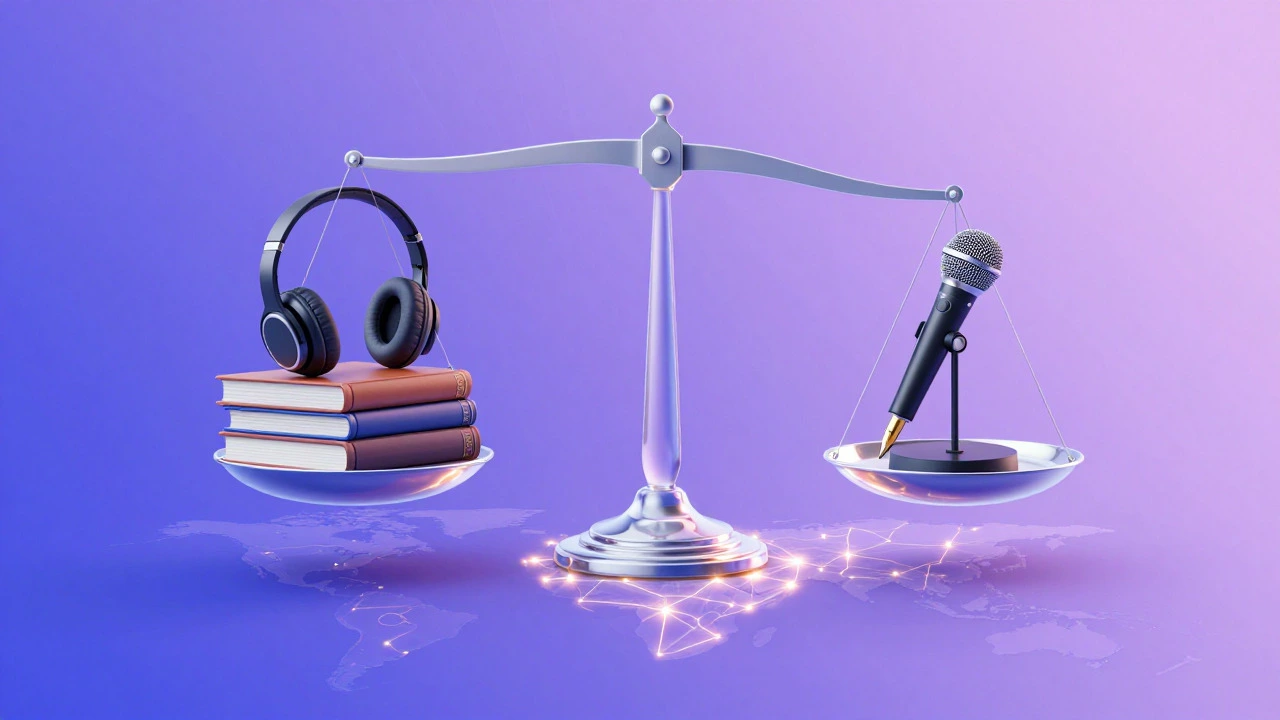
You might be wondering, "Should I spend equal time on all four?" Not necessarily. Your balance depends on your current level and goals. A beginner needs heavy input (listening/reading) to build a base. An advanced learner might need heavy output (speaking/writing) to refine nuance and style.
| Proficiency Level | Primary Focus | Secondary Focus | Recommended Activity |
|---|---|---|---|
| Beginner (A1-A2) | Listening & Reading | Basic Speaking | Graded readers, slow podcasts |
| Intermediate (B1-B2) | Speaking & Listening | Structured Writing | Language exchange, journaling |
| Advanced (C1-C2) | Writing & Speaking | Nuanced Listening | Debates, essay editing, idioms |
Notice the shift. As you move up, the focus moves from understanding others to expressing yourself precisely. If you stay stuck in the intermediate plateau, it’s usually because you are over-consuming content but under-producing language. You feel comfortable listening, so you keep watching Netflix. But you avoid speaking because it’s hard. Breaking this habit requires deliberate discomfort.
Common Pitfalls and How to Avoid Them
One major trap is the "Translation Habit." When you hear a word, do you instantly convert it to your native language? If yes, you are adding latency to every interaction. The solution is contextual learning. Don’t learn isolated words like "apple = manzana." Learn phrases like "grab an apple" or "apple pie." This anchors the meaning in action and context, reducing the need for mental translation.
Another pitfall is ignoring pronunciation until the end. Many learners wait until they have a huge vocabulary to fix their accent. By then, bad habits are deeply ingrained. Pronunciation is a physical skill, involving muscle memory in your tongue and jaw. Start early. Use shadowing techniques: listen to a native speaker and repeat exactly what they say, mimicking their rhythm and intonation simultaneously. This trains your mouth to produce sounds that don’t exist in your native language.
Finally, stop seeking a "perfect" teacher or course. There is no magic app that will download English into your brain. Consistency beats intensity. Fifteen minutes of focused practice every day yields better results than five hours of cramming once a week. Your brain consolidates memory during sleep, so daily exposure reinforces neural pathways more effectively than sporadic bursts.
Practical Routine for Daily Improvement
How do you fit this into a busy life? Here is a simple, actionable routine that covers all four skills in under an hour.
- Morning (Input): Listen to a 10-minute news podcast while getting ready. Do not look at the transcript yet. Just let the sounds wash over you.
- Commute (Input/Analysis): Read a short article or chapter of a book. Highlight three phrases you find interesting or useful.
- Lunch Break (Output - Writing): Write a short summary of the morning’s podcast or article. Use the three highlighted phrases. Keep it under 100 words.
- Evening (Output - Speaking): Record a 2-minute voice note summarizing your day. Listen back immediately. Note one error and one thing you said well. Correct the error and record again.
This cycle ensures you touch every skill daily. It prevents burnout because it varies the cognitive load. You switch between passive absorption and active creation, keeping your brain engaged.
Measuring Progress
How do you know if you are improving? Standardized tests like IELTS or TOEFL give you a score, but they don’t tell you if you can handle a job interview. Real-world metrics are better. Can you watch a movie without subtitles and understand the plot? Can you write an email without using a spellchecker? Can you hold a ten-minute conversation without switching to your native language?
Track these qualitative milestones. Take a video of yourself speaking once a month. Compare it to videos from six months ago. You will likely see subtle improvements in confidence, pacing, and vocabulary variety that you wouldn’t notice day-to-day. Progress in language learning is non-linear. You will have weeks where you feel worse, followed by sudden leaps forward. Trust the process and stick to the four pillars.
Which of the 4 skills should I focus on first?
If you are a complete beginner, start with Listening and Reading. You need to fill your mental database with vocabulary and sentence structures before you can produce them. Trying to speak without sufficient input leads to frustration and fossilized errors.
Do I need a tutor to improve my speaking skills?
Not necessarily. While a tutor provides feedback, you can improve significantly through self-talk, recording voice notes, and language exchange apps. The key is consistent output practice. However, a tutor is valuable for correcting persistent errors you cannot hear yourself.
How does reading help with speaking?
Reading exposes you to correct grammar and natural collocations (words that go together). This builds an intuitive sense of what "sounds right." When you speak, this intuition helps you construct sentences faster without consciously applying grammar rules.
Is it better to learn American or British English?
It depends on your goals and environment. Both are mutually intelligible. Choose the variant closest to the people you interact with or the media you consume. Consistency matters more than the specific accent; mixing accents randomly can confuse listeners.
How long does it take to become fluent?
According to the Foreign Service Institute, it takes approximately 600-750 class hours for an English speaker to reach proficiency in another Category I language. For non-native speakers aiming for fluency, expect 1-3 years of consistent daily practice, depending on immersion levels.