Recent POST






Healthy Competition Quiz
How Healthy Is Your Competitive Mindset?
1. How often do you compare your study progress to others?
Your Results
Healthy Competitive Mindset!
Score:
Your competitive drive is balanced with self-awareness. You focus on growth rather than comparison, which helps maintain mental health during intense preparation.
Adjust Your Approach
Moderate Competition
Score:
You're aware of comparison tendencies but need to strengthen your focus on personal growth. Small adjustments can prevent burnout.
Action Needed
Unhealthy Competition Patterns
Score:
Your mindset may be causing stress and burnout. The article highlights how this leads to empty victories and health issues.
Being competitive sounds like a strength-especially when you’re preparing for exams like IIT JEE, NEET, or UPSC. You push harder, study longer, and outwork everyone else. But what happens when that drive turns into a cage? The truth no one talks about: being overly competitive doesn’t just help you win. It can break you.
You’re Always Comparing Yourself
Every morning, you check your friend’s study schedule. Every night, you scroll through Instagram posts of someone who scored 99.9 percentile last year. You don’t just want to do well-you need to be the best. That’s not motivation. That’s a trap.
When your self-worth is tied to rankings, every practice test becomes a verdict. If someone else solves a problem faster, you feel like a failure-even if you’re improving. A 2023 study from the Indian Institute of Psychological Health found that 68% of top JEE aspirants reported chronic anxiety linked to constant comparison. Not because they were behind. But because they never felt ahead enough.
Success Feels Empty
Imagine finally cracking IIT JEE. You’ve studied 14 hours a day for two years. You’ve skipped birthdays, holidays, even your own birthday. You’re ecstatic. But then… what?
That high lasts a week. Then you start wondering: What if I’d gotten into IIT Bombay instead of Delhi? What if my friend got a better branch? What if I’m not good enough even now?
Competitive people don’t celebrate wins-they dissect them. They look for flaws in their victory. That’s not confidence. That’s a hunger that can never be filled. The moment you achieve your goal, your brain instantly sets a new, higher one. There’s no finish line. Only another hill to climb.
You Stop Learning. You Start Surviving.
When you’re focused only on beating others, you stop learning. You memorize shortcuts instead of understanding concepts. You skip tough topics because they’re “not high-yield.” You avoid asking questions in class because you don’t want to look slow.
Real mastery comes from curiosity. But competitiveness kills it. You’re not trying to understand physics-you’re trying to outscore the kid in the next seat. That’s why many top rankers crash in college. They didn’t learn how to think. They learned how to game the system.
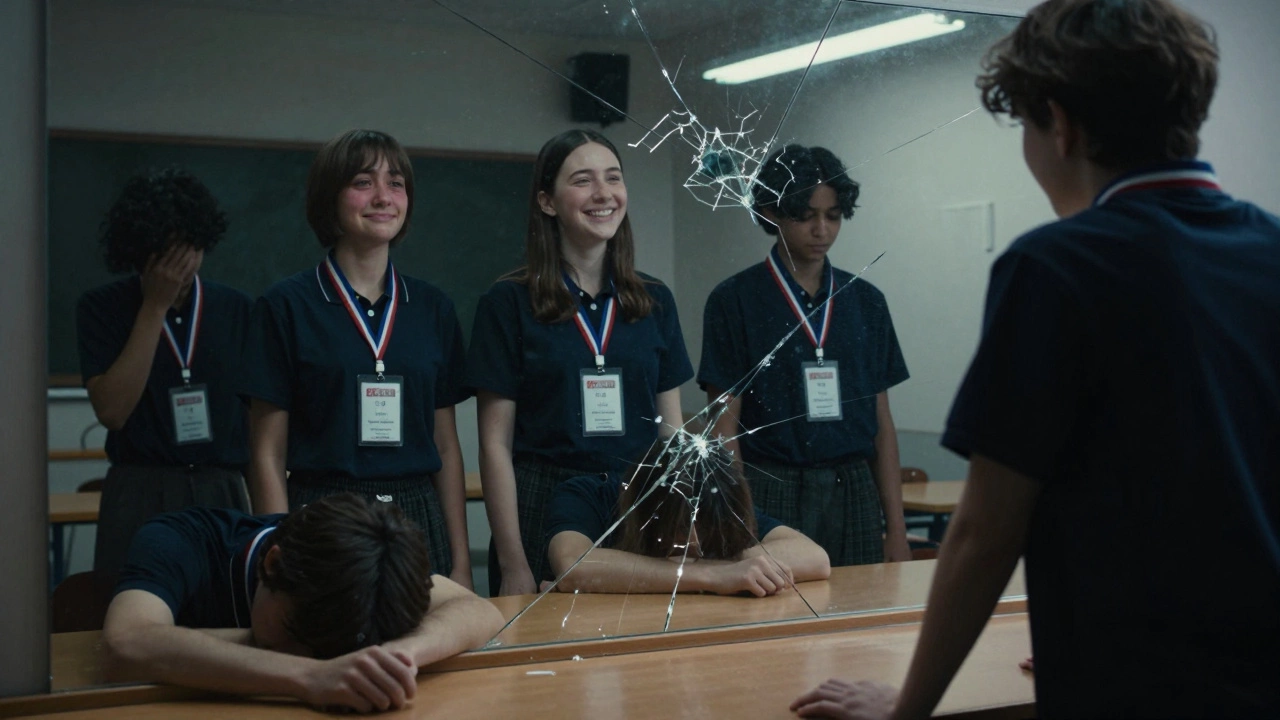
Your Health Pays the Price
Sleep? You sacrifice it. Meals? You skip them. Exercise? Forget it. You think you’re being disciplined. You’re actually running on fumes.
A 2024 survey by the National Institute of Mental Health and Neurosciences (NIMHANS) showed that 52% of students preparing for top competitive exams had symptoms of clinical depression. Another 41% showed signs of chronic stress-induced insomnia. And it wasn’t because the exams were hard. It was because their mindset turned preparation into punishment.
Your body doesn’t care about your rank. It only knows you’re under constant fire. Headaches. Stomach issues. Panic attacks. These aren’t side effects. They’re warnings.
You Lose Relationships
Friends stop inviting you out. Family stops asking about your day. Why? Because every conversation turns into a performance review.
“How many mocks did you take this week?”
“Did you beat Arjun’s score?”
“When are you going to get a rank under 100?”
You start seeing people as competitors, not companions. You envy their progress. You resent their breaks. You isolate yourself-not because you’re focused, but because you’re afraid.
And when you finally get your result? There’s no one left to celebrate with. Not because no one cares. Because you pushed them away.

You Fear Failure More Than You Want Success
Most people fear failing an exam. Competitive people fear being seen as a failure.
That’s why they avoid trying new things. Why they won’t take a gap year. Why they’ll sit for the same exam three times-even when they’re emotionally broken. Because quitting means admitting they’re not special.
One student told me, “If I don’t crack JEE this time, my parents will think I’m useless.” That’s not pressure. That’s emotional blackmail you’ve internalized.
True resilience isn’t about never falling. It’s about knowing it’s okay to get up differently.
There’s a Better Way
You don’t have to stop being driven. But you need to stop letting competition define you.
- Measure progress by your own growth, not someone else’s rank.
- Ask: “Am I learning, or just grinding?”
- Take one day off a week-no studying, no apps, no numbers.
- Talk to someone who doesn’t care about your score.
- Remember: Your value isn’t in your rank. It’s in your persistence, your curiosity, your humanity.
The best engineers, doctors, and scientists weren’t the ones who crushed every exam. They were the ones who kept going-even when they didn’t win.
Is being competitive bad for competitive exams?
Being competitive isn’t bad-it’s natural. But when your self-worth depends on outperforming others, it becomes toxic. Healthy competition pushes you to improve. Unhealthy competition makes you afraid to lose. The difference is in your mindset: Are you trying to grow, or just to win?
Why do competitive students burn out faster?
Because they tie their identity to results. When they fail a mock test, they don’t just feel disappointed-they feel broken. They don’t take breaks because they think rest is weakness. They compare constantly, which spikes cortisol levels. Over time, this leads to emotional exhaustion, loss of motivation, and physical symptoms like insomnia or digestive issues. Burnout isn’t about working hard. It’s about working without meaning.
Can I still aim for top ranks without being overly competitive?
Absolutely. Top performers who last are the ones who focus on mastery, not rankings. They study because they’re curious, not because they’re scared. They track their own improvement: “I understood thermodynamics better this week.” They sleep, eat, and take walks. They know that consistency beats intensity. You don’t need to be the loudest in the room to be the strongest.
How do I stop comparing myself to others?
Start by limiting exposure. Unfollow study influencers who post their ranks. Don’t ask about others’ scores. Keep a personal progress journal-write down what you learned each day, not what rank you got. Remind yourself: Your journey is yours alone. No one else’s path tells you how fast you should go.
What should I do if I’m already burned out?
Stop studying for a week. Not a day. A full week. Do nothing exam-related. Walk. Talk to someone who doesn’t know anything about exams. Eat real food. Sleep without an alarm. Then, ask yourself: Why did I start this? If the answer is still “to prove something,” it’s time to rethink your why. Burnout isn’t a sign you’re weak-it’s a sign you’ve been ignoring your limits. Listen to it.