Recent POST




Government Job Salary Calculator
Compare Your Future Earnings
Calculate your potential salary for top government positions based on experience and allowances. See how your career could grow over time.
Key Benefits:
- Job security for life
- 50% pension after retirement
- Free medical coverage
- Housing allowance
- International travel benefits
When people ask which government job has the highest salary, they’re usually not just curious about the number on the pay slip. They want to know if the effort of cracking a tough exam is worth it-long hours of study, years of preparation, and the pressure of competing against lakhs of candidates. The truth? Some government jobs in India pay more than top private sector roles, and they come with benefits most companies can’t match.
Top 5 Highest Paying Government Jobs in 2026
The highest paying government jobs aren’t just about base pay. They include allowances, housing, travel, medical benefits, pensions, and even foreign postings. Here are the top five roles that consistently lead the salary charts, based on 7th Pay Commission updates and recent revisions through 2026.
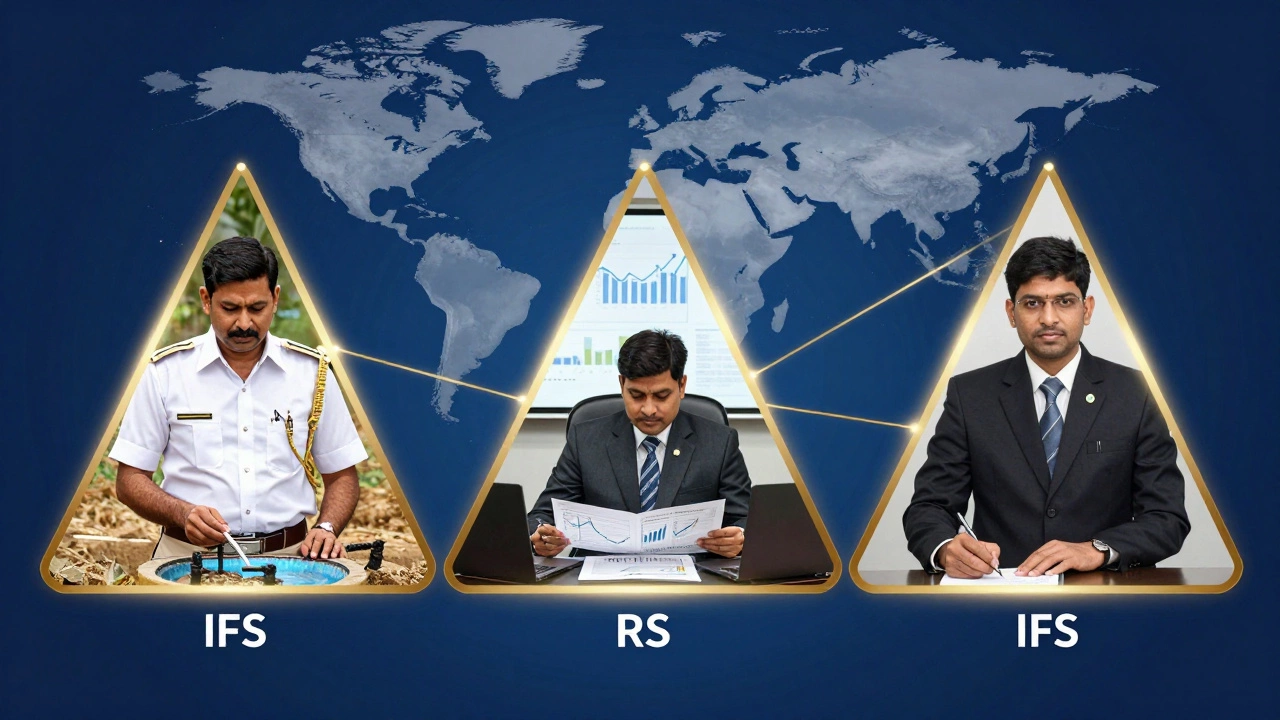
- Indian Administrative Service (IAS) - Starting at ₹56,100 per month, but with allowances, a senior IAS officer in a state or central post can earn over ₹2.5 lakhs per month. The Cabinet Secretary, the highest-ranking IAS officer, earns ₹2.5 lakhs plus perks like a bungalow, official car, security, and medical coverage for the entire family.
- RBI Grade B Officer - The Reserve Bank of India doesn’t just print money-it pays well. A Grade B officer starts at ₹82,000 per month. After five years, with promotions and allowances, the package hits ₹1.8 lakhs. Plus, there’s a housing allowance, travel reimbursements, and a pension plan that lasts for life.
- Indian Foreign Service (IFS) - IFS officers serve abroad, and their pay reflects that. Base salary starts at ₹56,100, but with foreign allowances, housing, and education subsidies for children overseas, the total package can exceed ₹3 lakhs per month. An ambassador in the U.S. or U.K. earns even more, often with tax-free income.
- SEBI Grade A Officer - The Securities and Exchange Board of India pays like a private bank but with job security. Starting pay is ₹77,000. After 3-4 years, with performance bonuses and allowances, officers earn ₹1.6-1.9 lakhs. The job includes stock market exposure, international training, and no transfer anxiety.
- ISRO Scientist/Engineer (Grade 7) - The Indian Space Research Organisation doesn’t advertise salaries much, but insiders confirm that senior scientists with 10+ years of experience earn ₹1.7-2.1 lakhs per month. Add housing, travel to launch sites, and research grants, and the real value goes higher.
Why These Jobs Pay So Much
These aren’t just jobs-they’re positions of national responsibility. The government pays more because the stakes are higher. An IAS officer runs entire districts. An RBI officer shapes monetary policy that affects inflation and interest rates. An IFS officer represents India on the global stage. These roles require years of training, deep expertise, and the ability to handle crises.
Compare that to a private sector job. A tech manager at Google India might earn ₹40-50 lakhs annually, but they’re on contract. No job security. No pension. No guaranteed medical care for parents. Government jobs offer lifetime stability. Even after retirement, you get a pension equal to 50% of your last drawn salary-something most private companies don’t touch.
The Exam Path: UPSC, RBI, SEBI, ISRO
Getting into these roles isn’t easy. The UPSC Civil Services Exam (for IAS, IFS) has a success rate of less than 0.1%. Over 10 lakh candidates apply each year. Only around 700 get selected. The exam has three stages: Prelims, Mains, and Interview. Preparation takes 1-2 years full-time.
RBI Grade B requires clearing a separate exam with sections on economics, English, reasoning, and general awareness. SEBI Grade A has a technical paper on finance and markets. ISRO recruits through GATE scores and a personal interview. Each exam is highly specialized.
Here’s what you’re really signing up for:
- Time: 2-5 years of preparation, depending on background.
- Cost: ₹1-2 lakhs on coaching, books, test series, and travel for interviews.
- Pressure: Family expectations, social media comparisons, and repeated failures.
But if you make it? The payoff isn’t just money. It’s respect. It’s impact. It’s knowing your decisions affect millions.

Salary vs. Lifestyle: What You Sacrifice
High salary doesn’t mean high freedom. IAS officers often work 14-hour days during elections or natural disasters. RBI officers get called at midnight during currency crises. IFS officers live away from family for years. ISRO scientists work weekends during rocket launches.
There’s also transfer risk. An IAS officer might be moved from Delhi to a remote district with no internet. An RBI officer could be posted in a small town with limited amenities. These jobs demand adaptability, not just intelligence.
And while the salary is high, the growth is slow. Promotions take 5-8 years. You don’t get stock options or bonuses tied to performance. You get steady increments and respect.
Is It Worth It? Real Stories
Meet Priya, 32, from Jaipur. She cracked IAS in 2021 after three attempts. Her father was a school teacher. Her mother ran a small shop. She spent ₹1.5 lakhs on coaching. Today, she’s a Deputy Commissioner in Uttar Pradesh. Her monthly take-home is ₹2.1 lakhs. She owns a house, her kids go to private school, and her parents get free healthcare.
Then there’s Arjun, 29, an RBI Grade B officer from Bhopal. He didn’t join coaching. He studied from YouTube and old question papers. He cleared the exam in his second try. He earns ₹1.6 lakhs a month. He travels to Mumbai every quarter for meetings. He has no car loan. He saves 60% of his income.
These aren’t outliers. They’re the norm.
What About Other High-Paying Government Jobs?
Some jobs are high-paying but not as visible. For example:
- DRDO Scientists - Earn up to ₹1.9 lakhs with project bonuses.
- Indian Police Service (IPS) - Similar pay to IAS, but with higher risk and fewer foreign postings.
- Coal India Managers - Private sector pay with government stability. Up to ₹1.8 lakhs for senior roles.
- Public Sector Banks (PO Level) - Starting pay ₹45,000, rising to ₹1.2 lakhs after 8 years.
But none of these match the IAS or IFS in total value-especially when you factor in long-term security and social influence.
Final Verdict: The Real Answer
The highest paying government job in 2026 is the Cabinet Secretary-the top IAS officer in India. With a fixed salary of ₹2.5 lakhs and perks worth another ₹1-1.5 lakhs monthly, the total package exceeds ₹4 lakhs. But even that’s not the full story.
The real value isn’t in the salary. It’s in the power to change systems. To fix schools. To stop corruption. To bring clean water to villages. To represent your country abroad. That’s what these jobs offer-and no private company can buy that.
If you’re preparing for a government exam, don’t just chase the salary. Chase the purpose. The money will follow.
Which government job has the highest salary in India in 2026?
The highest paying government job in India in 2026 is the Cabinet Secretary, the top-ranking IAS officer. The fixed salary is ₹2.5 lakhs per month, but with allowances for housing, travel, security, and medical care, the total monthly value exceeds ₹4 lakhs. This role leads the entire civil services and advises the Prime Minister directly.
Is RBI Grade B better than IAS?
RBI Grade B offers a higher starting salary than IAS-₹82,000 vs ₹56,100-and faster promotions in the first five years. But IAS has more power, broader responsibilities, and higher long-term earnings. An IAS officer can become Cabinet Secretary, while an RBI officer’s ceiling is Governor. If you prefer finance and policy without transfers, RBI is better. If you want influence across sectors and regions, IAS wins.
Can a government job make you rich?
Yes, but not overnight. Government jobs don’t make you rich like startups or real estate. But with a ₹2 lakh monthly salary, zero debt, free housing, medical care, and a 50% pension for life, you can build serious wealth over 25-30 years. Many IAS and RBI officers retire with ₹10-15 crore in savings, property, and investments-without ever taking a risk.
Which government exam is the hardest to crack?
The UPSC Civil Services Exam is the hardest. With over 10 lakh applicants and only 700 selected, the success rate is under 0.1%. It tests knowledge across 10+ subjects, requires essay writing, and has a grueling interview. The RBI Grade B and SEBI Grade A are also tough but focus on specific domains. UPSC is the Everest of government exams.
Do IAS officers get paid more than CEOs?
Top IAS officers earn more than most CEOs of mid-sized Indian companies. A Cabinet Secretary’s total package exceeds ₹48 lakhs annually, which is higher than CEOs of companies with ₹500-1,000 crore revenue. Only CEOs of Tata, Reliance, or Infosys earn more. But unlike CEOs, IAS officers have job security for life, even after retirement.
Are government jobs still worth it in 2026?
Yes, more than ever. Private jobs are volatile-layoffs, automation, remote work burnout. Government jobs offer stability, respect, and benefits that no startup can match. Even with inflation, the pension system and housing benefits keep government employees financially secure. If you want a life of purpose and peace, not just profit, government jobs are still the best option.