Recent POST



If you're asking easiest online degree, you're not alone. Many people start looking for this because they’re juggling work, family, or just want to finish school without burning out. The truth? There’s no degree that’s truly "easy" if you want it to mean something. But some online degrees are designed to be more forgiving, flexible, and less demanding in terms of math, labs, or technical depth. These are the ones that actually work for people who need to get through school without losing their sanity.
What "easy" really means in online degrees
"Easy" doesn’t mean no work. It means less stress, fewer technical barriers, and more room to learn at your own pace. An easy degree isn’t one where you skip readings or skip assignments-it’s one where the material feels natural, the deadlines are flexible, and you don’t need a background in calculus or organic chemistry to pass.For example, if you’ve ever read a novel, written an email, or argued with a friend about politics, you already have the foundation for a lot of online degrees. The easiest degrees build on skills you already use daily.
Top 5 easiest online degrees in 2025
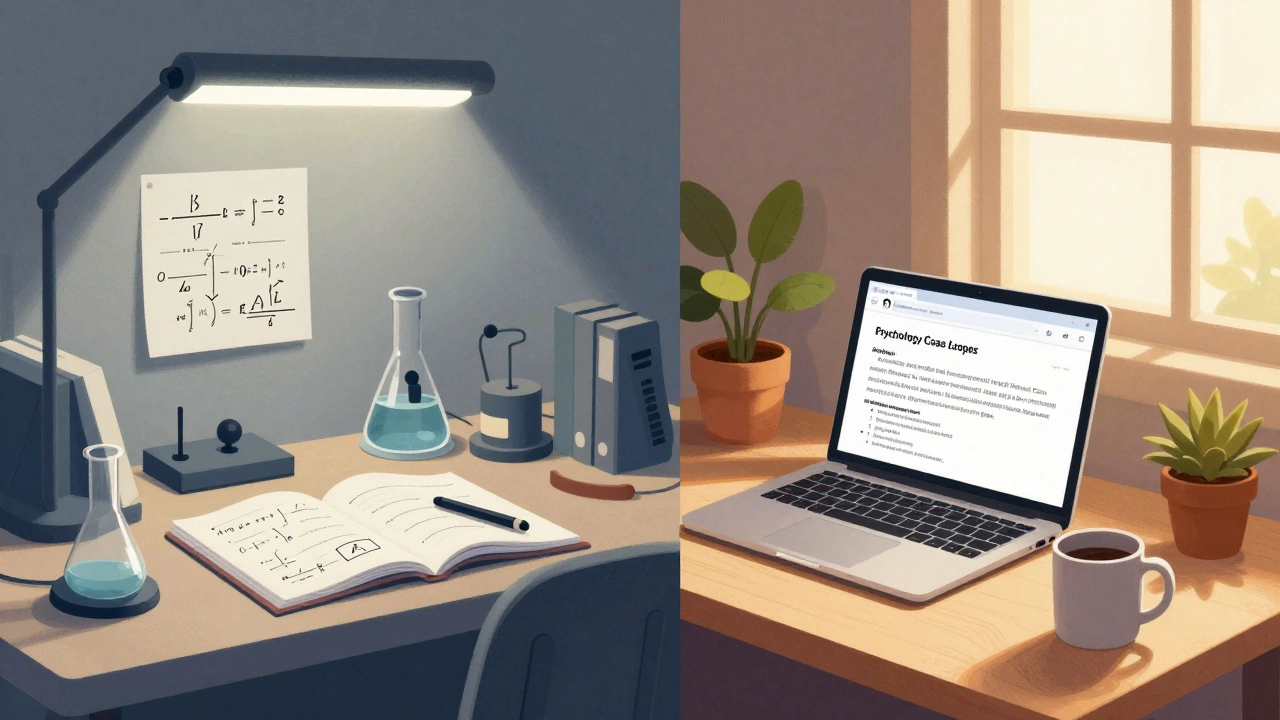
- Psychology - You’re already a human. Studying human behavior doesn’t require memorizing formulas. Coursework focuses on case studies, essays, and real-life applications. Many programs let you explore topics like stress, relationships, or social media’s effect on mental health-stuff you already notice in your life.
- General Studies - This isn’t a "major" in the traditional sense. It’s a customizable degree where you pick 3-5 subjects you actually care about: history, communications, sociology, even art. Perfect if you’re unsure what you want to study or just need a credential without pressure.
- Human Resources - HR degrees teach you how to manage people, not balance spreadsheets. You’ll learn about hiring, conflict resolution, and workplace laws. No coding. No lab reports. Just reading policies, writing memos, and understanding how teams work.
- Communications - If you can text, post on social media, or explain something to a friend, you’re halfway there. This degree covers writing, public speaking, media, and digital storytelling. Most assignments are videos, blogs, or presentations-not exams.
- Liberal Arts - A broad, flexible degree covering literature, philosophy, ethics, and cultural studies. It’s not about memorizing facts. It’s about thinking, writing, and discussing ideas. Many online programs let you take electives in pop culture, film, or even gaming culture.
What degrees look easy but aren’t
Some degrees get labeled "easy" because they don’t have math-but they’re actually harder than they seem.- Business Administration - Sounds simple, right? But many programs require accounting, finance, and statistics. If you hate numbers, this will drain you.
- Education - Teaching kids sounds rewarding, but you’ll need lesson plans, classroom management theories, and state certification exams. It’s not just "talking to children."
- Marketing - You might think it’s about memes and Instagram. But you’ll need data analysis, consumer behavior models, and campaign metrics. If you hate Excel, this will feel like a chore.
Don’t fall for the myth that "soft" subjects are low-effort. Some of the hardest degrees are the ones that sound fun.
Why online makes a difference
The easiest degrees become even easier online because of how they’re delivered. Unlike traditional campuses, online programs often:- Let you submit assignments anytime, not just on rigid deadlines
- Use discussion boards instead of timed exams
- Offer recorded lectures you can watch at 1.5x speed
- Have fewer group projects that require syncing schedules
For example, a psychology student in New Zealand can finish a 10-page paper on sleep patterns at 2 a.m. after putting the kids to bed. A student in Texas can watch a lecture on communication theory while waiting for their kid’s soccer practice. That flexibility is the real advantage-not the subject itself.
What to avoid if you want it to be easy
Stay away from degrees that require:- Lab work (biology, chemistry, engineering)
- Field placements (nursing, social work, teaching)
- High-level math (statistics, calculus, physics)
- Programming or coding (computer science, IT, data analytics)
- Technical certifications (networking, cybersecurity, graphic design software)
These aren’t impossible. But they add layers of complexity that make "easy" impossible. If you’re looking for low friction, skip anything that needs special equipment, software, or in-person supervision.

Real student stories
A 34-year-old single mom in Ohio finished her General Studies degree in 18 months while working two part-time jobs. She took courses in creative writing, environmental science, and film studies-all online, all self-paced. She didn’t get top grades, but she passed. And she got her diploma.A 28-year-old barista in Melbourne completed a Communications degree by submitting video essays about TikTok trends. His professor said his final project was "the most insightful analysis of digital identity" he’d seen in five years. He didn’t need to know how to code. He just needed to be curious.
These aren’t outliers. They’re people who chose degrees that matched their lives, not their fears.
How to pick your "easy" degree
Ask yourself these three questions:- What do I already enjoy reading or talking about? (If you love true crime documentaries, psychology might fit. If you’re always giving advice to friends, HR could work.)
- What do I hate doing? (If math makes you anxious, avoid finance. If you dread public speaking, skip education or theater.)
- What do I need this degree for? (Job promotion? Personal growth? Just to say you did it?)
Don’t pick a degree because it’s "easy" on paper. Pick it because it fits your brain, your schedule, and your life.
Final reality check
There’s no magic degree that lets you coast through college. But there are degrees that respect your time, your energy, and your limits. The easiest online degrees in 2025 aren’t about avoiding work-they’re about doing work that feels meaningful, not punishing.If you’re tired of feeling like you’re fighting your education, choose something that works with you-not against you. That’s not cheating. That’s smart.
Is an online degree respected by employers?
Yes, if it’s from an accredited school. Most employers don’t care if your degree was earned online or in person-they care if you graduated and what you learned. Degrees from regionally accredited universities (like Arizona State, Penn State, or the University of Florida) carry the same weight as traditional ones. Avoid for-profit schools with questionable reputations.
Can I finish an easy online degree in under a year?
It’s possible, but not common. Most associate degrees take 18-24 months, even online. Some accelerated programs offer 12-month paths, but they require 30-40 hours a week of study. If you’re working full-time, aim for 2 years. Rushing leads to burnout, not success.
Do I need to be tech-savvy to do an online degree?
No. Most platforms (Canvas, Blackboard, Moodle) are designed to be simple. You’ll need to know how to upload a file, join a Zoom call, and use email. If you can use Instagram or order food online, you can handle an online degree. Schools offer free tech support if you get stuck.
Are there any free easy online degrees?
Not fully free, but there are affordable options. Community colleges in the U.S. offer online associate degrees for under $3,000 a year. Some countries like Germany and Norway offer free tuition to international students. Look for scholarships, employer tuition reimbursement, or income-share agreements if cost is a barrier.
What’s the fastest way to get a degree if I’m not sure what I want?
Start with a General Studies or Liberal Arts program. These let you sample different subjects before committing. You can often transfer credits later if you decide to specialize. Many students use this path to test the waters before going into nursing, business, or education.