Recent POST






When someone decides to become a teacher, they don’t just walk into a classroom on day one. There’s a foundation they need to build first - and that’s what initial teacher training is all about. It’s the first formal step into the profession, designed to turn someone with subject knowledge into someone who can actually teach - clearly, confidently, and effectively.
What Exactly Is Initial Teacher Training?
Initial teacher training (ITT) is the structured program that prepares people to become qualified teachers. It happens before they start teaching full-time in a school. In most countries, including New Zealand, the UK, Australia, and Canada, you can’t legally teach in public schools without completing an approved ITT program.
This isn’t just a few workshops or a weekend seminar. It’s a full-time, often year-long process that combines classroom learning with real teaching practice. Think of it like an apprenticeship - you’re learning the theory while doing the job under supervision.
ITT programs vary by country and level (primary, secondary, special education), but they all follow the same core structure: coursework, supervised teaching, assessments, and feedback cycles. In New Zealand, for example, the Graduate Diploma in Teaching is the most common route for those with a bachelor’s degree in another field.
What Does Initial Teacher Training Cover?
It’s not just about knowing your subject. A math teacher needs to know how to explain quadratic equations to a 14-year-old who’s zoning out. A history teacher needs to know how to get a class of 30 kids to care about the Treaty of Versailles. That’s where ITT comes in.
Here’s what you’ll typically learn:
- Classroom management: How to set routines, handle disruptions, and build respect without yelling.
- Lesson planning: How to break down complex topics into digestible chunks that match students’ abilities.
- Assessment techniques: How to use formative assessments - quick checks like exit tickets or thumbs-up/down - to adjust teaching on the fly.
- Differentiation: How to teach the same lesson to students with wildly different skill levels, learning styles, or language backgrounds.
- Child development: Understanding how kids think at different ages - why a 7-year-old can’t sit still for 20 minutes, or why a 15-year-old shuts down when corrected in front of peers.
- Inclusive education: How to support students with disabilities, neurodiversity, trauma, or those learning English as a second language.
These aren’t abstract ideas. Trainees spend at least 12 weeks in real classrooms, teaching real students under the watchful eye of a mentor teacher. They record lessons, get feedback, revise, and try again. It’s messy. It’s exhausting. And it’s the only way to learn.
Who Needs Initial Teacher Training?
You might think only fresh graduates need it. But that’s not true. Many people switch into teaching later in life.
Take Sarah, a 38-year-old accountant in Christchurch. She loved working with numbers but felt empty. After volunteering at a local school, she realized she wanted to teach math. She didn’t have a teaching degree - but she had a Bachelor of Commerce. She enrolled in a one-year ITT program, spent 16 weeks in a Year 9 classroom, and by the end of the year, she was hired full-time.
Or James, a 42-year-old electrician in Wellington. He tutored his nephew in physics and loved it. He went through an ITT program while working part-time. He’s now teaching Year 11 physics at a state high school.
ITT isn’t just for new grads. It’s for career-changers, parents returning to work, and even retired professionals who want to give back. All you need is a bachelor’s degree (or equivalent) and the drive to learn how to teach.
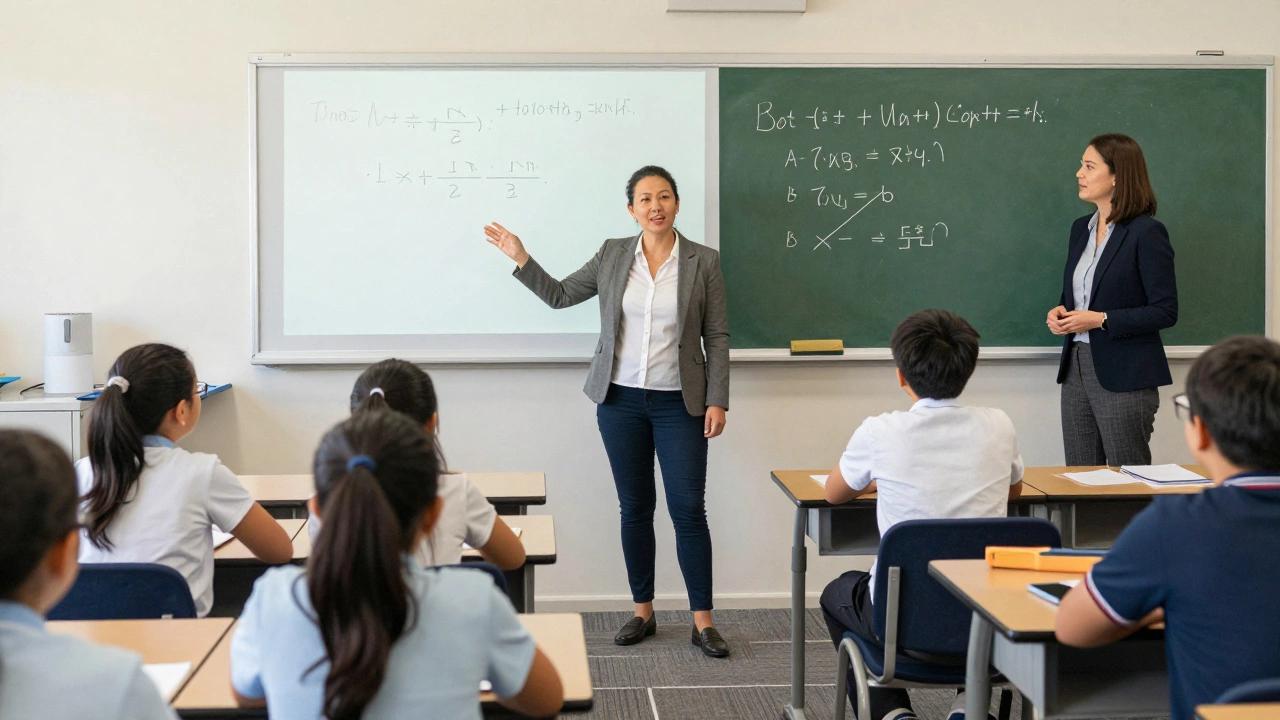
How Is Initial Teacher Training Different From On-the-Job Training?
Some schools hire unqualified people and say, “Just figure it out.” That’s not ITT. That’s trial by fire - and it often leads to burnout.
ITT is structured. It’s backed by education standards. It’s monitored by universities or accredited providers. Trainees are assessed against national teaching standards - like the Teaching Council of Aotearoa New Zealand’s Registered Teacher Criteria.
On-the-job training might teach you how to mark tests or manage a timetable. ITT teaches you why those things matter. It teaches you how to design learning experiences that stick.
For example: a new teacher might be told, “Use group work.” But ITT shows them how to form groups so no one gets left out, how to assign roles so everyone participates, and when group work actually helps learning - versus when it just creates noise.
Why Does Initial Teacher Training Matter?
There’s a reason countries invest millions into ITT: it works.
A 2023 study by the OECD found that students taught by teachers who completed formal ITT scored 12% higher in reading and math than those taught by untrained staff. The gap was even wider in low-income schools.
Why? Because trained teachers:
- Stay in the profession longer (75% stay past five years vs. 40% for untrained hires)
- Use evidence-based strategies instead of guesswork
- Build stronger relationships with students and families
- Adapt faster to challenges - whether it’s a student with anxiety, a new curriculum, or remote learning
It’s not about perfection. It’s about preparation. You wouldn’t send someone to fix a heart valve after watching a YouTube video. Why would you let someone teach a child’s future with less?

How Long Does It Take?
It depends on your path:
- Graduate entry (post-degree): 1 year full-time (e.g., PGCE, Graduate Diploma)
- Undergraduate degree with teaching major: 3-4 years (e.g., Bachelor of Education)
- Part-time or distance learning: 1.5-2 years
In New Zealand, most people take the one-year Graduate Diploma route. It’s intensive. You’ll spend 3 days a week in school and 2 days at university. You’ll write lesson plans, get observed, reflect on feedback, and revise - sometimes 10 times before you get it right.
It’s not easy. But it’s designed to be hard. Because teaching is hard.
What Happens After Initial Teacher Training?
Completion doesn’t mean you’re done learning. In fact, it’s just the beginning.
After finishing ITT, you’ll typically be registered as a beginning teacher. Most countries have a probationary period - often two years - where you’re still supported by mentors and required to complete professional development.
During this time, you’ll:
- Have regular observations
- Attend workshops on literacy strategies, behavior management, or digital tools
- Collaborate with experienced teachers
- Build a portfolio of your teaching practice
Only after this period do you become a fully registered teacher - and even then, you’re expected to keep learning. Teaching is a lifelong profession of growth.
Common Myths About Initial Teacher Training
- Myth: “You just need to know your subject.”
Reality: Knowing calculus doesn’t mean you can explain it to someone who’s never seen a graph. - Myth: “IT’s just a formality.”
Reality: Over 30% of untrained hires quit within the first year. Trained teachers stay. - Myth: “I can learn on the job.”
Reality: Kids aren’t guinea pigs. They deserve teachers who know how to teach - not just what to teach.
Initial teacher training isn’t about ticking boxes. It’s about building competence, confidence, and care. It’s the difference between someone who can stand in front of a class - and someone who can change a student’s life.
Is initial teacher training mandatory to become a teacher?
Yes, in most countries, including New Zealand, Australia, the UK, and Canada, you must complete an approved initial teacher training program to become a fully registered teacher in public schools. Some private schools may hire untrained staff, but they’re the exception - not the norm. Without formal training, you won’t be eligible for certification, which affects job opportunities, salary scales, and professional recognition.
Can I do initial teacher training while working?
Yes, many programs offer part-time or flexible options. In New Zealand, for example, you can enroll in a part-time Graduate Diploma in Teaching that lets you work 2-3 days a week while completing your training. Distance learning and block teaching models (e.g., 2 weeks on campus, 4 weeks in school) are also common. It’s demanding, but it’s designed for people who can’t quit their jobs.
Do I need a degree to start initial teacher training?
Yes, most ITT programs require a bachelor’s degree in any field. Some programs are designed for graduates with no teaching background - like the one-year Graduate Diploma. If you don’t have a degree, you’ll need to complete one first, either as a full teaching degree (Bachelor of Education) or as a subject-specific degree before applying to ITT.
How much does initial teacher training cost?
Costs vary by country and program. In New Zealand, a one-year Graduate Diploma in Teaching typically costs between NZD $7,000-$10,000. Some students qualify for government subsidies or scholarships. In the UK, tuition fees are capped at £9,250 per year. Many programs offer bursaries for high-demand subjects like maths, science, and special education - sometimes up to £30,000 for top candidates.
What’s the difference between initial teacher training and continuing professional development?
Initial teacher training is your entry into the profession - it’s what qualifies you to teach. Continuing professional development (CPD) happens after you’re registered. CPD includes workshops, conferences, online courses, and mentoring you do throughout your career to improve your skills. Think of ITT as getting your driver’s license, and CPD as taking advanced driving courses to handle snow, night driving, or racing conditions.