Recent POST





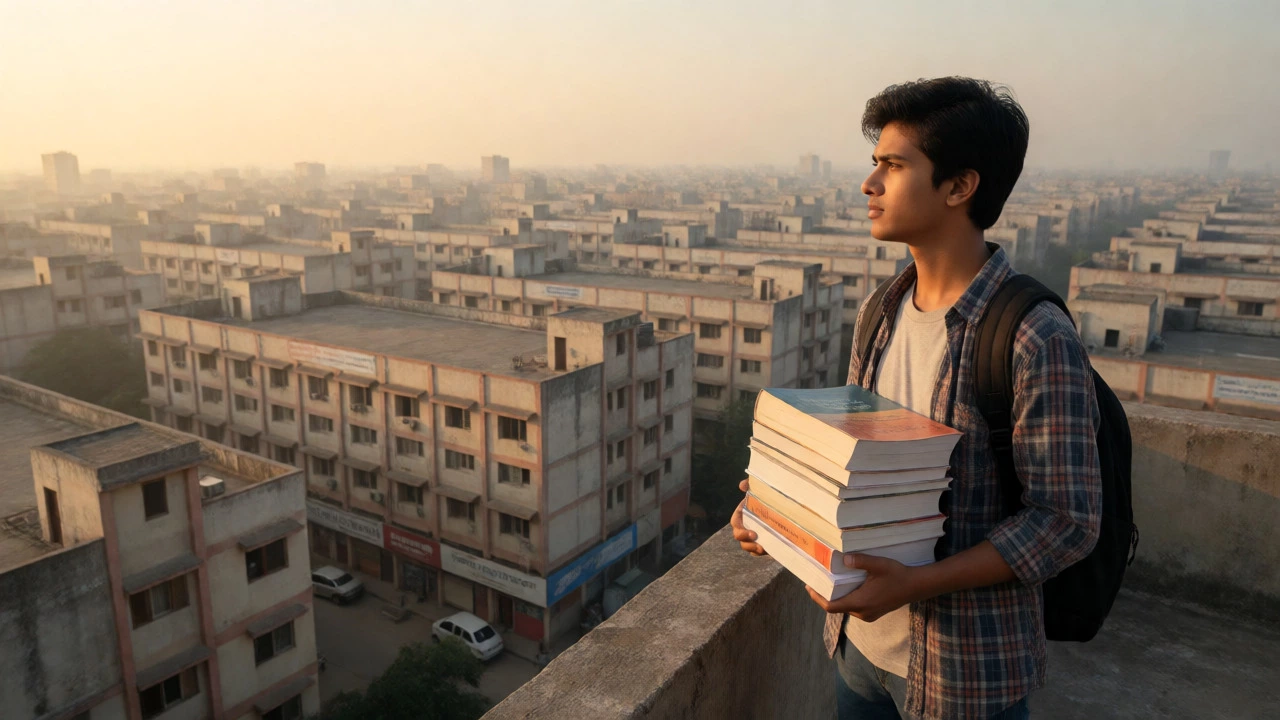
Competitive Exam City Matcher
Answer these questions to find the ideal study environment for your next big exam.
Recommended Strategy
Kota
Best for: High discipline, low budget tolerance, JEE/NEET.
- Extreme Pressure
- Moderate Cost
- Isolation Risk
Delhi (Mukherjee Nagar)
Best for: UPSC, networking, current affairs access.
- High Cost
- Great Resources
- Chaotic Lifestyle
Pune / Hyderabad
Best for: CAT/GATE, balanced lifestyle, good weather.
- Good Balance
- Moderate Cost
- Self-Study Focus
You’re staring at a map of India, wondering where to drop your bags for the next two years. Should you go to Kota, the industrial hub known for its intense, factory-like coaching culture? Or maybe Delhi, the capital with its sprawling university campuses and political pulse? Maybe somewhere quieter, like Pune or Hyderabad?
Here’s the truth: there is no single "best" city. There is only the best city for you. Choosing the wrong location can drain your bank account and your mental health before you even open a book. But choosing the right one gives you an ecosystem that pulls you toward success.
Quick Summary / Key Takeaways
- Kota offers unmatched peer pressure and structured discipline but comes with high isolation risks.
- Delhi (Mukherjee Nagar) provides access to top-tier faculty and current affairs resources but is expensive and chaotic.
- Pune & Hyderabad offer a balanced lifestyle with lower costs and better weather, ideal for self-study with online support.
- Online-First Hybrid models are shifting the need for physical relocation, allowing students to stay near family support systems.
- Your personality type-whether you thrive on competition or need calm-is the primary filter for choosing a city.
The Psychology of Location: Why Environment Matters
Think about your own habits. Do you study better when everyone around you is studying? Or do you panic when you see others working harder than you? This distinction determines your city choice more than any ranking of coaching institutes.
In psychology, this relates to social facilitation versus social loafing. In cities like Kota, the sheer density of aspirants creates a powerful social facilitation effect. You walk into a library, and 500 people are silent. That silence is contagious. It forces you to focus. However, for those prone to anxiety, this same environment triggers comparison stress. You hear rumors about who topped the mock test, and suddenly your confidence shakes.
Conversely, a city like Bangalore or Pune might feel too relaxed. The coffee shops are inviting, the tech scene is buzzing, and the weekend plans are always full. If you lack intrinsic discipline, these distractions can erode your study hours. The goal isn't just to find a place with good teachers; it's to find a place that aligns with your psychological resilience.
Kota: The Pressure Cooker Model
Kota remains the undisputed king for engineering (JEE, Joint Entrance Examination) and medical (NEET, National Eligibility cum Entrance Test) preparations. Why? Because the entire economy of the city revolves around these two exams.
The infrastructure here is built for volume. Coaching centers operate on assembly-line efficiency. Faculty members teach thousands of students using standardized methods. This consistency ensures that if you follow the schedule, you cover the syllabus. Period.
But let’s look at the cost. Not just money, but emotional bandwidth. Living in hostels often means cramped rooms, poor food quality, and limited privacy. Many students report feeling isolated from the "real world." If you are someone who needs family support to cope with failure, Kota can be brutal. The dropout rate is significant, not because students aren’t smart, but because they burn out.
- Best for: Students who need external structure, have high tolerance for monotony, and are preparing for STEM fields.
- Avoid if: You struggle with mental health issues, crave diverse social interactions, or prefer flexible learning schedules.

Delhi: The Information Hub for Civil Services
If you are aiming for UPSC, Union Public Service Commission civil services examination, Delhi is almost mandatory. Specifically, areas like Mukherjee Nagar and Old Rajinder Nagar form a micro-ecosystem dedicated entirely to civil services.
Why Delhi? Two reasons: Current Affairs and Networking. For UPSC, knowing what happened yesterday matters as much as knowing history from 1857. In Delhi, you are close to the source. News debates happen in real-time in local tea stalls and libraries. You can attend lectures by former bureaucrats, journalists, and policy experts who actually live in the city.
Furthermore, the library culture in Delhi is unparalleled. Places like the Delhi University Central Library or private reading rooms in Mukherjee Nagar provide 24-hour access to resources. The community aspect is strong here. Study groups form organically. You find peers who share notes, discuss answers, and keep each other accountable.
The downside? Rent. A small room in Mukherjee Nagar can cost ₹15,000-₹20,000 per month, which is steep compared to smaller towns. Plus, pollution levels in winter can affect respiratory health, impacting your ability to concentrate. Traffic is another time-sink. If you waste two hours commuting, you lose valuable revision time.
Pune and Hyderabad: The Balanced Alternatives
Not everyone wants the chaos of Delhi or the rigidity of Kota. Enter Pune and Hyderabad. These cities have emerged as strong contenders for management entrance exams (CAT, Common Admission Test) and general competitive exams.
Pune offers a pleasant climate year-round, which directly impacts cognitive function. Studies suggest that extreme heat reduces productivity by up to 10%. Pune avoids the extreme winters of North India and the humid summers of the South. It has a vibrant student population due to universities like Fergusson College and Symbiosis. The cost of living is moderate, and the food options are diverse and affordable.
Hyderabad brings a different vibe. It’s a tech hub, meaning the infrastructure is modern, and internet connectivity is reliable. For students relying heavily on online platforms like Unacademy or Physics Wallah, Hyderabad’s digital backbone is a huge plus. The city is also safer and cleaner than many northern counterparts. The food is excellent, and the pace of life is slower than Mumbai or Delhi, allowing for a healthier work-life-study balance.
Comparing the Hubs: A Decision Matrix
To make this concrete, let’s break down the key factors. Use this table to weigh your priorities.
| Factor | Kota | Delhi (Mukherjee Nagar) | Pune/Hyderabad | Home City + Online |
|---|---|---|---|---|
| Primary Focus | JEE, NEET | UPSC, SSC, Banking | CAT, GATE, State PSCs | All (Self-disciplined) |
| Cost of Living | Moderate-High (Hostels) | High (Rent & Food) | Moderate | Lowest |
| Peer Pressure | Extreme | High | Moderate | Low/None |
| Resource Access | Structured Coaching | Libraries & Experts | Online + Local Institutes | Digital Only |
| Lifestyle Balance | Poor | Chaotic | Good | Excellent (if disciplined) |

The Rise of the Hybrid Model: Staying Home
Let’s address the elephant in the room: do you really need to move? With the post-2020 shift, high-quality education is accessible via screens. Platforms like Physics Wallah, an ed-tech company offering low-cost video courses and Unacademy, a live learning platform for competitive exams have democratized access to top faculty.
Staying in your home city saves you lakhs of rupees. That money can buy you better books, a laptop, or simply reduce financial stress. More importantly, you retain your support system. Parents can ensure you eat well. Friends can keep you grounded. When you fail a mock test, you have a hug waiting, not just a cold hostel wall.
However, this requires immense self-control. Without the fear of missing a class or seeing friends study, procrastination becomes your enemy. If you choose this route, create a strict routine. Treat your bedroom like a classroom. No phone during study hours. Fixed wake-up times. If you can’t manage this, don’t risk it. Move to a hub.
How to Choose: A Step-by-Step Framework
Don’t just pick a city based on Instagram reels or your friend’s advice. Follow this logical flow:
- Identify Your Exam: Are you doing UPSC? Go to Delhi. JEE/NEET? Consider Kota or major metro coaching centers. CAT? Look at Mumbai, Bangalore, or Pune.
- Assess Your Discipline Level: Be honest. Do you need someone to force you to sit down? If yes, choose a city with rigorous offline classes (Kota/Delhi). If you are self-driven, consider home or a lighter city like Pune.
- Budget Check: Calculate total costs for 2 years. Include rent, food, travel, and coaching fees. Can your family sustain this without debt? If not, look for cheaper alternatives or scholarships.
- Mental Health Audit: Have you struggled with anxiety or depression before? High-pressure environments might worsen this. Opt for cities with green spaces, better weather, and a calmer pace.
- Trial Run: Before committing, visit the city for a week. Stay in a PG. Visit the libraries. Talk to current students. Does the vibe match your energy?
Pitfalls to Avoid
One common mistake is chasing the "topper" narrative. Just because a student cracked UPSC from a small town doesn’t mean you will. They might have had unique circumstances. Don’t romanticize suffering. Another pitfall is ignoring logistics. Can you get good food? Is the water potable? These small daily frictions add up to massive fatigue over months.
Also, beware of "coaching traps." Some institutes promise results but deliver rote learning. Always check reviews from recent batches, not just marketing brochures. Look for feedback on doubt-solving sessions, not just lecture quality.
Is Kota still worth it for JEE in 2026?
Yes, for students who thrive in highly structured, competitive environments. The peer group intensity in Kota helps push limits, but it requires strong mental resilience. If you prefer flexibility or have health concerns, metros like Delhi or Pune with hybrid coaching might be better.
Which city is best for UPSC preparation?
Delhi, specifically Mukherjee Nagar and Old Rajinder Nagar, is widely considered the best due to access to specialized libraries, current affairs resources, and a dense network of mentors and peers. However, online resources have made home-based preparation viable for disciplined candidates.
Can I prepare for competitive exams from my hometown?
Absolutely. With high-speed internet and quality online platforms, location matters less than discipline. Preparing from home saves money and provides emotional support. Success depends on creating a strict study schedule and avoiding local distractions.
What is the cost difference between Kota and Delhi?
Delhi generally has higher living costs, particularly rent and food, due to its status as a metro city. Kota’s accommodation is cheaper, but coaching fees can be comparable. Overall, Delhi tends to be 20-30% more expensive for long-term stays.
Are online coaching classes effective enough?
For theoretical concepts, yes. Top educators are available online. However, for practical problem-solving and doubt clearing, offline or hybrid models often perform better. Many successful aspirants use a mix: online theory lectures and offline test series.