Recent POST






Daily English Speaking Habit Tracker
Your Daily Practice
Weekly Goal: 70 minutes
Build fluency through consistent practice. 10 minutes daily is more effective than 7 hours weekly!
7-Day Challenge Tasks
Your Progress
If you’ve ever been stuck in a conversation, fumbling for words while the other person talks faster than you can think, you know how frustrating English speaking can be. It’s not about knowing grammar rules or memorizing vocabulary lists. It’s about speaking. Real, messy, imperfect, flowing speech. And that’s something you can only build by doing - not studying.
Stop Learning. Start Speaking.
Most people spend years learning English and never actually speak it well. They watch videos, take quizzes, underline vocabulary, and still freeze when someone asks, "How was your weekend?" Why? Because learning isn’t the same as using. Your brain doesn’t learn to speak by reading about riding a bike. It learns by falling off, getting up, and trying again. The first step isn’t buying a course or downloading an app. It’s changing your mindset. You don’t need to be perfect. You need to be heard. Say something, even if it’s wrong. Say it again tomorrow. And again the next day. Fluency isn’t a destination. It’s a habit.Speak to Yourself Every Day
You don’t need a partner to start speaking. Start with yourself. Talk out loud while you make coffee. Describe what you’re doing: "I’m pouring milk into the cup. It’s warm. The smell is sweet." Record yourself for 60 seconds on your phone. Play it back. Don’t cringe. Listen. Where did you pause? What words did you struggle with? Write those down. Next time, use them. This isn’t practice for others. It’s practice for your mouth and brain to work together. Most people think their pronunciation is fine until they hear their own voice. That’s normal. Everyone sounds weird at first. The goal isn’t to sound like a native speaker. It’s to sound like someone who can get their point across without hesitation.Shadowing: The Secret Weapon Most People Ignore
Shadowing means repeating what you hear - out loud, right after the speaker. No pause. No thinking. Just copy. Use short clips from YouTube, podcasts, or Netflix. Pick something with clear speech, like TED Talks or BBC Learning English. Play 10 seconds. Pause. Say it exactly like they did. Match their rhythm, tone, even their breathing. Do this for 10 minutes a day. After two weeks, you’ll notice your speech flows smoother. Your tongue starts moving in new ways. Your ears get better at catching sounds you used to miss - like the difference between "think" and "sink," or why "I would" sounds like "I’d." It’s not magic. It’s muscle memory. Your mouth learns patterns by copying them, not by studying them.Find Your Speaking Partner - Even If You’re Shy
You need someone to talk to. Not a teacher. Not a tutor. Someone who’ll let you mess up. Look for free language exchange groups online. Apps like Tandem or HelloTalk connect you with people learning your language. You help them with your native tongue. They help you with English. No pressure. No grades. Just two people trying to get better. If you’re too nervous to talk to strangers, start with a friend who’s also learning. Set a rule: 15 minutes a day, only English. No switching to your native language. Even if you say "um" a lot. Even if you use gestures. Keep going.
Use Real-Life Triggers, Not Textbooks
Textbooks teach you how to say "I am going to the store to buy apples." Real life doesn’t work like that. People say: "Hey, got any apples?" or "Can you grab some fruit?" or "I’m out of milk - wanna pick some up?" Start noticing how people actually speak. Watch vloggers, listen to podcasts, or tune into casual TV shows like Friends or The Office. Pay attention to contractions, slang, and filler words like "like," "you know," or "actually." Don’t memorize them. Just notice them. Then try using one in your next conversation. You don’t need to sound like a news anchor. You need to sound like a person who gets by - and eventually, thrives.Build a Tiny Habit: Speak for 10 Minutes a Day
Consistency beats intensity. Ten minutes every day is better than two hours once a week. Set a timer. Pick a topic: your favorite food, your last vacation, what you’re watching on TV. Talk nonstop until the timer goes off. Don’t stop to look up words. Keep going. Use gestures. Use simple words. Use wrong grammar if you have to. After a month, you’ll have spoken for over 5 hours. That’s more than most people manage in a year of classes. And you didn’t pay for anything. Just time.Track Progress, Not Perfection
Don’t measure yourself by how many words you know. Measure it by how often you speak without panic. Did you finish a sentence without stopping? Did you understand someone’s question and answer without translating in your head? That’s progress. Keep a simple log: Date | Topic | Did I finish speaking? | Did I understand them? | One word I used well. After 30 days, look back. You’ll see patterns. You’ll see improvement. You’ll realize you’re not stuck. You’re moving.What Not to Do
Don’t wait until you’re ready. There’s no such thing as ready. You’ll never feel 100% prepared. The moment you start speaking - even badly - you become better. Don’t memorize scripts. "My name is John. I live in New York. I work as a teacher." That’s not conversation. That’s a robot. Real talk is messy. It’s interrupted. It’s emotional. It’s "Wait, what?" and "Oh, right!" and "I forgot what I was saying." Don’t rely on translation. Your brain doesn’t need to turn English into your native language and back. That’s why you speak slowly. Train yourself to think in English. Start small. Think your thoughts in English. "I’m tired." "This coffee is good." "I need to call Mom."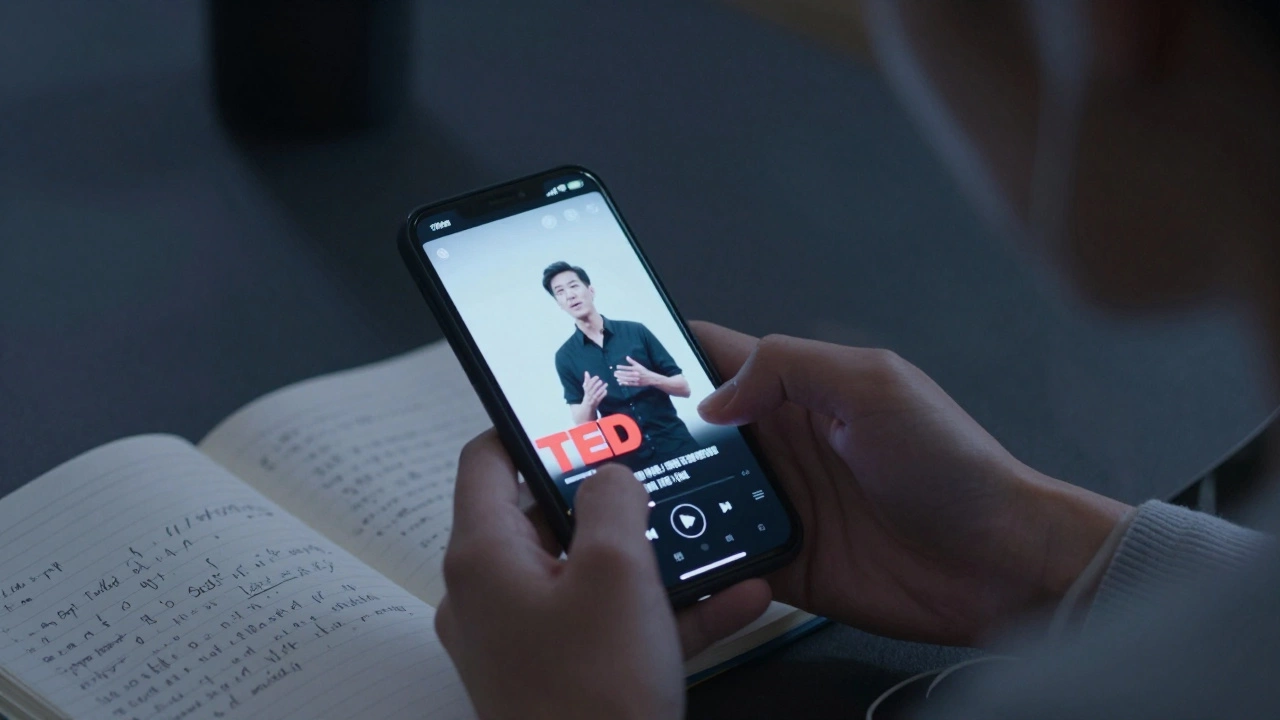
Where to Find Free Practice
- YouTube: Search "daily English conversation" or "English listening practice." Pick one video a day. Watch, pause, repeat. - Podcasts: "The English We Speak" (BBC) or "Learn English with Emma" are short, clear, and practical. - Apps: Tandem, HelloTalk, Speaky - all free. Find someone who wants to learn your language. - Local groups: Check Meetup.com for English conversation clubs. Many are free and meet in cafes. - Amazon Echo or Google Home: Ask it questions. "What’s the weather today?" "Tell me a joke." Answer out loud. It won’t judge you.It’s Not About Accent. It’s About Clarity.
You don’t need to sound American or British. You need to be understood. A Spanish speaker with a strong accent who speaks clearly is easier to understand than a native speaker mumbling. Focus on enunciating consonants. Slow down slightly. Pause between ideas. Stress the right words. "I WANT coffee," not "i want coffee." People care about meaning, not pronunciation. If you say "I need to leave now," they’ll understand you - even if "leave" sounds like "leeve."One Week Challenge
Try this for seven days:- Day 1: Talk to yourself for 10 minutes. Record it.
- Day 2: Shadow a 30-second clip from a YouTube video.
- Day 3: Text a friend in English. Just one message.
- Day 4: Watch a 5-minute YouTube video. Pause every sentence. Say it out loud.
- Day 5: Ask a question to a native speaker online (even just "How are you?").
- Day 6: Say three new words out loud before bed.
- Day 7: Record yourself again. Compare to Day 1.
What Comes Next?
After a month of daily speaking, you’ll start thinking in English. You’ll dream in fragments of sentences. You’ll catch yourself correcting your own grammar without trying. That’s when it clicks. You’re no longer learning English. You’re living it. The next step? Find a topic you care about - movies, cooking, sports, tech - and talk about it. Join a group. Start a journal in English. Write three sentences a day. Speak them out loud. That’s how fluency grows. Not from textbooks. Not from apps. From your own voice, repeated, day after day.How long does it take to speak English fluently?
There’s no fixed timeline. People who speak 10 minutes a day, every day, usually notice big changes in 3 to 6 months. Fluency doesn’t mean knowing every word. It means speaking without fear, understanding others easily, and thinking in English. It’s a habit, not a test.
Should I take an English speaking course?
Courses can help if they focus on speaking, not grammar drills. But no course replaces daily practice. If you’re paying for a course, make sure you’re speaking at least 50% of the time. If it’s mostly listening or writing, you’re wasting money. Free practice - talking to yourself, shadowing, language exchange - works better for most people.
Why do I understand English but can’t speak it?
Because listening and speaking use different parts of your brain. You’ve trained your ears, not your mouth. Understanding is passive. Speaking is active. You need to practice producing sounds, forming sentences on the spot, and thinking quickly. That only happens when you speak - not when you listen.
What if I’m too shy to speak?
Start alone. Talk to your pet. Talk to your mirror. Record yourself. No one has to hear it. Then try texting someone in English. Then say one sentence out loud to a friend. Shyness fades with small wins. You don’t need to be bold. You just need to begin.
Is it okay to make mistakes?
Yes. More than okay - it’s necessary. Every mistake is data. It tells you what to practice next. Native speakers make mistakes too. The difference is, they don’t stop speaking because of them. Your goal isn’t perfection. It’s progress. Say it wrong. Say it again. That’s how you learn.