Recent POST


CBSE Stream Finder & Path Guide
Based on the CBSE framework, choose your primary interest or goal below to see the recommended stream and key focus areas.
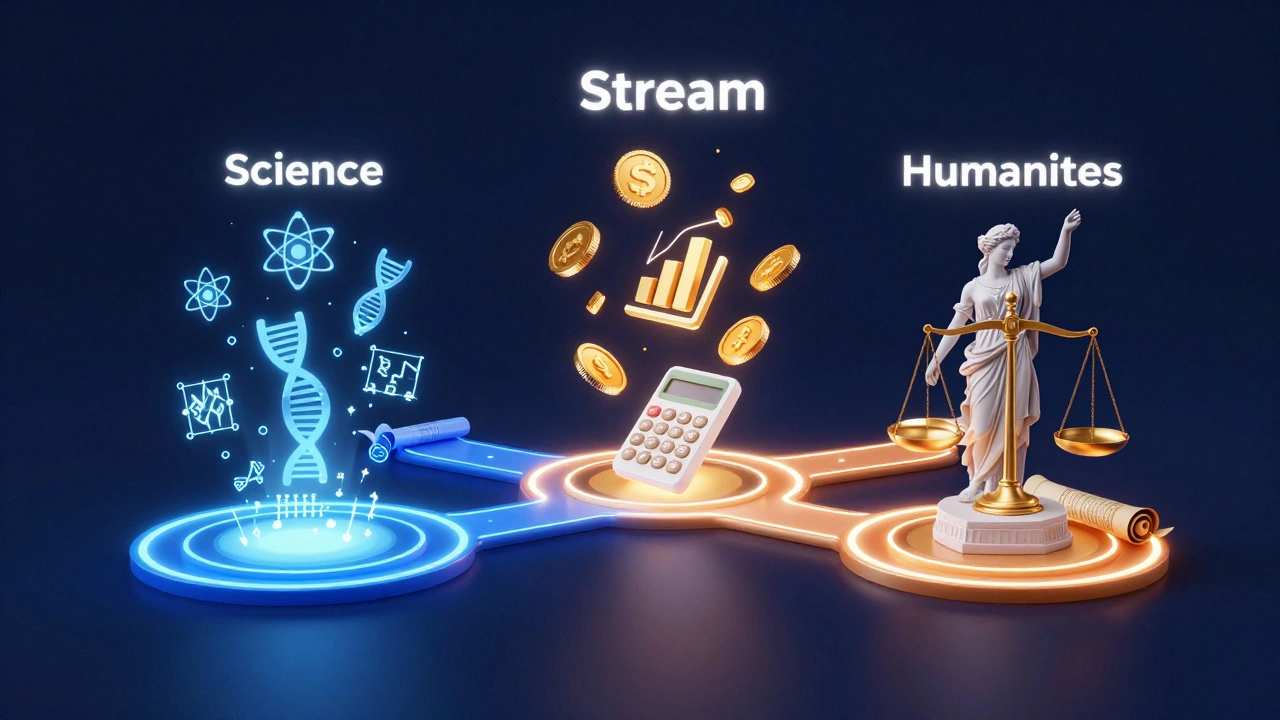
Science
Medicine, Engineering, Research & Technology
High RigorCommerce
Business, Finance, Accounting & Economics
ProfessionalHumanities
Law, Civil Services, Arts & Psychology
Broad ScopeStream Details
Core Subjects:
- -
Competitive Edge:
The Big Picture: Why CBSE is the Go-To Choice
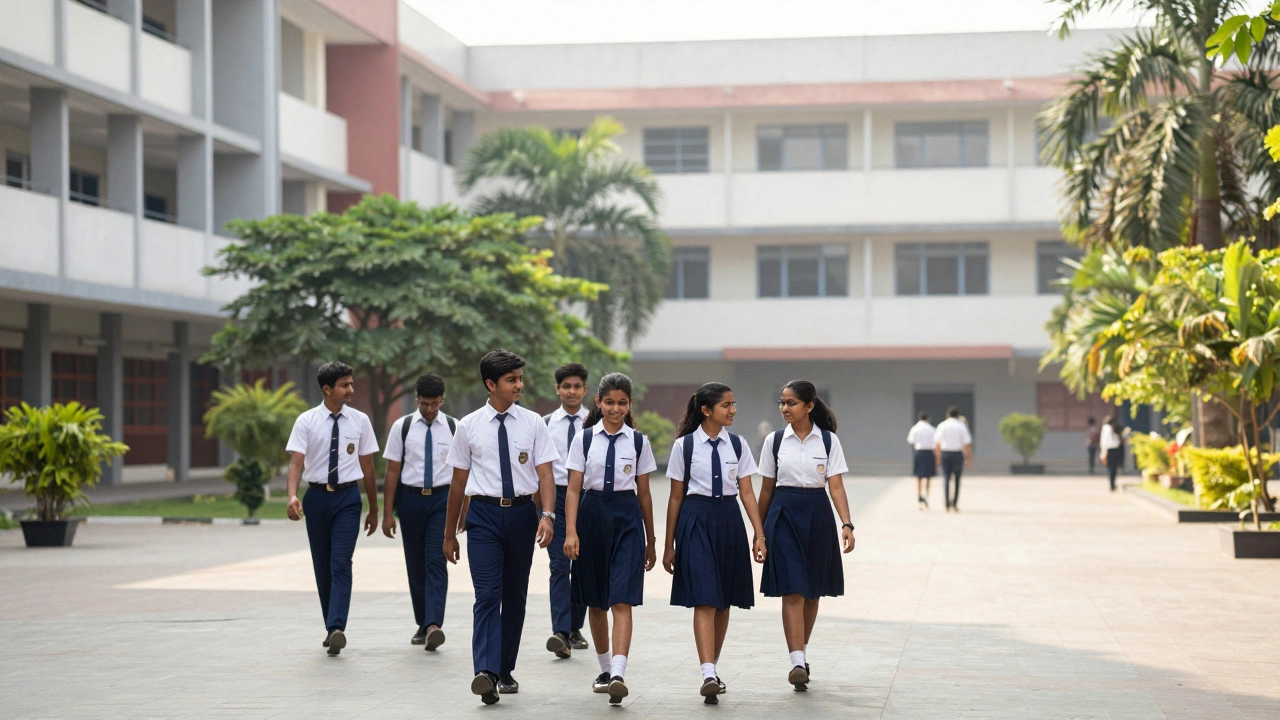
If you walk into any residential colony in Delhi, Bangalore, or Mumbai, you'll likely find a school following the CBSE curriculum. The main reason it's so popular is its universality. Because it's a national board, the syllabus is the same regardless of whether you're in Kerala or Himachal Pradesh. Imagine a family moving from Chennai to Chandigarh; if the kids are in a CBSE school, they don't have to worry about a massive gap in their learning or a completely different set of textbooks. It's a seamless transition.
Beyond the logistics, there's a heavy emphasis on competitive edge. Most of the big entrance exams in India, like the JEE (Joint Entrance Examination) for engineering and NEET (National Eligibility cum Entrance Test) for medical school, are based on the NCERT textbooks used by CBSE schools. If a student spends ten years studying these books, they aren't starting from scratch when they hit grade 11. They've already built the foundation required for these high-stakes tests.
Breaking Down the CBSE Framework
To understand why this system works, you have to look at the NCERT (National Council of Educational Research and Training). This is the body that actually writes the textbooks. The CBSE is the board that conducts the exams and sets the rules, while NCERT provides the content. This partnership ensures that a student in a small town gets the same quality of academic material as a student in an elite private school in a metro city.
The system is generally split into two major phases: the Secondary stage (Classes 9 and 10) and the Senior Secondary stage (Classes 11 and 12). In the 10th grade, students take the Board Exams, which are a huge deal in Indian culture. It's often the first time a student is tested on a national scale, and the results can influence which "stream" they choose for the next two years.
Choosing Your Path: The Stream System
Once a student clears the 10th grade, they don't just stay in "school"-they pick a specialization. This is where the popularity of CBSE really shows, as it offers a structured way to pivot into professional careers. You'll usually see three main paths:
- Science: This is the most sought-after stream, focusing on Physics, Chemistry, and Biology (for medical aspirants) or Mathematics (for engineering aspirants). It's rigorous and high-pressure, but it opens the door to the most prestigious colleges.
- Commerce: Ideal for those looking toward Chartered Accountancy, business management, or economics. It covers Accountancy, Business Studies, and Economics.
- Humanities: Often unfairly viewed as the "easier" path, this stream is actually booming. It covers Psychology, Sociology, Political Science, and History, catering to those aiming for law, civil services, or design.
| Feature | CBSE (Central Board) | ICSE (Council for Indian School Certificate Exams) |
|---|---|---|
| Focus | Science & Math (Competitive Exams) | Language, Arts & Comprehensive Literature |
| Syllabus | More concise, based on NCERT | Extensive and detailed |
| Difficulty | Moderate (Structured) | Higher (More volume of content) |
| Popularity | Extremely High (National) | High (Urban/Elite) |
The Reality of the Classroom Experience
While the board is popular, the actual experience varies wildly depending on whether you're in a government school or a private "international" school. In many private CBSE schools, you'll see a blend of the national curriculum with a bit of extra flair-like adding more sports, coding classes, or foreign languages. However, the core remains the same: the goal is to pass the board exams with a high percentage.
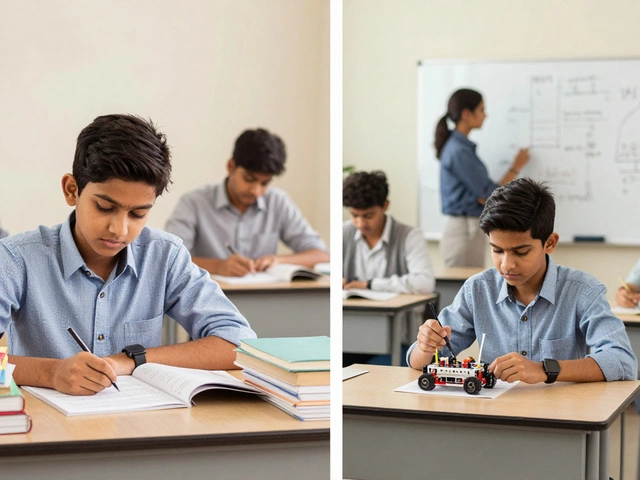
One common critique is the "rote learning" culture. Because the exams are standardized, some teachers encourage students to memorize answers word-for-word from the textbook. However, in recent years, there's been a shift. The board has introduced "Competency-Based Education," which aims to move away from memorization and toward actual understanding. They're adding more case-study questions and real-world problems to the papers to stop kids from just regurgitating text.
Is it the Right Choice for Every Student?
It depends on the end goal. If you are aiming for an Indian university, specifically an IIT or an AIIMS, CBSE is almost a requirement for sanity. Trying to study the ICSE syllabus while coaching for the JEE is like trying to run two different marathons at once; it's exhausting and often redundant.
On the other hand, if a student is definitely planning to move abroad for their entire higher education, a board like the IB (International Baccalaureate) or Cambridge might be more appealing. These offer more flexibility and a more "global" approach to learning. But even then, many students start with CBSE and switch later because the foundation in Math and Science provided by the Indian board is incredibly strong.
Navigating the School Search in India
If you're looking for a popular school, don't just look at the rankings. Look at the student-to-teacher ratio and the "extra-curricular" reality. Some schools claim to have a great sports program, but if the only field is a concrete slab, that's a red flag. Also, check the school's history with the board exams. Do they have a high pass percentage? More importantly, do they put too much pressure on the kids, or is there a balanced environment?
Another pro tip: look at the faculty. In the most popular schools, teachers are often experts in the CBSE pattern. They know exactly which chapters are "hot topics" for the exams and how to frame answers to get maximum marks. This strategic knowledge is a huge part of the appeal for parents.
Is CBSE easier than ICSE?
Generally, yes. The CBSE syllabus is more streamlined and focuses more on the core concepts required for national competitive exams. ICSE has a much broader and more detailed syllabus, especially in English and Humanities, which makes the workload heavier.
Which board is best for engineering aspirants?
CBSE is widely considered the best choice because the JEE (Joint Entrance Examination) syllabus is almost identical to the NCERT books used by CBSE schools. This allows students to prepare for school and competitive exams simultaneously.
Can a student switch from a state board to CBSE?
Yes, it's possible and quite common. However, the transition can be tricky depending on the grade level. Switching in 9th or 11th grade is more challenging because those are the starting years for the board-specific cycles. It's best to do it in primary or middle school.
What is the role of NCERT in CBSE schools?
NCERT is the organization that develops the curriculum and textbooks. While CBSE is the board that administers exams and certifies students, the actual content being taught in almost every CBSE school comes from NCERT books.
Does CBSE recognize vocational training?
Yes, CBSE has been integrating vocational subjects into the mainstream curriculum to provide students with skill-based learning alongside their academic studies, helping them become job-ready after the 10th or 12th grade.
Next Steps for Parents and Students
If you've decided that a CBSE school is the right move, start by listing the schools in your area that have a proven track record of board results. Visit the campus during school hours to see if the students look stressed or engaged. If you're already in a CBSE school and moving into 11th grade, sit down with a counselor to decide between Science, Commerce, and Humanities based on your interests and the entrance exams you plan to take.
For those struggling with the workload, focus on mastering the NCERT textbooks first. Don't get distracted by too many reference books until you've nailed the core concepts. That's the secret to succeeding in the most popular school system in India.