Recent POST




eLearning Platform Finder
Take this 4-question quiz to find which eLearning platform matches your needs best. Answer honestly for the most accurate recommendation.
What's your primary learning goal?
How much are you willing to pay?
How much time do you have?
How do you prefer to learn?
Your Recommended Platform
Coursera
Your goal: Degree or professional certification
Recommended for: Career advancement with university-backed credentials
Starting at $39/month for certificates, Coursera offers courses from top universities like Stanford and Yale. It's ideal for structured learning with graded assignments and professional credentials.
When you’re looking to learn something new-whether it’s coding, public speaking, or advanced calculus-you don’t need to sit in a classroom anymore. eLearning platforms have made it possible to access high-quality education from anywhere, at any time. But with so many out there, which ones actually work? And what’s the difference between them?
What exactly is an eLearning platform?
An eLearning platform is a digital system designed to deliver, manage, and track educational content. Think of it as a virtual classroom with video lessons, quizzes, discussion boards, progress tracking, and sometimes even live instructor sessions. These platforms serve students, professionals, and even corporations looking to upskill.
They’re not just websites with videos. A good platform includes structure: lessons built in order, assessments to test understanding, certificates to prove completion, and tools to keep you engaged. Some are free. Others cost hundreds of dollars a year. But they all share one goal: making learning accessible.
Coursera: Learn from top universities
Coursera is one of the most recognizable names in online education. It partners with schools like Stanford, Yale, and the University of London to offer courses, specializations, and even full online degrees. If you want to learn machine learning from a professor at Stanford or earn a project management certificate from Google, Coursera is where you go.
It’s not free-you’ll pay for certificates and graded assignments-but many courses let you audit them for free. That means you can watch all the videos and read the materials without submitting assignments or getting a credential. The platform also offers financial aid if you can’t afford the fees.
Coursera works well for people who want structured, university-backed learning. It’s less about quick tips and more about deep, long-term skill building.
Udemy: Learn anything, from anywhere
If Coursera feels like a university, Udemy feels like a massive online marketplace. Anyone can create a course here-whether they’re a professional web developer, a yoga instructor, or a retired accountant who knows Excel inside out.
This means the quality varies. Some courses are polished, well-edited, and taught by experts. Others are rushed, poorly recorded, and full of outdated info. That’s why reading reviews and checking instructor credentials is critical.
What makes Udemy stand out is price. Courses often go on sale for under $15. You can pick up a course on Excel macros, Python automation, or even how to start a podcast for less than the cost of a coffee. With over 200,000 courses, there’s literally something for everyone.
edX: Nonprofit learning with real credentials
edX was founded by Harvard and MIT in 2012. It’s one of the few major platforms built on a nonprofit model. That means its focus is on education, not profit.
Like Coursera, edX partners with top universities and offers degree programs, micro-masters, and professional certificates. But edX is more transparent about pricing. You can audit most courses for free. If you want a certificate, you pay only for that. No subscription traps.
It’s particularly strong in STEM fields-computer science, engineering, data science-and has some of the most rigorous assessments. If you’re serious about building a resume-worthy credential without enrolling in a full degree, edX is a smart pick.
LinkedIn Learning: Learn for your career
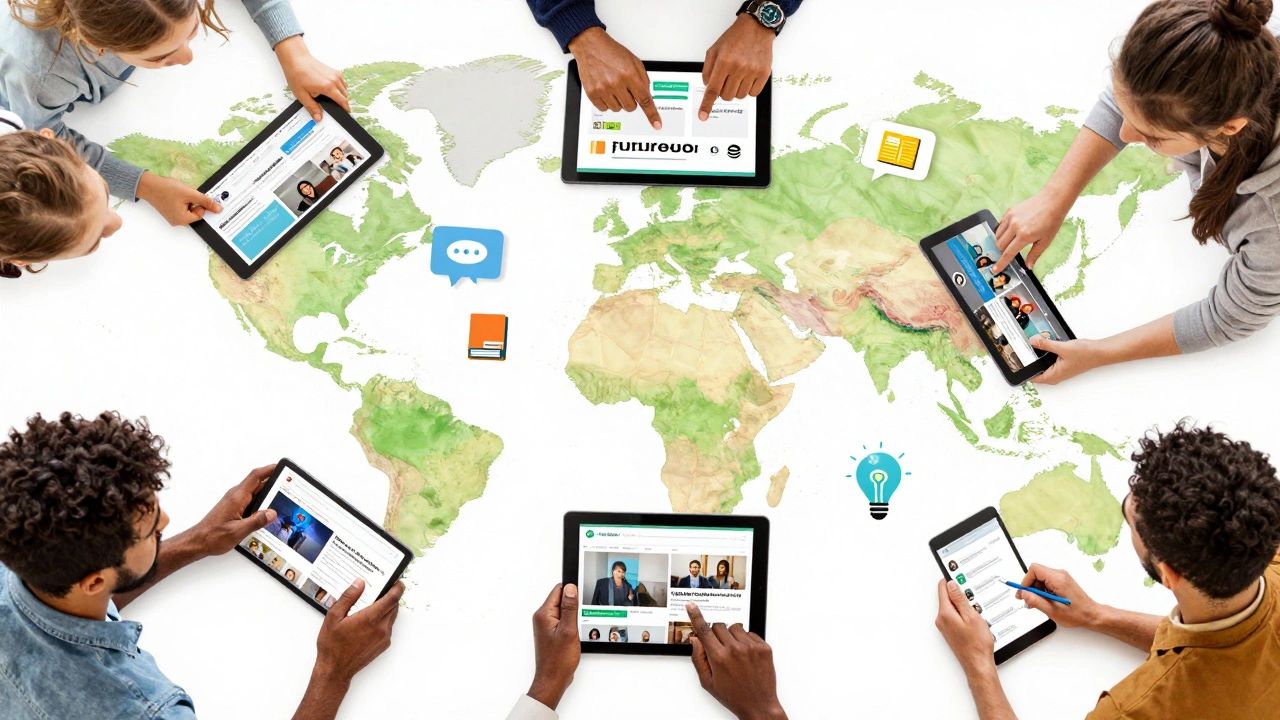
LinkedIn Learning (formerly Lynda.com) is built for professionals. It doesn’t try to replace a university. Instead, it helps you get better at your job.
Its courses are short, practical, and focused on workplace skills: Excel pivot tables, PowerPoint design, leadership communication, project management tools, even how to use AI in marketing.
The big advantage? Your learning history shows up on your LinkedIn profile. When you complete a course, it adds a badge to your profile. Recruiters see it. That’s powerful.
It’s subscription-based, usually around $30-$40 a month. But if you’re already using LinkedIn for job hunting or networking, it’s one of the easiest ways to add value to your profile without spending hours.
Khan Academy: Free, for everyone
Khan Academy is the outlier. It’s completely free. No ads. No subscriptions. No paywalls. It’s funded by donations and grants.
It started with math tutorials for a student who couldn’t afford tutoring. Now it covers everything from kindergarten arithmetic to college-level calculus, physics, economics, and computer programming. It’s used by millions of students worldwide, including schools in rural areas with no access to qualified teachers.
The interface is simple. Lessons are broken into 5-15 minute videos, followed by practice exercises. You earn points and badges as you progress. It’s not flashy, but it’s incredibly effective.
If you’re a student, a parent helping a child, or someone trying to rebuild foundational skills, Khan Academy is one of the best free resources on the planet.
Pluralsight: For tech professionals
If you work in software, IT, or cybersecurity, Pluralsight is probably already on your radar. It’s built for tech professionals who need to stay current.
It doesn’t offer degrees or general education. It dives deep into programming languages, cloud platforms like AWS and Azure, DevOps tools, network security, and data engineering. Courses are taught by industry practitioners, not academics.
It’s subscription-only, with plans starting at around $30/month. But if you’re in tech, the ROI is clear. Many companies pay for their employees’ access because it’s so aligned with real-world job needs.
One standout feature: skill assessments. Before you start a course, it tests your current level. Then it recommends exactly what you need to learn next. No guesswork.
FutureLearn: Global and social learning
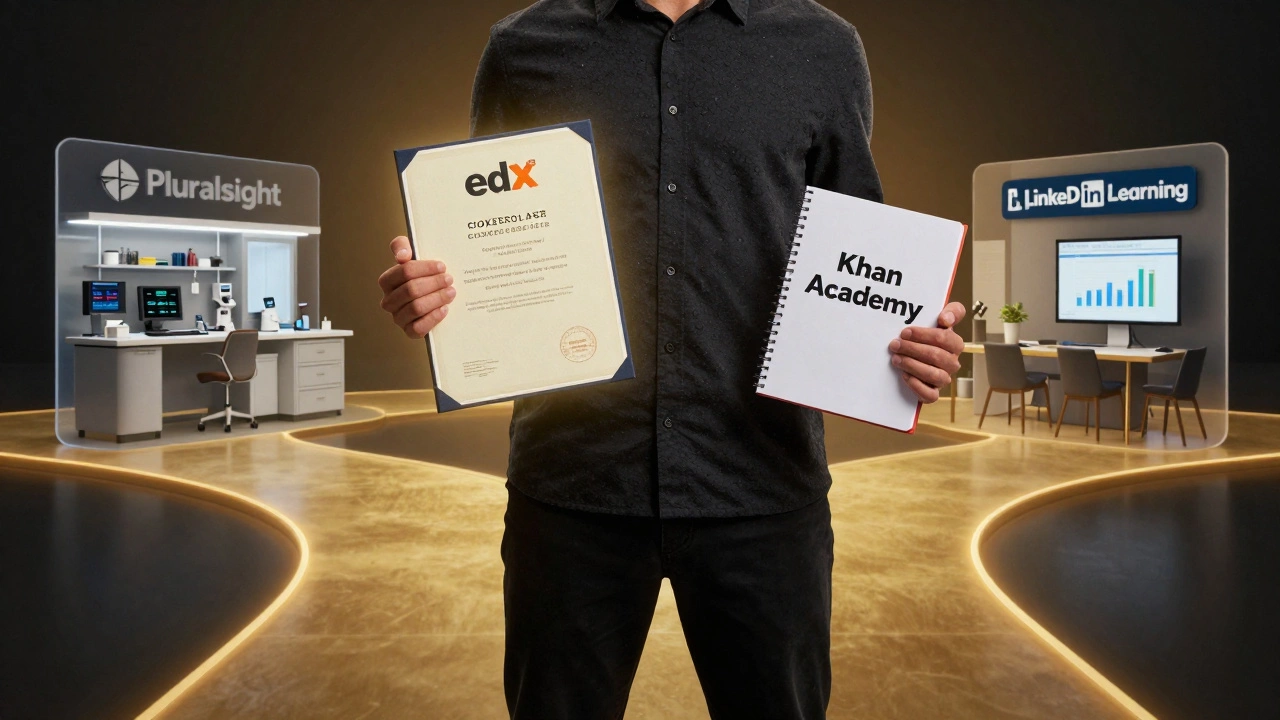
FutureLearn is based in the UK and leans into social learning. Instead of just watching videos alone, you’re encouraged to discuss topics with other learners from around the world.
It partners with universities like the University of Edinburgh and the British Council. Courses often focus on humanities, health, education, and business-not just tech.
It’s also one of the few platforms that offers short courses (1-3 weeks) alongside longer programs. Perfect if you’re short on time but want to explore a new subject without a big commitment.
Most courses are free to audit. Pay only if you want a certificate or access to graded assignments.
MasterClass: Learn from legends
MasterClass isn’t your typical learning platform. It’s more like watching a documentary-but you’re the student.
Here, you learn from celebrities and experts: Gordon Ramsay teaches cooking, Serena Williams teaches tennis, Neil Gaiman teaches storytelling, and Hans Zimmer teaches film scoring.
The production value is insane. Each class is filmed like a Netflix documentary, with cinematic shots, behind-the-scenes footage, and personal stories. It’s not about getting certified. It’s about inspiration.
It costs $180/year for unlimited access. If you’re looking to be motivated, not just trained, this is the place.
Choosing the right platform
So how do you pick?
- Want a degree? Go with Coursera or edX.
- Need to boost your resume? LinkedIn Learning is your best bet.
- Looking for free, foundational knowledge? Khan Academy is unbeatable.
- Working in tech? Pluralsight delivers real skills.
- Want quick, cheap skills? Udemy has thousands of $10 courses.
- Want to be inspired? MasterClass turns learning into entertainment.
Most people don’t stick to one. They mix and match. Use Khan Academy to brush up on math. Take a Udemy course on Excel. Enroll in a Coursera specialization to switch careers. That’s the power of eLearning today.
What’s missing?
There are hundreds more platforms-Skillshare for creative skills, Duolingo for languages, Codecademy for coding, Brilliant for math and science. But the ones above cover the most common needs: academic, professional, technical, and personal growth.
The real secret? It’s not about the platform. It’s about consistency. A $20 course won’t help if you never finish it. A free course won’t change your life if you skip the exercises.
Choose one that fits your goal. Stick with it. That’s how real learning happens.
Are eLearning platforms worth the money?
It depends on what you want. If you’re looking for a certificate to add to your LinkedIn profile or resume, then yes-paid platforms like Coursera, edX, and LinkedIn Learning offer verified credentials that employers recognize. If you just want to learn something new for fun, free platforms like Khan Academy and YouTube offer excellent content. The key is matching the platform to your goal. Don’t pay for a degree if you just want to learn Excel. And don’t waste time on free courses if you need official certification.
Can I get a job after taking an online course?
Absolutely. Many people have switched careers using online courses. For example, someone working in retail might take a Coursera specialization in data analysis, build a portfolio with real projects, and land a job as a junior data analyst. Platforms like LinkedIn Learning even show your completed courses on your profile, which recruiters see. But courses alone aren’t enough. You need to apply what you learn-build projects, contribute to open-source work, or volunteer. Skills + proof = job offers.
Do employers take online certificates seriously?
Yes, but not all certificates are equal. Certificates from universities (Coursera, edX) or industry leaders (Google, IBM on Coursera) carry real weight. A certificate from a random Udemy instructor? Less so. Employers care more about what you learned and what you can do than the platform name. If you can show a project you built, a problem you solved, or skills you’ve applied, that’s more convincing than any certificate.
What’s the best free eLearning platform?
Khan Academy is the best overall for foundational learning-from math to history to computer science. For coding, freeCodeCamp offers hands-on projects and certifications. For languages, Duolingo and Memrise are top choices. And for professional skills, YouTube has thousands of high-quality tutorials from experts. The key is to use free resources strategically: combine video lessons with practice and real-world application.
How do I stay motivated on an eLearning platform?
Set small goals. Instead of saying, "I’ll finish this course," say, "I’ll watch one video and do one exercise today." Use the platform’s progress tracker. Join a study group or forum. Tell a friend what you’re learning. Schedule learning time like an appointment. And reward yourself-after completing a module, treat yourself to coffee or a walk. Motivation fades. Systems keep you going.