Recent POST





IIT JEE Success Rate Calculator
This calculator uses official IIT JEE statistics to show how many students make it through each stage of the exam. The numbers are based on actual data from recent years.
Remember: Only 0.6% of all candidates ultimately get into IITs. This tool helps visualize the extreme competition in the Indian engineering entrance system.
Every year, over 1.5 million students sit for the IIT JEE in India. Only about 10,000 of them get into the Indian Institutes of Technology. That’s a 0.6% success rate. For context, you’re more likely to be struck by lightning than to clear this exam. But it’s not just the odds that make it brutal-it’s the years of grinding, the sleepless nights, the family expectations, and the fact that your entire future hinges on a single three-hour test.
Why IIT JEE Is the Toughest Exam on Earth
The IIT JEE (Joint Entrance Examination) isn’t just hard-it’s designed to break people. It’s not enough to know the material. You have to master it at lightning speed, under extreme pressure, with zero room for error. The exam tests three subjects: Physics, Chemistry, and Mathematics. But it doesn’t ask for textbook answers. It asks for creative problem-solving under time constraints that feel like torture.
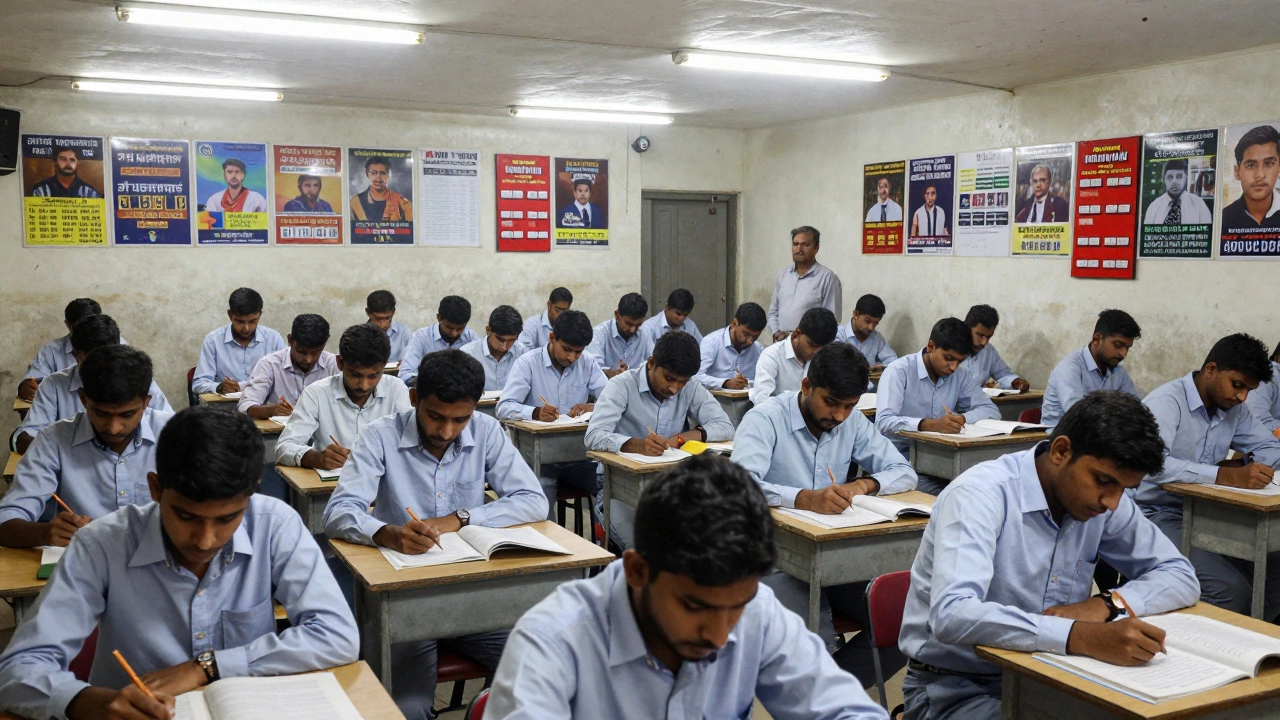
Students typically start preparing in Class 9 or 10. By Class 12, they’re spending 12 to 14 hours a day studying. Many drop out of school entirely to join coaching centers in Kota, Rajasthan-a city built around exam prep. Picture a 16-year-old waking up at 5 a.m., studying until midnight, eating meals at their desk, and skipping birthdays and holidays. They’re not just studying for a test. They’re training like Olympic athletes, except their medal is admission to a top engineering school.
The exam has two parts: Main and Advanced. Clearing Main gets you a rank. Clearing Advanced gets you into IIT. Only 25% of those who take Main even qualify for Advanced. And once you’re in Advanced, you’re competing against the top 250,000 students in the country. The questions are engineered to be tricky. A single misread word, a decimal point off, and your answer is wrong. No partial credit. No second chances.
What Makes It Worse Than Other Exams?
People often mention the UPSC Civil Services Exam as one of the hardest. And yes, it’s long, complex, and requires deep knowledge of governance, history, and current affairs. But UPSC gives you a year to prepare. You can study at your own pace. You can retake it multiple times. IIT JEE doesn’t play nice. You get two shots: one in January, one in April. If you miss both, you’re out for the year. And if you’re 18 and you fail? The pressure to try again next year is crushing.
Compare that to the US SAT or the UK A-Levels. They’re stressful, sure. But they’re not life-or-death. You can apply to dozens of universities. You can retake them. You can switch majors. In India, for many families, IIT isn’t just a school-it’s the only acceptable path to success. If you don’t get in, you’re told you’ve wasted your potential. That kind of stigma doesn’t exist in most other countries.
Medical entrance exams like NEET are just as intense. Over 2 million students take it every year for fewer than 100,000 seats. But NEET is mostly memorization. IIT JEE demands original thinking. You can’t just cram formulas. You have to understand how they interact, how they bend, how they break. One question might combine calculus, mechanics, and electromagnetism in a single problem. You need to spot the pattern before you even start writing.
The Human Cost
In 2023, over 40 students in India died by suicide during the IIT JEE preparation season. That’s not a statistic. That’s 40 families shattered. These aren’t kids who failed. These were top performers who felt they let everyone down. One 17-year-old left a note: “I tried. I gave everything. But it wasn’t enough.”
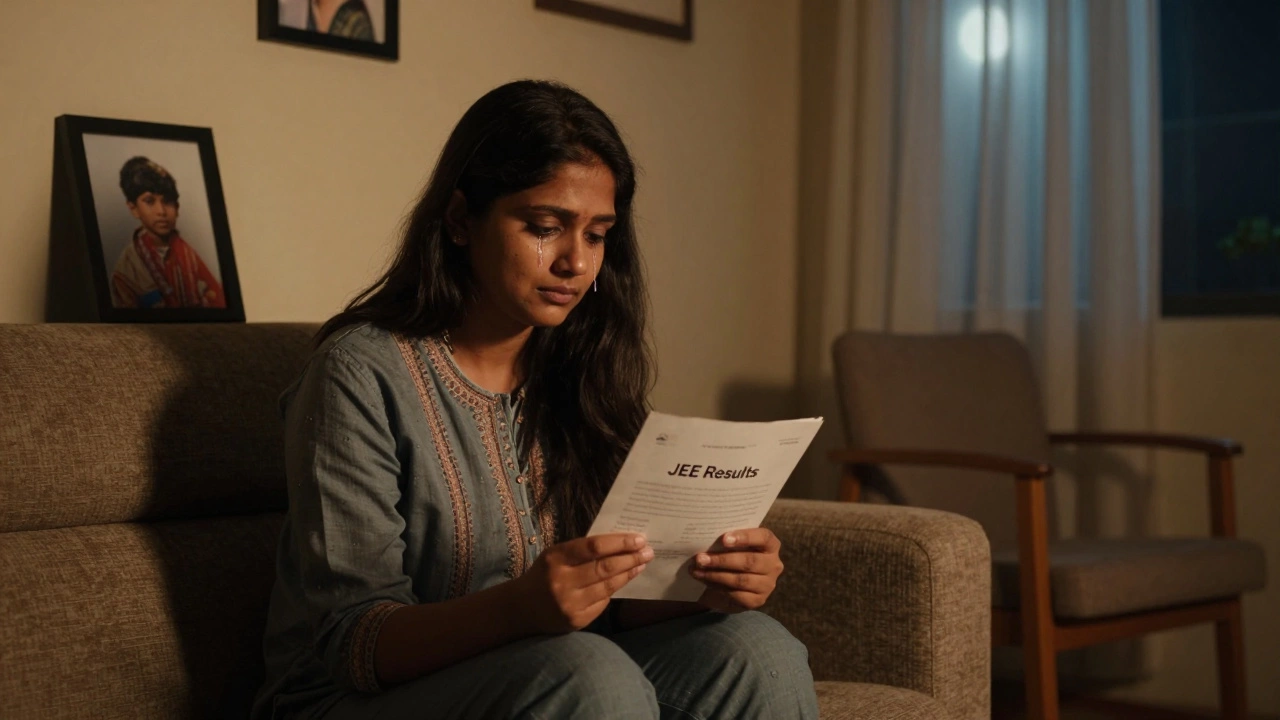
Parents invest everything-savings, homes, careers-to get their child into an IIT. Some families sell land. Others take loans. One father in Bihar sold his only cow to pay for coaching. A mother in Tamil Nadu worked three jobs for three years so her daughter could afford test series. When the results come out, the silence in some homes is louder than any scream.
And the system doesn’t help. Coaching centers sell fake “guaranteed success” packages. Tutors promise 99th percentile results. Students are told, “If you don’t crack JEE, you’re nothing.” No one talks about mental health. No one asks, “Are you okay?”
Who Actually Succeeds?
The students who make it aren’t necessarily the smartest. They’re the most consistent. They’re the ones who show up even when they’re exhausted. They’re the ones who review their mistakes instead of blaming the paper. They don’t memorize-they build intuition. They solve 100 problems a day, not because they have to, but because they’ve learned that each mistake teaches them something.
Many successful candidates say the real secret isn’t talent. It’s routine. Waking up at the same time. Eating the same breakfast. Studying in the same chair. Following the same schedule. It’s not about brilliance. It’s about endurance.
One IIT graduate from Delhi told me: “I didn’t study harder than others. I just never stopped. Even on Diwali, I opened my notebook for 45 minutes. That’s what kept me going.”
Is It Worth It?
Yes and no. If you get into an IIT, you’ll likely land a job paying ₹15-30 lakhs a year right out of college. Top companies like Google, Microsoft, and Amazon recruit directly. Many graduates move abroad. Some start billion-dollar startups.
But here’s the truth: most IIT graduates don’t become engineers. They become consultants. Or product managers. Or data scientists. The degree opens doors-but it doesn’t define who you are. And many who made it say they’d do it again… but only if the system changed. They want less pressure. Less stigma. More support.
What Can Be Done?
Some schools in Kerala and Karnataka are starting to reduce the pressure. They’ve banned coaching center ads near campuses. They’ve introduced counseling for students. Some parents are learning to say, “We love you no matter what.”
But real change needs to come from the top. The government needs to increase IIT seats. Coaching centers need to stop selling false hope. Schools need to teach resilience, not just equations.
Until then, the IIT JEE remains the most stressful exam in the world-not because it’s the hardest to pass, but because it asks teenagers to carry the weight of entire families, communities, and futures on their shoulders.
Is IIT JEE harder than UPSC?
IIT JEE is harder in terms of intensity and time pressure. UPSC is broader and longer, but you have a year to prepare and can retake it multiple times. IIT JEE gives you two chances a year, and failure feels like a personal collapse. The questions in JEE demand creative problem-solving under extreme time limits, while UPSC tests depth of knowledge and writing ability over months.
How many hours do IIT JEE toppers study daily?
Most top performers study between 10 and 14 hours a day during their final year. But it’s not just about hours-it’s about focus. They solve 80-100 problems daily, review mistakes every night, and take full mock tests every weekend. Quality beats quantity. One student who studied 8 focused hours a day with perfect revision outperformed others who studied 12 hours without reflection.
Can you crack IIT JEE without coaching?
Yes. Around 15-20% of top 100 rankers are self-studied. They use free YouTube channels like NPTEL and Unacademy, old IIT papers, and books like HC Verma and RD Sharma. The key is discipline. Without coaching, you must design your own schedule, track progress daily, and find peers to test with. Many self-studied students say coaching gave them structure-but not knowledge. That they built themselves.
What’s the success rate of IIT JEE?
For IIT JEE Advanced, the success rate is about 0.6%. In 2024, over 1.5 million students took JEE Main. About 250,000 qualified for Advanced. Of those, only 10,000 got into IITs. That’s roughly 1 in every 150 students who start the process. For context, Harvard’s acceptance rate is around 4%.
Are there alternatives to IIT JEE for engineering in India?
Yes. NITs and IIITs accept JEE Main scores. Many state universities like VIT, SRM, and Manipal have their own entrance exams. Private colleges like BITS Pilani use the BITSAT. And there are newer options like the Delhi Technological University entrance. While IITs are the most prestigious, many of these schools offer excellent education and placements. Some students who didn’t get into IITs ended up with better careers because they chose a school that matched their interests, not just its name.
Final Thought
The IIT JEE isn’t just an exam. It’s a mirror. It reflects a society that equates success with elite institutions. It shows how much we value performance over well-being. But change is possible. More students are speaking up. More parents are listening. More schools are offering mental health support. The exam will always be hard. But it doesn’t have to be soul-crushing.
If you’re preparing for it-take breaks. Talk to someone. Sleep. Eat. Walk outside. Your worth isn’t on that scorecard. And if you don’t make it? You’re not broken. You’re just one of the millions who dared to try.