Recent POST




Syllabus Difficulty Comparator
Comparison Analysis
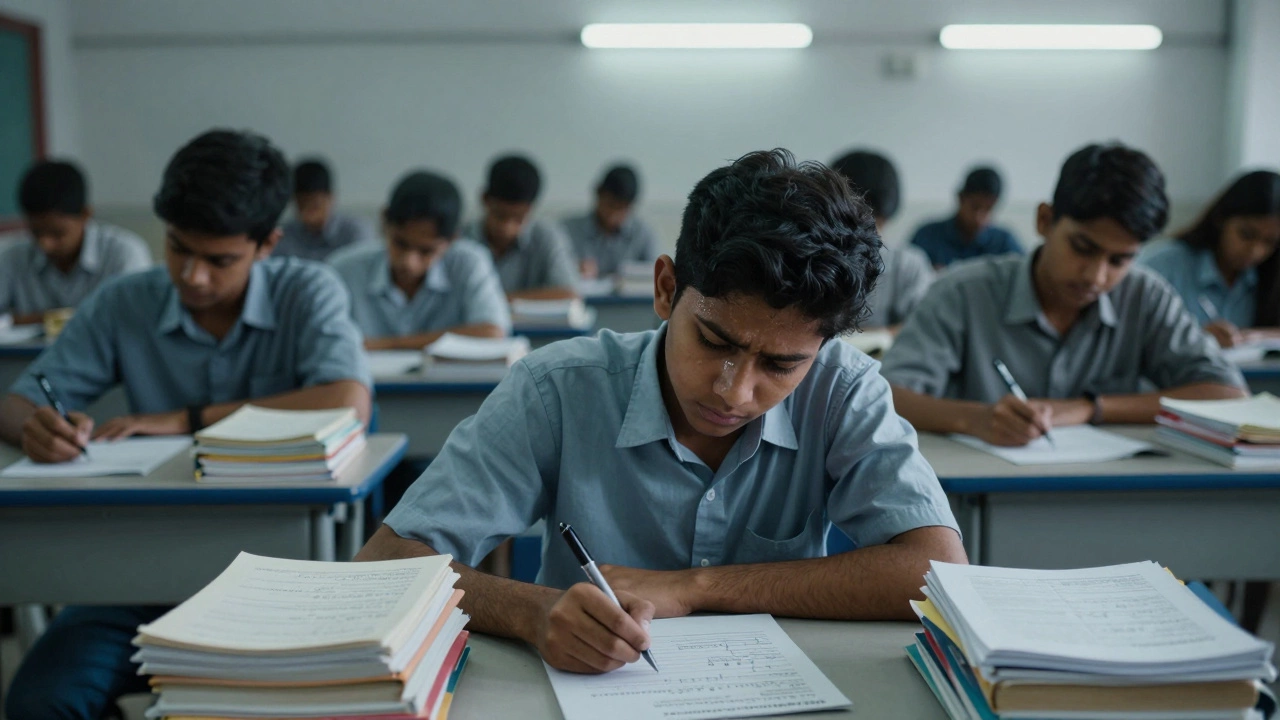
Imagine sitting for a math exam where one single question can determine whether you get into your dream university or have to retake the entire year. Now imagine doing that while thousands of other students are taking the same test at the exact same time, under strict surveillance, with no calculators allowed. This isn't a scene from a dystopian movie; it's a Tuesday afternoon for millions of students around the world.
The question of which school syllabus is the hardest doesn't have a simple answer because "hard" means different things to different people. For some, difficulty is about volume-how much you have to read. For others, it's about depth-how complex the concepts are. And for many, it's about pressure-the stakes involved in failing.
To figure out who holds the title for the toughest academic workload, we need to look at the big players: India's CBSE (Central Board of Secondary Education), the international heavyweight known as the International Baccalaureate, and the rigorous British system called A-Levels. Each has its own brand of pain, but they hurt in very different ways.
The CBSE Grind: Depth Over Breadth
If you ask any student from North India, the CBSE syllabus is often described as conceptually deep and highly competitive. The Central Board of Secondary Education serves over 10 million students across more than 35 countries. It’s not just a board; it’s a gateway.
Why do people call it hard? Because in India, your marks don’t just decide if you pass. They decide your future career path. Top engineering colleges like IITs require you to ace national-level entrance exams (JEE Advanced), which go far beyond the standard curriculum. But even before you reach those exams, the CBSE Class 12 board exams themselves are notoriously tough. The grading curve is steep. Getting an 'A1' grade usually requires near-perfect scores.
- Conceptual Rigor: Subjects like Physics, Chemistry, and Mathematics (PCM) demand strong foundational understanding. You can't memorize your way through a vector calculus problem.
- High Stakes: One bad day in the exam hall can drop your percentile significantly, affecting college admissions.
- Competition Density: You’re competing against some of the brightest minds in Asia. The sheer number of applicants creates a psychological pressure cooker.
However, critics argue that CBSE focuses heavily on rote learning in humanities subjects compared to science streams. Still, for STEM aspirants, the intensity is unmatched. If you love solving complex problems and thrive under pressure, CBSE might feel challenging but rewarding. If you prefer creativity and broad exploration, it can feel suffocating.
The International Baccalaureate: The Marathon Runner
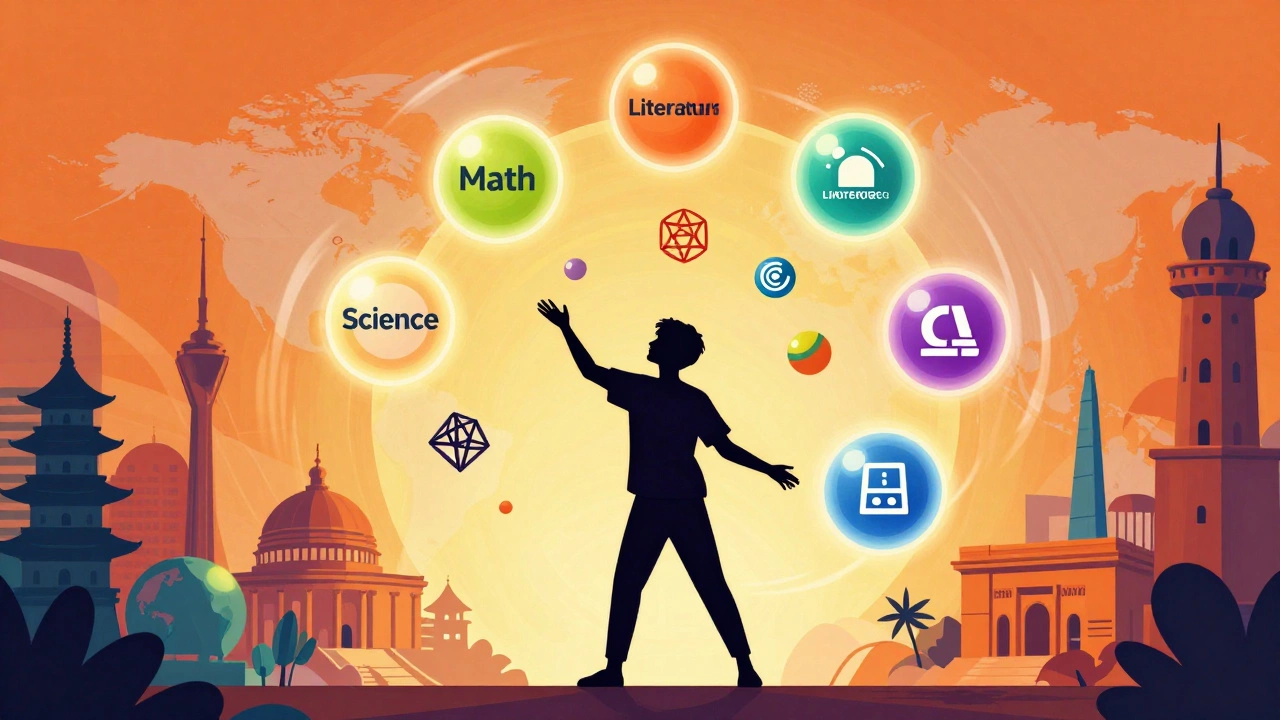
Now let’s shift gears to the International Baccalaureate Diploma Programme (IBDP), a globally recognized pre-university curriculum designed to develop well-rounded individuals. Unlike CBSE, which drills down into specific subjects, the IB throws everything at you. Science, math, literature, history, a second language, and a creative project-all simultaneously.
The IB is famous for its breadth. You must take six subject groups plus three core components: Theory of Knowledge (TOK), Extended Essay (EE), and Creativity, Activity, Service (CAS). That’s right-you have to write a 4,000-word research paper (the EE) while balancing five other major courses and participating in extracurricular activities.
| Feature | CBSE (India) | IB Diploma |
|---|---|---|
| Subject Focus | Deep specialization (especially in Sciences) | Broad coverage across all disciplines |
| Assessment Style | Primarily final written exams | Mix of internal assessments, oral presentations, and finals |
| Workload Type | Intense study hours, less homework variety | Constant output required (essays, labs, projects) |
| Global Recognition | Strong in Asia, growing elsewhere | Universally accepted by top universities worldwide |
Many students say the IB feels harder because there’s never a break. Even when you finish one assignment, another looms ahead. The TOK essay alone confuses many freshmen-it asks philosophical questions like “How do we know what we know?” There’s no right answer, only how well you argue your point.
But here’s the catch: the IB rewards consistency. You don’t need perfect scores everywhere. A balanced performance across all areas gets you a diploma. In contrast, CBSE punishes weakness in key subjects harshly. So while IB spreads the pain evenly, CBSE concentrates it.
A-Levels: Mastering Fewer Subjects
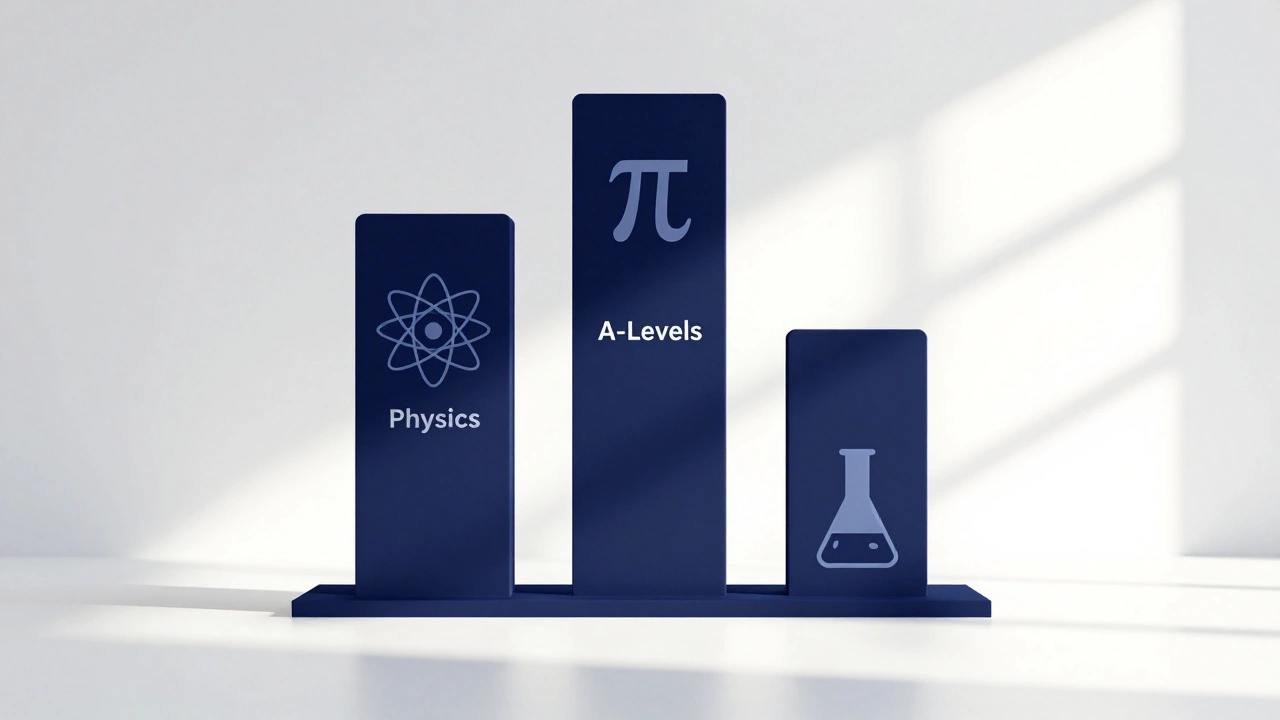
Let’s not forget the UK’s GCE Advanced Level (A-Level) qualifications, subject-based credentials typically taken after GCSEs, focusing on 3-4 subjects in great depth. A-Levels offer a different kind of challenge: extreme specialization.
Instead of juggling six subjects, you pick three or four and dive deep. Want to become a physicist? Take Physics, Math, Further Math, and maybe Chemistry. No need to worry about French poetry or art history unless you want to.
This sounds easier, right? Wrong. Because going deeper means facing higher-order thinking questions. University professors often say A-Level students arrive better prepared in their chosen fields than IB or CBSE peers. Why? Because they’ve spent two years mastering fewer topics instead of skimming many.
Also, linear assessment matters. Since 2017, most A-Levels are assessed entirely at the end of Year 13. No modular tests along the way. One shot. Fail, and you wait months to resit. That adds mental strain.
Yet, flexibility helps. Students struggling in one area can drop it without ruining their whole profile. With CBSE or IB, dropping a core subject isn’t really an option.
What Makes a Syllabus "Hard"?
We keep talking about difficulty, but let’s define it properly. Difficulty comes from several sources:
- Cognitive Load: How abstract or complex are the ideas? (e.g., quantum mechanics vs. basic algebra)
- Volume: How much material must be covered? (e.g., reading 10 novels vs. memorizing formulas)
- Time Pressure: Are deadlines tight? Is cramming possible?
- Consequences: What happens if you fail? Career impact? Social stigma?
- Support Systems: Do teachers guide you closely, or are you left alone?
When we apply this framework, each system wins in certain categories:
- Highest Cognitive Load: CBSE (Science Stream) & A-Levels (Math/Physics)
- Greatest Volume: IB Diploma
- Most Time Pressure: CBSE Board Exams + JEE Prep Cycle
- Highest Consequence: CBSE (due to limited elite seats)
- Least Support Structure: Varies by school, but generally lower in public CBSE schools due to large class sizes
So yes, CBSE ranks highest overall-not because it’s objectively superior, but because it combines high cognitive load with massive consequences and intense competition. Add cultural expectations from families expecting medical or engineering careers, and you get a recipe for stress.
Regional Variations Within Systems
It’s important to note that not every CBSE school is equal. Private institutions in Delhi or Mumbai may provide tutors, small classes, and personalized coaching. Rural CBSE schools might struggle with resources. Same goes for IB-some campuses hire veteran educators; others throw new hires into the deep end.
In New Zealand, where I live, our NCEA system emphasizes continuous assessment. Students build portfolios throughout the year. It reduces panic before finals but increases daily responsibility. Some find it liberating; others feel overwhelmed by constant evaluation.
Meanwhile, American AP courses mimic college-level work but allow mixing and matching. Take Calculus BC and skip Biology if you hate it. Less structured, more freedom-but also less coherence.
Real Talk: Which Should You Choose?
You’re probably asking yourself: “Which one should I pick?” Here’s the truth-it depends on your goals.
- If you aim for Indian premier institutes (IITs, AIIMS, DU Law): Stick with CBSE. Its alignment with entrance exams gives you an edge.
- If you plan to study abroad in Europe, Canada, or Australia: IB opens doors wider due to global recognition.
- If you already know your field (engineering, medicine, economics): A-Levels let you specialize early and impress admissions officers with focused expertise.
Don’t choose based on reputation alone. Talk to current students. Ask them about sleep deprivation, burnout rates, and teacher availability. Real experience beats marketing brochures every time.
Final Thoughts: Hard Isn’t Always Better
Here’s something nobody wants to admit: the hardest syllabus isn’t necessarily the best one. Success in life rarely correlates directly with how painful high school was. Many brilliant engineers came from vocational tracks. Many successful entrepreneurs dropped out of traditional paths altogether.
What matters more than difficulty is fit. Does the system match your learning style? Does it prepare you for your next step? Can you sustain motivation without breaking down?
For now, if forced to name the hardest syllabus in the world, I’d point to CBSE-for its blend of conceptual depth, societal pressure, and life-altering consequences. But remember: hardness is subjective. Your journey matters more than labels.
Is CBSE harder than IB?
Yes, in terms of depth and consequence. CBSE demands mastery of fewer subjects but expects perfection, especially in sciences. IB requires broader knowledge across six subjects plus core projects, making it mentally exhausting but less punitive per subject.
Which syllabus is best for studying abroad?
The International Baccalaureate (IB) is widely recognized globally and preferred by universities in the US, UK, Canada, and Europe. However, strong CBSE results combined with SAT/ACT scores also open many doors.
Can I switch from CBSE to IB midway?
Technically yes, but practically difficult. IB has unique requirements like TOK and CAS that aren’t part of CBSE. Switching late means catching up on missing components, which can overwhelm students.
Are A-Levels easier than CBSE?
Not necessarily. A-Levels go deeper in fewer subjects, requiring advanced analytical skills. CBSE covers more ground but sometimes lacks nuance. Both are challenging-they just challenge differently.
Does CBSE help with JEE preparation?
Absolutely. CBSE aligns closely with JEE Main syllabus, giving students a head start. Most top rankers follow CBSE or similar state boards supplemented by dedicated coaching.