Recent POST






Coding Language Finder
Discover which programming language you should learn based on your current role or career goals. Select your job field and primary task to get personalized recommendations.
Recommended Language:
Learn Python to automate repetitive tasks like cleaning spreadsheets or generating reports. This language is ideal because it's beginner-friendly and widely used across many industries.
"As a digital marketer, I used Python to automate email campaigns and saved 10+ hours weekly."
Think coding is just for software engineers? That’s a myth. Coding isn’t some secret language only geeks use behind closed doors. It’s everywhere - in hospitals, banks, museums, farms, even in your local bakery’s inventory system. If a job involves data, automation, or digital tools, there’s a good chance someone had to write code to make it work.
Software Developers and Engineers
This is the obvious one. Software developers build apps, websites, and systems. They write code in languages like Python, JavaScript, Java, or C#. But even here, roles vary. Frontend developers focus on what users see - buttons, layouts, animations. Backend developers handle servers, databases, and logic. Full-stack developers do both. Mobile developers build apps for iOS and Android. And then there are DevOps engineers who automate how code gets deployed. All of them live in code.
Data Analysts and Scientists
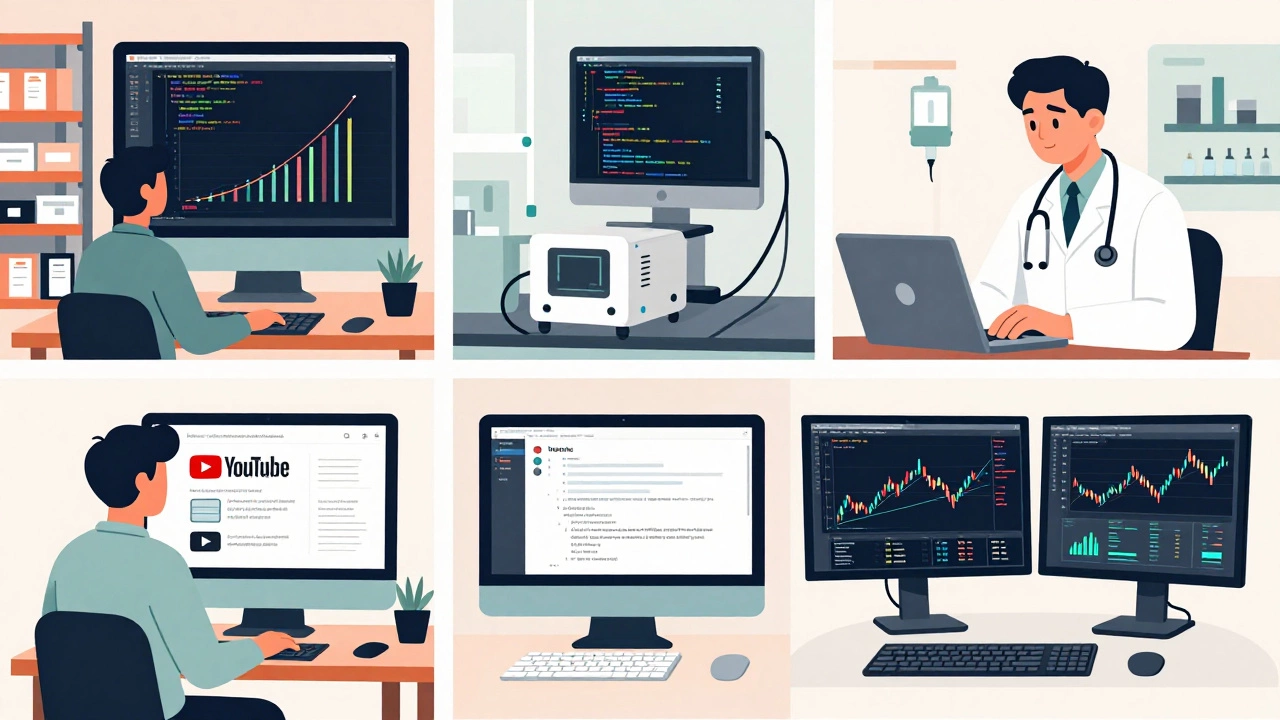
Data analysts don’t just make charts in Excel. They pull data from databases, clean messy spreadsheets, and run statistical models. That’s where Python and R come in. A data analyst at a retail company might use Python to track which products sell best during holidays. A data scientist might build machine learning models to predict customer churn. SQL is their daily driver for pulling data. You don’t need a PhD to do this - just enough coding to automate the boring stuff.
Digital Marketers
Yes, marketers code. Not to build apps, but to make campaigns smarter. They use JavaScript to track clicks on ads. They write Python scripts to automate email lists. They tweak HTML and CSS to fix landing pages that aren’t converting. Google Tag Manager and Meta Pixel? Those are code snippets they paste into websites. A marketer who can tweak a tracking pixel or write a simple automation script stands out. They don’t need to be engineers - but they do need to understand how code works.
Financial Analysts and Fintech Roles
Banks and investment firms don’t rely on spreadsheets alone anymore. Traders use Python to backtest trading strategies. Risk analysts write scripts to flag unusual transactions. Fintech companies build apps for peer-to-peer lending, crypto wallets, or mobile payments. Even accountants use automation tools like Excel macros or Python scripts to reconcile thousands of transactions overnight. At a hedge fund in Wellington, a junior analyst might spend half their day writing code to pull stock data instead of manually copying numbers.
Healthcare Professionals
Hospitals run on software. Electronic health records, patient scheduling, lab result systems - all coded. Biomedical engineers design medical devices and write firmware for them. Researchers analyzing genetic data use Python or R to find patterns in DNA sequences. Even nurses use apps that track patient vitals - those apps were built by someone who wrote code. In New Zealand, public health agencies use coded systems to track disease outbreaks. If you work in healthcare today, you’re likely interacting with code more than you realize.
Graphic Designers and UI/UX Designers
Designers used to hand off files to developers and hope for the best. Now, many learn basic HTML and CSS to see how their designs translate to screens. Tools like Figma let designers export code snippets. Some even prototype interactive interfaces using JavaScript. A UI designer who can explain why a button’s padding breaks on mobile isn’t just creative - they’re technical. It’s not about becoming a full developer. It’s about speaking the same language.
Scientists and Researchers
From climate scientists modeling weather patterns to astrophysicists analyzing telescope data, coding is a core tool. Python and MATLAB are standard in labs. A biologist might use code to track gene expression across thousands of samples. A physicist might simulate particle collisions. Even social scientists use code to analyze survey responses from millions of people. You don’t need a computer science degree to do this - just the willingness to learn a few scripts that save weeks of manual work.
Manufacturing and Engineering Technicians
Factories don’t run on levers anymore. They run on robots and sensors. Engineers program PLCs (Programmable Logic Controllers) using ladder logic - a form of code. Automation technicians troubleshoot robotic arms on assembly lines. They use Python to log machine performance or write scripts to predict when a part will fail. In agriculture, smart tractors use code to plant seeds at exact intervals. Even a mechanic working on modern cars needs to read diagnostic codes from the engine’s computer.
Teachers and Educators
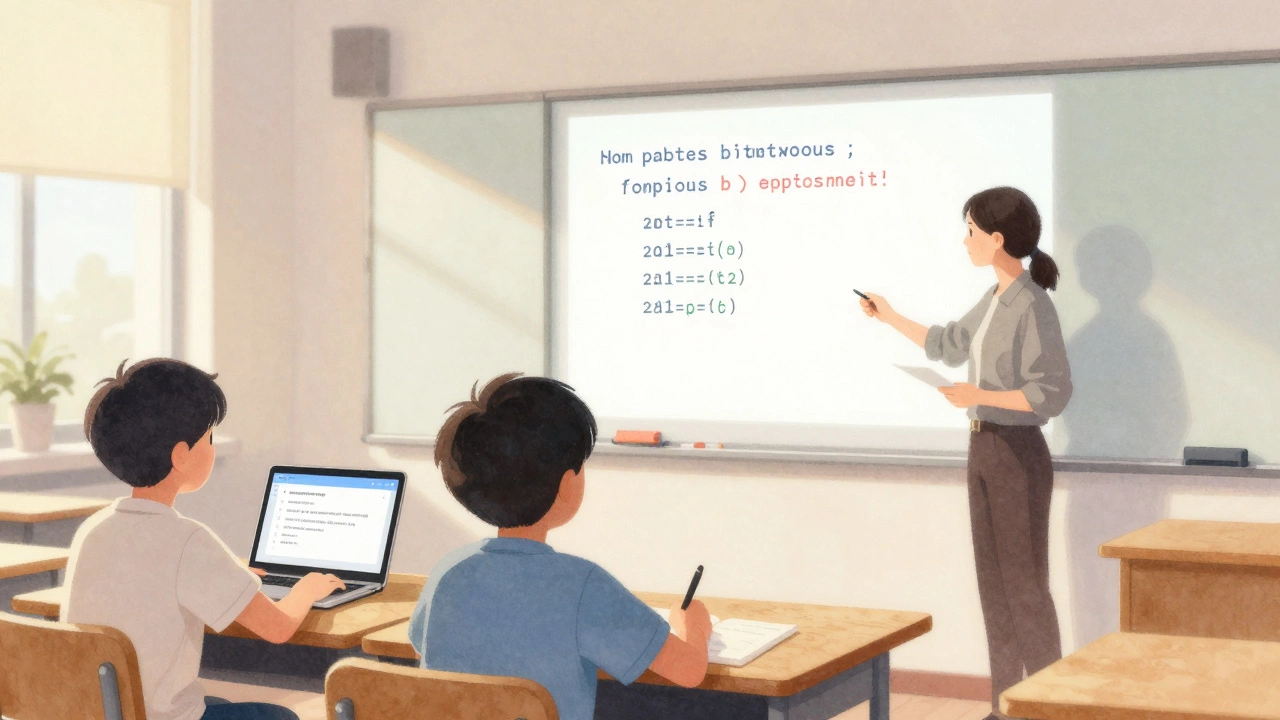
Teachers code too - especially in schools teaching digital literacy. They build interactive quizzes with JavaScript. They automate grading with Python scripts. They use code to create custom learning tools for students with special needs. A high school teacher in Auckland might use a simple Python program to generate random math problems for practice. An education researcher might analyze student performance data using R. Coding isn’t just for STEM teachers - it’s becoming part of every classroom’s toolkit.
Content Creators and YouTubers
Ever wonder how some YouTubers get thousands of views overnight? Sometimes it’s not just good content - it’s smart code. They use APIs to analyze trending topics. They write scripts to auto-upload videos at optimal times. They automate thumbnails, captions, and comment replies. Podcasters use code to edit audio files in bulk. Even bloggers who use WordPress plugins are working with code behind the scenes. You don’t need to build a website from scratch - but knowing how to tweak code gives you control.
Why Learning to Code Helps - Even If You’re Not a Developer
You don’t have to become a software engineer to benefit from coding. Learning to code means learning how to break problems down, spot patterns, and automate repetitive tasks. A marketing assistant who learns to write a simple Python script to clean up a customer list saves 10 hours a week. A nurse who understands how hospital software works can flag errors faster. A teacher who automates grading gets more time for students.
Most of these jobs don’t require a computer science degree. Many people learn coding through free platforms like freeCodeCamp, Codecademy, or YouTube. Start with one language - Python is the easiest for beginners. Learn just enough to solve one real problem you face. That’s how most people get started.
What Coding Skills Are Most Common?
Not everyone needs the same tools. Here’s what you’re likely to see across these roles:
- Python: Used in data, science, marketing, finance, and automation. It’s readable and powerful.
- SQL: The language for pulling data from databases. Essential for analysts and anyone working with numbers.
- JavaScript: Powers websites and interactive tools. Needed by marketers, designers, and content creators.
- HTML/CSS: Basic structure and styling of web pages. Useful for anyone managing online content.
- R: Popular in research and statistics. Common in academia and public health.
- Shell scripting (Bash): Used by IT and DevOps teams to automate system tasks.
You don’t need to master all of them. Pick one based on your field. A marketer? Start with JavaScript and HTML. A teacher? Try Python. A nurse? Learn SQL to understand patient data systems.
How to Start Without Quitting Your Job
Start small. Spend 15 minutes a day. Here’s how:
- Identify one task you do weekly that feels repetitive - like copying data, renaming files, or sending emails.
- Search for a tutorial: “How to automate [your task] with Python.”
- Follow along. Don’t try to understand everything - just get it to work.
- Use free tools like Google Colab or Replit. No downloads needed.
- After a week, you’ll have a script that saves you time. That’s your win.
Many people think they need to spend months learning before they can do anything. That’s wrong. You can write your first working script in an afternoon.
What If You’re Not “Tech-Savvy”?
You don’t need to be. Coding is just another tool - like using Excel or sending an email. You don’t need to be a mechanic to drive a car. You don’t need to be a chef to use a microwave. Coding is the same. It’s about solving problems, not building computers.
People who think they’re “not the coding type” are often just scared of the jargon. Terms like “API,” “variable,” or “loop” sound scary until you see them in action. Start with real examples. Watch someone automate their grocery list. See how a teacher auto-grades quizzes. That’s coding. It’s not magic. It’s just logic.
Do you need a degree to get a job that uses coding?
No. Many people land jobs using coding skills without a degree. Bootcamps, online courses, and self-taught projects are common paths. Employers care more about what you can do than what’s on your diploma. A marketing assistant who automates reports with Python often gets promoted faster than someone with a business degree but no technical skills.
Can I learn coding if I’m bad at math?
Yes. Most coding jobs don’t require advanced math. You need basic logic - like understanding if-else statements or loops. You don’t need calculus to write a script that sorts emails or pulls sales data. Python and SQL are about patterns and structure, not equations. If you can follow a recipe, you can learn to code.
What’s the easiest coding language to start with?
Python is the easiest for beginners. It reads like plain English. You can use it for data, websites, automation, and even games. Most non-tech professionals start with Python because it solves real problems fast - like cleaning spreadsheets, renaming files, or sending automated emails.
How long does it take to learn enough coding for a job?
It depends on the job. For basic automation tasks, you can learn enough in 2-4 weeks with 1 hour a day. To land a data analyst role, you might need 3-6 months of consistent learning. The key isn’t time - it’s applying what you learn to your own work. The moment you automate one task, you’ve already started.
Will coding replace my job?
It won’t replace you - but it might replace the boring parts of your job. Coding automates repetitive tasks, not human judgment. A teacher won’t be replaced by code, but they’ll spend less time grading and more time helping students. A marketer won’t be replaced, but they’ll stop manually updating spreadsheets. Learning to code helps you focus on what matters - creativity, strategy, and people.
Next Steps
Start today. Open your browser and go to freeCodeCamp.org or Python.org. Pick one small task from your daily work - something you hate doing. Find a tutorial for it. Try to code it. Even if you fail, you’ll learn more than someone who waits for the “perfect time.”
Coding isn’t about becoming a programmer. It’s about becoming someone who can make technology work for them - not the other way around.