Recent POST





Free Course Time Investment Calculator
How to get value from free courses
The article states that only less than 10% of people finish free courses. The key is treating courses like a job with consistent time investment.
Remember: Completion rates aren't about course difficulty - they're about consistent time investment. Even 3 hours per week can make a difference.
Why this matters
Value comes from application, not certificates. Free courses are worth it when you apply the knowledge through:
- 1 Building a public portfolio
- 2 Applying skills to real projects
- 3 Engaging with course communities
Calculate Your Success Potential
Enter your course details to see if you're likely to succeed
Your Success Potential
Free college courses aren’t a gimmick. They’re not just for students who can’t afford tuition. They’re a real tool - used by working parents, career switchers, retirees, and people in small towns with no local colleges. But here’s the question most people don’t ask: Are free college courses worth it? Not in theory. In practice. Right now, in 2026.
What you actually get with free college courses
When you sign up for a free course from MIT, Stanford, or the University of Edinburgh, you’re not getting a diploma. You’re getting lecture videos, reading lists, problem sets, and sometimes discussion forums. That’s it. No grading. No feedback from professors. No official transcript. But here’s what you do get: access to the same material as paying students.
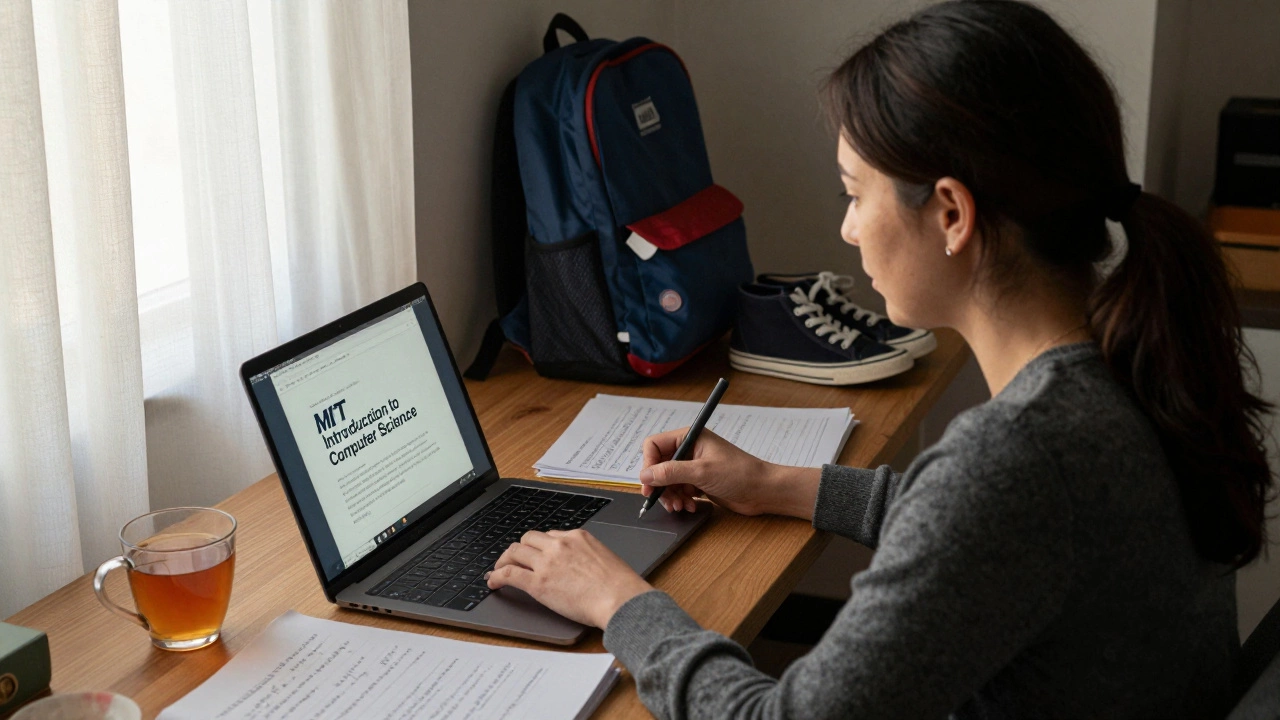
Take MIT’s Introduction to Computer Science on edX. It’s free. It uses the same syllabus, same textbooks, and same assignments as the on-campus version. People who finished it and added it to their LinkedIn profiles got interviews at companies like Shopify and Atlassian - not because they had a certificate, but because they could talk through the final project in detail.
Free courses don’t hand you a credential. They hand you knowledge. And knowledge, when applied, becomes value.
Who benefits the most?
Not everyone gets the same return. The people who thrive in free courses have one thing in common: they treat them like real classes.
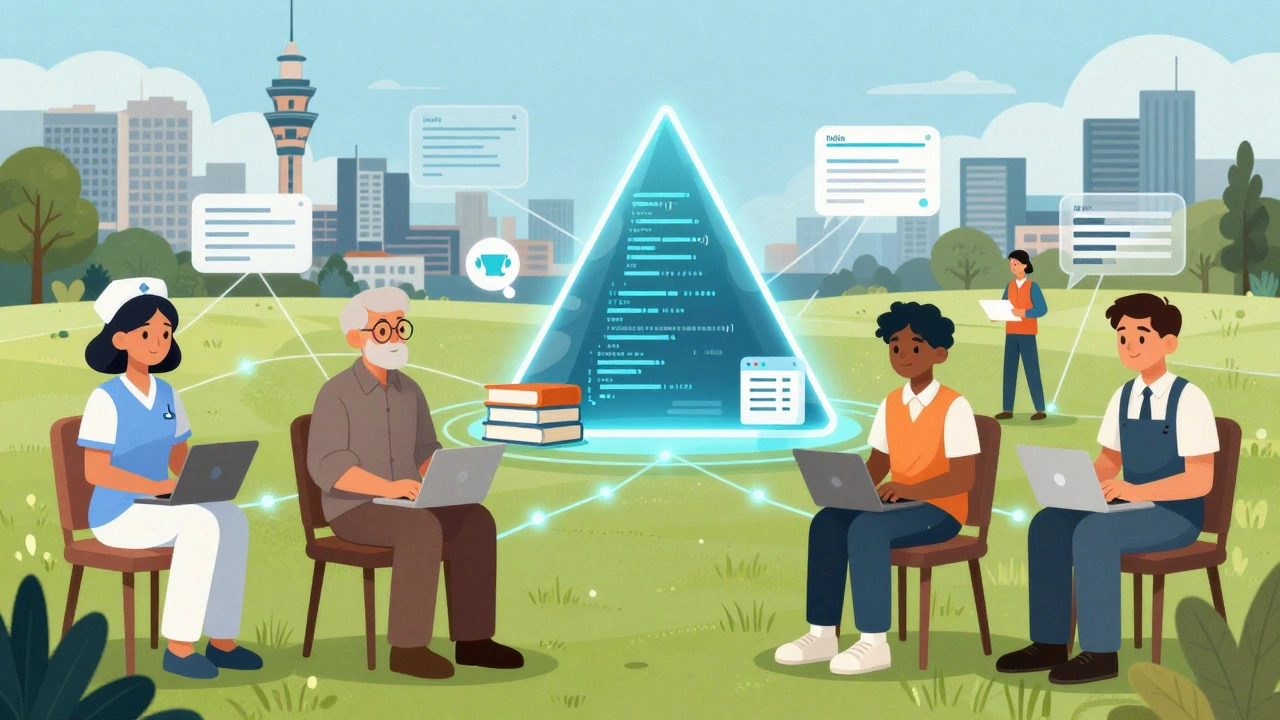
- Working professionals use them to learn Python, data analysis, or project management without quitting their jobs. A nurse in Auckland upskilled in healthcare analytics through a free Johns Hopkins course - and got promoted six months later.
- Career changers build portfolios. A former retail worker in Wellington took free design courses from Coursera, built three websites for local nonprofits, and landed a junior UX role.
- Students in developing countries use them to prepare for international exams. A high schooler in rural India used free MIT math lectures to score in the top 1% on the SAT.
- Retirees learn for fun - but often end up starting side projects. One 72-year-old in Christchurch learned web development and now runs a small blog about vintage cameras.
The common thread? These people didn’t just watch videos. They did the work. They submitted assignments. They joined study groups. They built something.
What free courses can’t do
They won’t get you a degree. They won’t replace a four-year program if your goal is to become a licensed engineer, doctor, or teacher. Most employers still require formal credentials for regulated professions.
They also won’t give you networking. You won’t meet professors, classmates, or recruiters. No campus events. No alumni networks. No internship referrals. If your goal is to break into a tight-knit industry like finance or law, free courses alone won’t open doors.
And yes - the completion rates are terrible. Studies show fewer than 10% of people who start a free MOOC finish it. That’s not because the material is too hard. It’s because most people treat it like Netflix: they start, they get distracted, and they never come back.
How to make free courses worth your time
If you’re serious, treat it like a job.
- Set a schedule. Block out 3-5 hours a week. Put it in your calendar like a doctor’s appointment.
- Do the assignments. Even if no one grades them. If the course asks you to write code, write it. If it asks for an essay, write it. That’s how you learn.
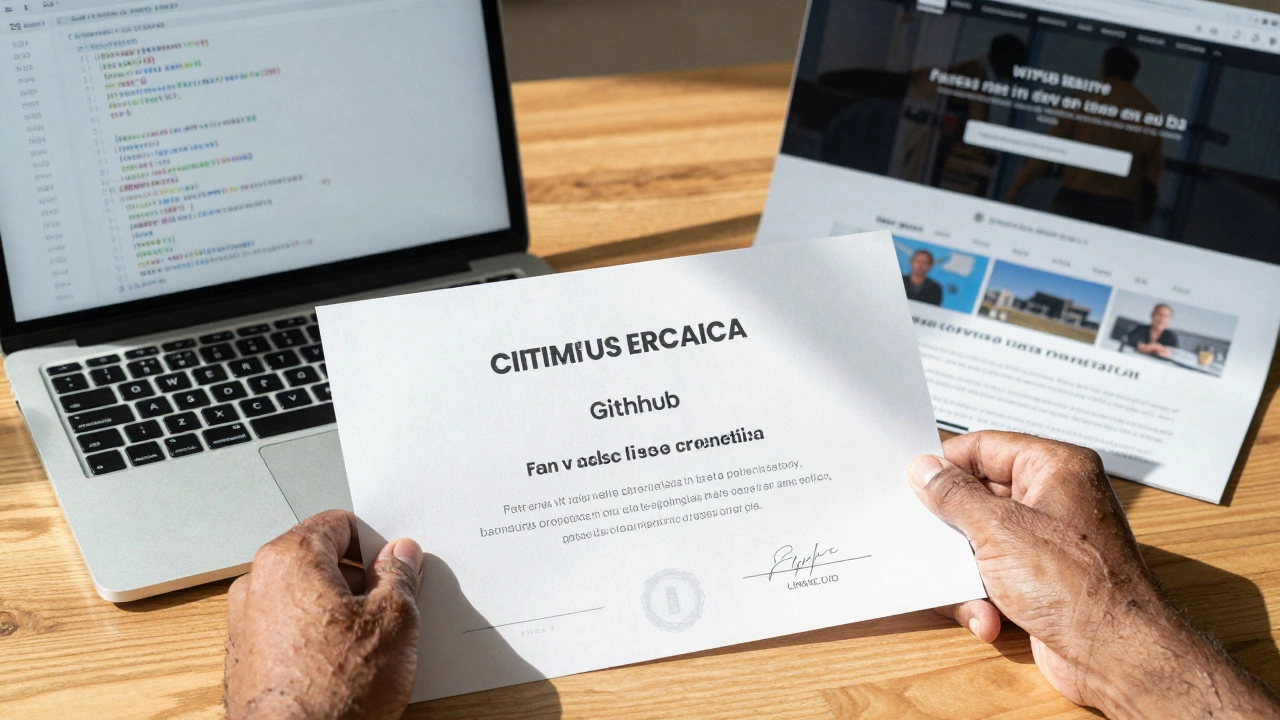
- Build a public portfolio. Upload your projects to GitHub, Behance, or a personal website. Link them on your LinkedIn. This is your proof of skill.
- Join the community. Many free courses have active forums. Answer questions. Ask for feedback. People who engage in discussions are 5x more likely to finish.
- Pair it with something real. Use what you learn in your current job. Volunteer for a project. Help a friend build a website. Apply it - or it fades.
One woman in Dunedin took a free Google Data Analytics course. She didn’t wait for a job. She started analyzing her local community center’s attendance data and presented her findings at a town meeting. Three months later, she was hired as their part-time data coordinator.
Free vs paid: What’s the real difference?
Most free courses have paid upgrades: certificates, graded assignments, mentor access. But here’s the truth: the certificate itself is rarely valuable.
Look at this data from a 2025 LinkedIn survey of 12,000 hiring managers:
| Factor | Percentage who say it matters |
|---|---|
| Portfolio of work | 82% |
| Ability to explain concepts | 79% |
| Certificate from platform | 28% |
| University name on certificate | 19% |
The certificate? Almost irrelevant. What matters is what you did with the course. The work you built. The problems you solved.
Pay for a course only if you need feedback, deadlines, or mentorship. Otherwise, you’re paying for a piece of paper you could have earned for free.
Top free courses that actually led to jobs in 2025-2026
These aren’t random picks. These are courses people from New Zealand, Australia, and Southeast Asia used to change their careers.
- Google Data Analytics Professional Certificate (Coursera) - Free to audit. 3,400+ learners in NZ used it to land roles in public sector analytics.
- Harvard’s CS50: Introduction to Computer Science - Free on edX. Over 1,200 New Zealanders completed it and applied the skills to jobs in fintech and government IT.
- Stanford’s Machine Learning (Coursera) - Free to watch. Used by engineers in Wellington to transition into AI roles at startups.
- University of London’s Introduction to Psychology - Free on Coursera. Helped customer service staff move into HR roles.
- MIT’s Principles of Manufacturing - Free on OpenCourseWare. Taken by tradespeople upskilling for automation roles in manufacturing.
All of these are free to access. None require payment to learn the material.
What to avoid
Don’t sign up for 10 courses at once. You’ll burn out.
Don’t chase certificates. They’re not magic tickets.
Don’t assume free means easy. MIT’s calculus course is harder than most university finals.
And don’t listen to people who say, “It’s not real learning.” If you can explain how a neural network works, or how to run a regression analysis, or how to structure a legal contract - that’s real learning. No diploma needed.
Final answer: Are free college courses worth it?
Yes - if you treat them like a job.
No - if you treat them like a hobby.
The value isn’t in the course. It’s in what you build after you finish it. The code you wrote. The spreadsheet you cleaned. The presentation you gave. The problem you solved.
Free college courses don’t change your life. You do. The course is just the tool.
Can I get a job with just a free course certificate?
Not by itself. Employers care about what you can do, not what piece of paper you hold. A certificate from a free course means almost nothing on its own. But if you used that course to build a portfolio, solve real problems, or improve your skills at work - then yes, you can get a job. The certificate is just a footnote. Your work is the headline.
Are free courses from top universities actually as good as paid ones?
The content is identical. The lectures, readings, and assignments in a free MIT course are the same as those in the paid on-campus version. The only differences are grading, feedback, and access to professors. If you’re self-disciplined, you’ll learn just as much - maybe more - because you’re forced to figure things out on your own.
Do free courses count toward a degree?
Rarely. A few universities let you transfer credits from paid, accredited online programs - but not from free courses. If you want a degree, you’ll still need to enroll in a formal program. But free courses are excellent prep. Many students use them to test if a field is right for them before spending thousands.
How long do free courses take to complete?
It depends. Most range from 4 to 12 weeks, with 3-10 hours of work per week. But many people take them at their own pace. Some finish in a month. Others stretch them over a year. The key isn’t speed - it’s consistency. Even one hour a week adds up.
Are there free courses in languages other than English?
Yes. Platforms like edX and Coursera offer courses in Spanish, French, Mandarin, Portuguese, and even te reo Māori. Some universities, like the University of Auckland, offer free introductory courses in Māori studies and environmental policy in both English and te reo. Check the language filter on course platforms.
Next steps if you’re ready to start
Here’s what to do tomorrow:
- Pick one course that matches a skill you need - not one you think looks impressive.
- Block 3 hours a week in your calendar.
- Start the first lecture.
- Do the first assignment - even if it’s just writing a short summary.
- Share your progress with one person. Tell them what you’re learning.
You don’t need money. You don’t need permission. You just need to begin.