Recent POST





UPSC Interview Mindset Simulator
Current Scenario
Loading scenario...
Analysis
Explanation goes here.
Your Mindset Score
- Ethical Clarity: -
- Pragmatism: -
- Empathy: -
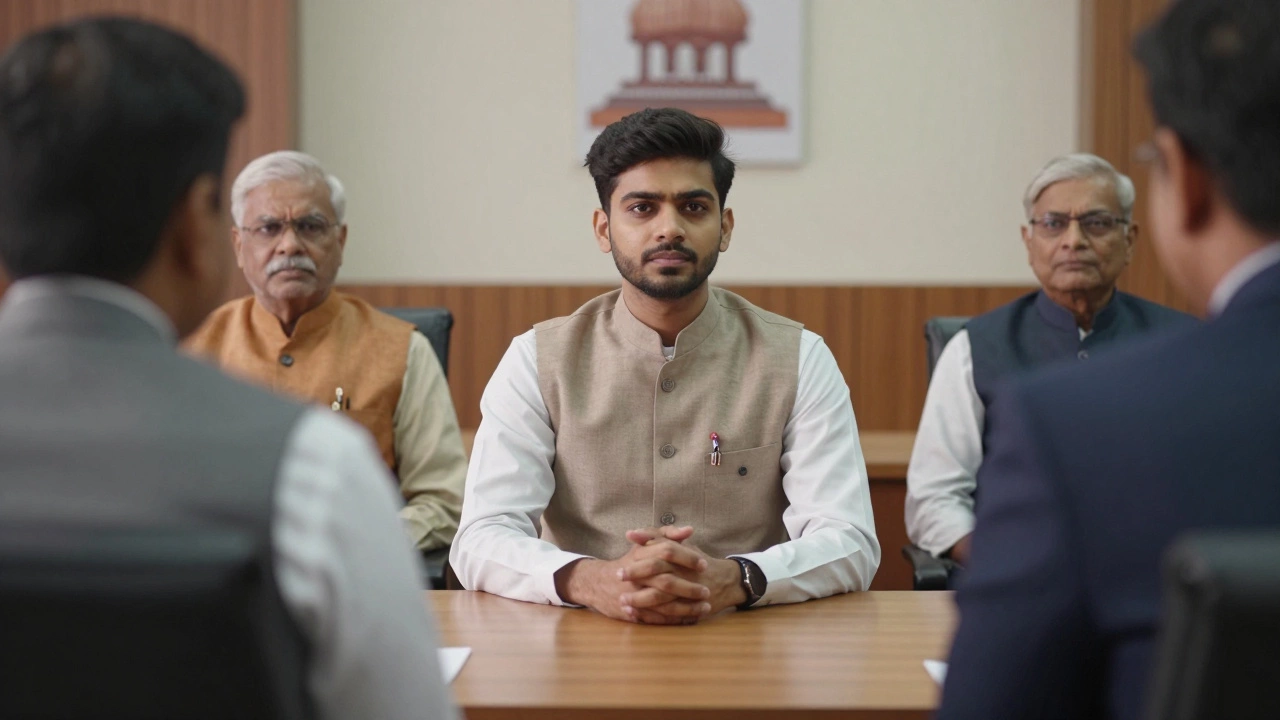
Imagine sitting across from a panel of senior bureaucrats. They aren't asking you to recite the Constitution or calculate GDP growth rates. Instead, they ask, "How would you handle a riot in your district if the police force was on strike?" This isn't a hypothetical movie scene. This is the reality of the UPSC Civil Services Examination, specifically the final stage: the Personality Test, commonly known as the Interview. For many aspirants, the term "GS 9 level experience" sounds like an obscure academic code. In truth, it refers to the depth of practical, administrative, and ethical judgment expected at the highest levels of governance-roughly equivalent to the responsibilities of a District Magistrate or a Secretary in the Government of India.
If you are preparing for government jobs, understanding this concept is crucial. It’s not just about knowing facts; it’s about demonstrating that you possess the maturity, decision-making ability, and emotional intelligence required to lead. Let’s break down what this really means, why it matters, and how you can cultivate this mindset before you even step into the interview room.
Decoding the "GS 9" Benchmark
To understand "GS 9 level experience," we first need to look at where the term originates. The General Studies (GS) papers in the UPSC Mains examination test your breadth of knowledge. Paper I covers Ethics, Integrity, and Aptitude. Paper II covers Governance, Constitution, Polity, Social Justice, and International Relations. Papers III and IV cover Technology, Economic Development, Environment, Disaster Management, Security, and Society. While there is no official paper called "GS 9," the phrase has evolved in coaching circles to describe the synthesis of all these subjects applied to real-world scenarios.
Think of it this way: A fresh graduate knows what corruption is. A person with "GS 9 level experience" understands the systemic causes of corruption, the legal frameworks to combat it, the ethical dilemmas faced by officials, and the practical steps to implement anti-corruption measures without disrupting public service delivery. It is the difference between theoretical knowledge and administrative wisdom.
Is "GS 9" an official UPSC term?
No, "GS 9" is not an official term used by the Union Public Service Commission (UPSC). It is a colloquialism used by coaches and aspirants to describe the high-level analytical and ethical reasoning expected in the final stages of the selection process.
The Core Pillars of Administrative Experience
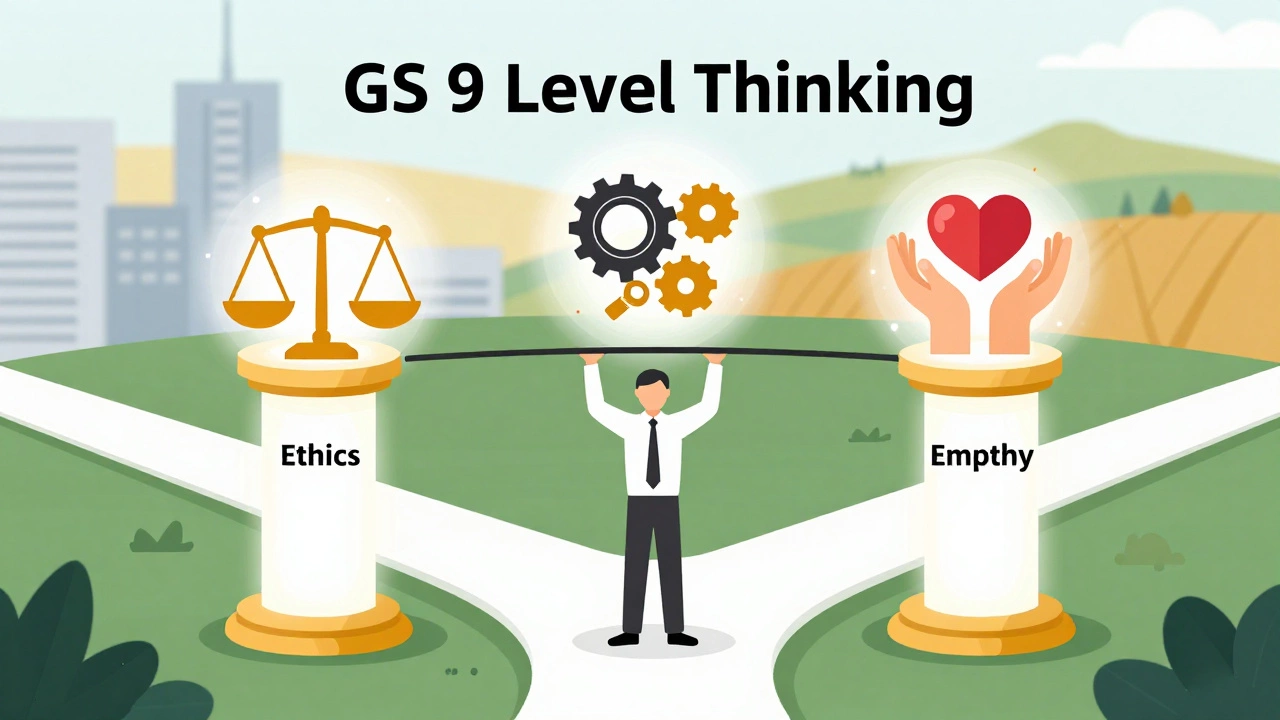
When interviewers assess whether you have this level of experience, they are looking for specific traits. You don’t need to have been an IAS officer for ten years to demonstrate this. You need to show that you think like one. Here are the three core pillars:
- Ethical Clarity: Can you identify the right course of action when laws, morals, and political pressure conflict? For example, if a minister asks you to approve a project that violates environmental norms, do you resign, comply, or find a legal workaround? Your answer must reflect integrity without being naive.
- Pragmatic Problem-Solving: Idealism gets you elected; pragmatism gets things done. GS 9 level thinking involves finding solutions within constraints. If funds are cut for a rural health scheme, how do you adapt? Do you partner with NGOs? Use local resources? Prioritize critical cases? Show flexibility and resourcefulness.
- Empathy and Leadership: Administration is about people. Can you relate to the struggles of a farmer, a factory worker, or a tribal community? Leaders who lack empathy fail because they lose trust. Demonstrate that you listen, understand diverse perspectives, and make decisions that serve the common good.
Why This Matters for Your Interview Performance
The UPSC interview is worth 275 marks. It is often the deciding factor between getting an allocation in the Indian Administrative Service (IAS) versus another service, or clearing the list altogether. Candidates who memorize answers but lack this "experience" vibe often stumble. Why? Because the panel asks situational questions designed to bypass rote learning.
Consider this common question: "You are posted in a remote area. A dam is about to burst, but the locals refuse to evacuate due to superstition. What do you do?" A candidate without GS 9 level thinking might say, "I will enforce evacuation using police force." A candidate with this mindset will say, "I will engage local religious leaders to explain the danger in terms they understand, use loudspeakers in the local dialect, and personally visit homes to reassure them. Force is the last resort because it destroys trust needed for future governance." See the difference? One is mechanical; the other is human-centered and strategic.
| Aspect | Rote Learner Approach | GS 9 Level Approach |
|---|---|---|
| Focus | Reciting facts and laws | Applying principles to context |
| Tone | Defensive or rigid | Confident, calm, and empathetic |
| Solution | Theoretical ideal | Practical compromise |
| Error Handling | Denies mistakes | Acknowledges and learns |
How to Build This Experience Without Working in Government
You might be thinking, "I’m a student. How can I gain this experience?" The good news is that you don’t need a government job to develop this mindset. You can simulate it through deliberate practice.
1. Analyze Real-World Case Studies
Read beyond headlines. When a disaster strikes, don’t just read the death toll. Read the post-mortem reports. What went wrong? Was it poor planning, communication failure, or corruption? Look at successful initiatives like Kerala’s flood management or Gujarat’s earthquake recovery. Understand the mechanisms behind them. Ask yourself: "If I were the District Collector, what would I have done differently?"
2. Engage in Community Service
Volunteer work is gold for building empathy and practical skills. Whether it’s teaching underprivileged children, organizing blood donation camps, or helping in disaster relief, these experiences give you stories to share. They show you’ve dealt with real people, real problems, and real emotions. Interviewers love candidates who have "boots on the ground" experience, even if it’s informal.
3. Practice Situational Mock Interviews
Don’t just practice standard questions. Create your own scenario-based drills. Write down five complex situations involving ethical dilemmas, resource scarcity, or inter-departmental conflict. Answer them out loud. Record yourself. Listen back. Are you sounding robotic? Are you jumping to conclusions? Refine your responses until they sound natural, thoughtful, and balanced.
4. Develop Interpersonal Skills
Administration is 80% communication. Work on your listening skills. Learn to articulate complex ideas simply. Practice having difficult conversations. Join debate clubs or discussion groups. The goal is to become someone others feel comfortable talking to-because that’s what a leader does.
Common Pitfalls to Avoid
Even well-prepared candidates fall into traps. Here’s what to watch out for:
- Being Overly Aggressive: Don’t argue with the panel. If you disagree, express your view respectfully. Say, "That’s an interesting perspective. From my viewpoint..." rather than "You’re wrong."
- Faking Knowledge: If you don’t know an answer, admit it. But add, "However, based on my understanding of related concepts, I would approach it by..." Honesty builds credibility; bluffing destroys it.
- Ignoring Local Context: Generic answers fail. Tailor your responses to the region you’re applying for. Know its history, culture, challenges, and strengths. Show that you care about serving that specific community.
- Neglecting Body Language: Your posture, eye contact, and tone speak louder than words. Sit straight, smile naturally, and maintain steady eye contact. Nervous habits like fidgeting signal insecurity.

The Role of Current Affairs in Building Depth
Current affairs aren’t just about remembering dates and names. They are your laboratory for testing GS 9 level thinking. Take a recent event, like the implementation of a new labor law. Don’t just note the provisions. Analyze:
- Who benefits? Who loses?
- What are the implementation challenges?
- How does it align with constitutional goals?
- What ethical issues arise?
This multi-dimensional analysis transforms news into knowledge. It trains your brain to see connections between policy, politics, economics, and society. Over time, this becomes second nature. You start seeing the world not as isolated events, but as interconnected systems-a hallmark of senior administrative thinking.
Final Thoughts: It’s About Mindset, Not Memory
"GS 9 level experience" isn’t something you buy from a book or cram in a month. It’s a mindset cultivated over time through curiosity, reflection, and engagement with the world. As you prepare for government exams, shift your focus from "what to remember" to "how to think." Read widely, volunteer actively, discuss deeply, and reflect honestly. When you walk into that interview room, let them see not just a candidate who passed an exam, but a future leader ready to serve.
Remember, the best administrators aren’t those who know all the answers. They are those who ask the right questions, listen to the right people, and make decisions that stand the test of time. Start building that character today. Your future constituency will thank you.
How long does it take to develop GS 9 level thinking?
There is no fixed timeline. However, consistent practice over 6-12 months of focused preparation, including case study analysis and mock interviews, can significantly enhance your analytical and ethical reasoning skills.
Can working professionals compete with fresh graduates in this aspect?
Absolutely. Working professionals often have an advantage because they bring real-world problem-solving experience. They should leverage their industry insights to provide practical, grounded answers during the interview.
What resources help in developing this mindset?
Books like 'Ethics, Integrity and Aptitude' by Lexicon Publications, daily newspapers like The Hindu or Indian Express, and case studies from previous year UPSC interviews are excellent resources. Additionally, volunteering and community engagement provide practical exposure.
Is it necessary to join a coaching institute for this?
Not necessarily. While coaching institutes offer structured guidance and peer interaction, self-study combined with disciplined practice of case studies and mock interviews can be equally effective. The key is consistency and quality of reflection.
How important is body language in demonstrating this experience?
Very important. Confidence, calmness, and respect conveyed through body language reinforce your verbal answers. Poor body language can undermine even the most intelligent response, making you appear insecure or arrogant.