Recent POST

CBSE School Comparison Tool
Compare CBSE Schools Across States
Select states to compare their CBSE school counts
When it comes to school education in India, the Central Board of Secondary Education (CBSE) is one of the most widely followed boards. With over 26,000 affiliated schools across the country and in more than 25 foreign countries, CBSE’s reach is massive. But if you’re asking which single state has the highest number of CBSE schools, the answer isn’t what most people expect.
Uttar Pradesh Leads with Over 4,500 CBSE Schools
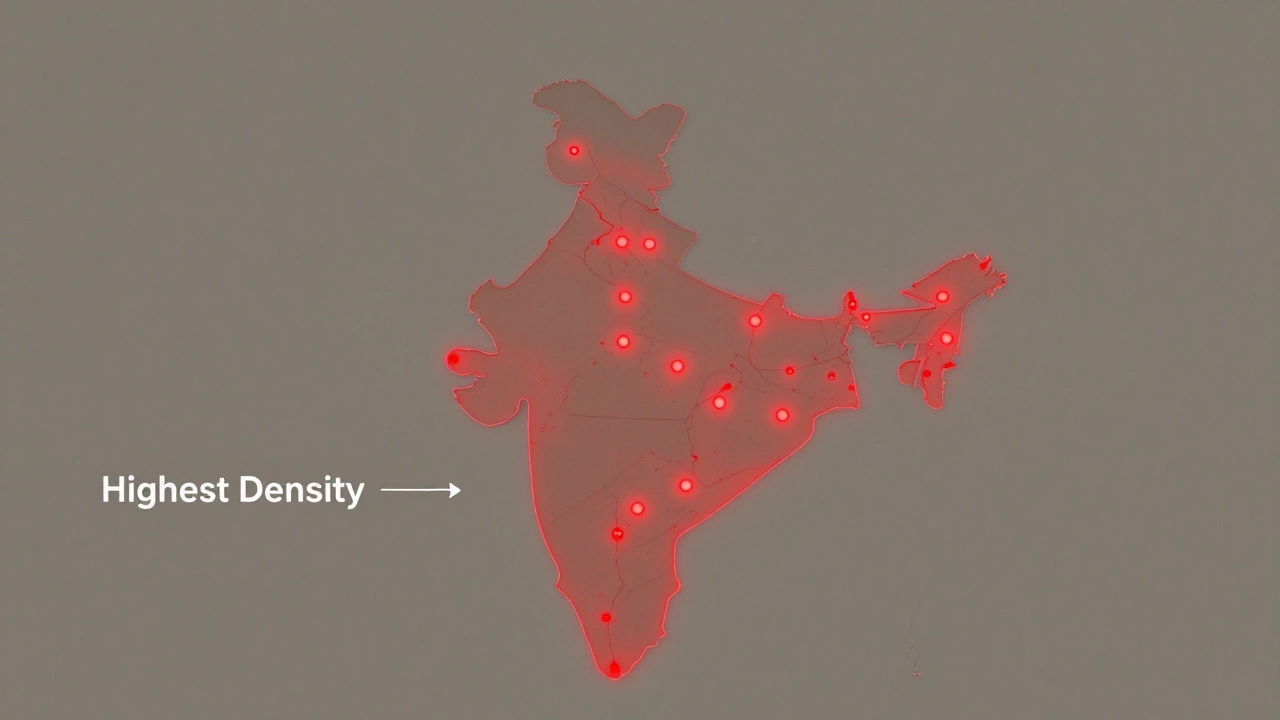
Uttar Pradesh tops the list with more than 4,500 CBSE-affiliated schools. That’s nearly one-fifth of all CBSE schools in India. Why? It’s not just about population size - though Uttar Pradesh is India’s most populous state with over 240 million people. It’s also about state policy. Since the early 2000s, the state government has actively encouraged private and aided schools to adopt the CBSE curriculum. Many of these schools are located in cities like Lucknow, Kanpur, Varanasi, and Ghaziabad, where middle-class families increasingly prefer CBSE over state boards for its national recognition and alignment with competitive exams like JEE and NEET.
According to the latest CBSE annual report (2024-25), Uttar Pradesh accounts for 17.3% of all CBSE schools in India. The next closest state, Maharashtra, has around 3,800 schools - still over 700 fewer than Uttar Pradesh. Delhi, despite being a Union Territory and a major education hub, sits at about 2,900 schools. So while Delhi has a high concentration of elite institutions, it doesn’t come close to Uttar Pradesh’s sheer volume.
Why CBSE Is So Popular in Uttar Pradesh
The rise of CBSE in Uttar Pradesh didn’t happen by accident. Several factors drove this shift:
- Parental demand: Families want a standardized curriculum that works across states. If a family moves from Lucknow to Bangalore, CBSE ensures continuity in education.
- Competitive exam prep: CBSE syllabus aligns closely with JEE Main, NEET, and other national-level entrance tests. Many coaching centers in UP focus exclusively on CBSE students.
- Government incentives: The state provides land and tax breaks to private schools that adopt CBSE, especially in semi-urban and rural areas.
- Teacher training: CBSE conducts regular workshops for teachers in UP, helping schools meet quality standards.
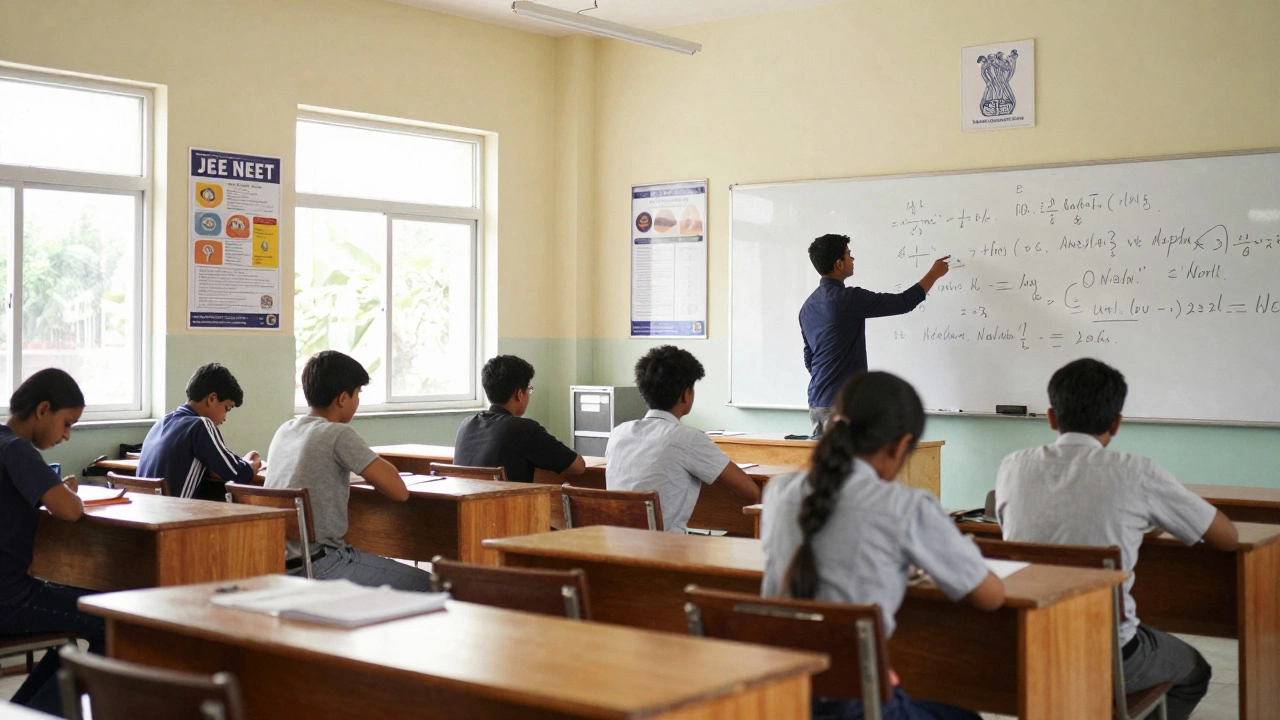
As a result, even small towns in Uttar Pradesh now have CBSE schools. In districts like Agra, Mathura, and Bareilly, over 60% of private schools are CBSE-affiliated. This trend has been growing steadily since 2015.
How CBSE School Numbers Compare Across Top States
Here’s how the top five states and territories stack up in terms of CBSE school count as of 2025:
| Rank | State/UT | Number of CBSE Schools | Percentage of National Total |
|---|---|---|---|
| 1 | Uttar Pradesh | 4,523 | 17.3% |
| 2 | Maharashtra | 3,815 | 14.6% |
| 3 | Delhi (UT) | 2,917 | 11.2% |
| 4 | Rajasthan | 2,487 | 9.5% |
| 5 | Karnataka | 2,231 | 8.6% |
The gap between first and second place is significant. Uttar Pradesh doesn’t just lead - it dominates. In fact, the top three states together account for over 43% of all CBSE schools in India. That means less than 60% of schools are spread across the remaining 26 states and union territories.
What About Other High-Performing States?
States like Tamil Nadu, Andhra Pradesh, and West Bengal have strong education systems, but their CBSE presence is much smaller. Tamil Nadu, for example, has only about 850 CBSE schools. Why? Because the state has a long-standing preference for its own board, the Tamil Nadu State Board. Similarly, West Bengal’s state board remains dominant due to cultural and linguistic ties.
Kerala, often praised for its literacy rate, has around 1,100 CBSE schools - impressive, but still less than half of Rajasthan’s count. Even in cities like Bengaluru and Hyderabad, where CBSE schools are popular, they don’t outnumber state board schools.
Why This Matters for Students and Parents
If you’re a parent choosing a school, knowing where CBSE schools are most concentrated helps you understand your options. In Uttar Pradesh, you’re likely to find:
- More experienced teachers trained in CBSE patterns
- Greater access to CBSE-specific study material and coaching
- Higher chances of school transfers if your family relocates within India
- Stronger alumni networks for college admissions
On the flip side, if you live in a state with fewer CBSE schools, you might have to travel farther or pay higher fees to access a quality CBSE-affiliated institution. This can be a barrier for families in rural areas of states like Odisha, Jharkhand, or Chhattisgarh, where CBSE schools are still relatively rare.
Is the Number of Schools the Only Thing That Matters?
Not necessarily. A state with fewer CBSE schools might still have better-performing ones. For example, Delhi has fewer schools than Uttar Pradesh, but many of its CBSE schools rank among the top 100 in India based on board exam results. Similarly, schools in Puducherry and Chandigarh have high pass rates despite lower numbers.
So while Uttar Pradesh leads in quantity, other states lead in quality. But for families looking for choice, accessibility, and affordability - quantity matters. More schools mean more competition, which drives down fees and improves infrastructure.
The Future of CBSE Schools in India
The CBSE is expanding its presence in northeastern states like Assam, Manipur, and Tripura, where enrollment has grown by over 30% since 2020. The board is also pushing for more schools in Tier-3 and Tier-4 cities. But unless there’s a major policy shift, Uttar Pradesh is unlikely to lose its top spot in the next five years.
Meanwhile, states like Gujarat and Haryana are investing heavily in CBSE infrastructure. Haryana, for instance, has added 400 new CBSE schools since 2022. But even with that growth, it still trails behind the top three.
The bottom line? If you’re looking for the state with the most CBSE schools, the answer is clear: Uttar Pradesh. It’s not just a number - it’s a reflection of changing education priorities across India.
Which state has the most CBSE schools in India?
Uttar Pradesh has the highest number of CBSE schools in India, with over 4,500 affiliated institutions as of 2025. It accounts for nearly 17.3% of all CBSE schools nationwide, far ahead of Maharashtra (3,815) and Delhi (2,917).
Why does Uttar Pradesh have so many CBSE schools?
Uttar Pradesh has a large population and strong demand from middle-class families for a national curriculum that aligns with competitive exams like JEE and NEET. The state government also provides incentives like land and tax breaks to private schools that adopt CBSE. Teacher training programs and partnerships with CBSE have further boosted adoption, especially in semi-urban areas.
Is Delhi the state with the most CBSE schools?
No, Delhi is not the state with the most CBSE schools. Although it has a high concentration of well-known institutions, it ranks third with around 2,917 schools. Uttar Pradesh leads with over 4,500, and Maharashtra is second with 3,815.
Do CBSE schools perform better than state board schools?
Performance varies by school, not by board. Some CBSE schools have excellent results, especially in urban centers, but many state board schools - like those in Kerala or Tamil Nadu - also produce top scorers. CBSE’s advantage lies in its standardized syllabus and alignment with national exams, not necessarily in overall academic quality.
Are there CBSE schools outside India?
Yes, CBSE has over 250 schools in more than 25 countries, including the UAE, Saudi Arabia, Kenya, and Singapore. These schools serve Indian expatriate communities and follow the same curriculum as schools in India, making it easier for students to return and continue their education.