Recent POST





eLearning Course Finder
Find Your Perfect eLearning Course
Answer these quick questions to get personalized course recommendations based on your goals and learning style.
Ever wonder how eLearning actually works? It’s not just watching videos or downloading PDFs. It’s a full system designed to help you learn something new-whether it’s coding, accounting, or Spanish-without ever stepping into a classroom. And it’s not magic. It’s built on a few clear pieces that fit together like puzzle pieces.
What’s inside an eLearning platform?
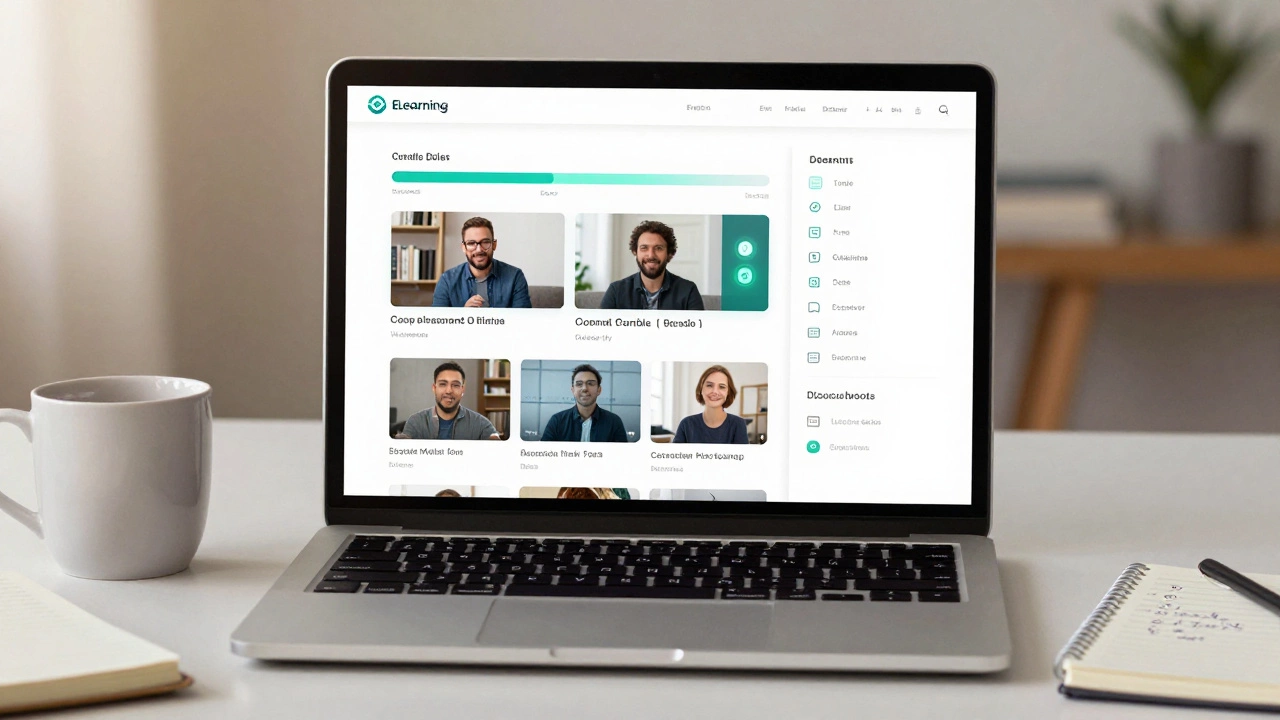
An eLearning platform is like a digital classroom that never closes. It’s a website or app where you log in, see your course, watch lessons, take quizzes, and track your progress. Think of it as a mix between Netflix and a textbook, but with feedback and deadlines built in.
Most platforms use a eLearning platform structure that includes:
- A course library with videos, readings, and interactive exercises
- A dashboard that shows what you’ve done and what’s next
- Quizzes or assignments to test your understanding
- A discussion board or chat where you can ask questions
- A progress tracker that tells you how far you’ve come
Companies like Coursera, Udemy, and Khan Academy all use this basic setup. The difference isn’t in the structure-it’s in how they organize it, who teaches it, and how much support you get.
How do you start learning?
You don’t just jump into a course. There’s a flow.
- You pick a course based on what you want to learn-maybe "Python for Beginners" or "Financial Accounting Fundamentals".
- You sign up. Some courses are free. Others cost money, but often you can try the first lesson before paying.
- You get access to the course materials. This usually starts with a short video explaining what you’ll learn and why it matters.
- You watch a lesson, then do a quick quiz or activity. No long essays. Just enough to make sure you’re following.
- You move to the next lesson. The system won’t let you skip ahead until you finish the current one.
- At the end, you take a final test. If you pass, you get a certificate. Not because it’s perfect-but because you showed up and did the work.
This structure is called "microlearning." It means breaking big topics into small, digestible chunks. You learn 5-10 minutes at a time, then pause. That’s why people stick with it. It doesn’t feel like studying. It feels like scrolling-but with a purpose.
How do you know if you’re learning?
That’s the big question. How do you know you’re not just watching videos and forgetting everything?
Good eLearning platforms use three tools to make sure you’re actually learning:
- Spaced repetition: You’ll see the same concept again a day later, then a week later, then a month later. This isn’t random. It’s science. Studies show this method helps your brain keep information longer.
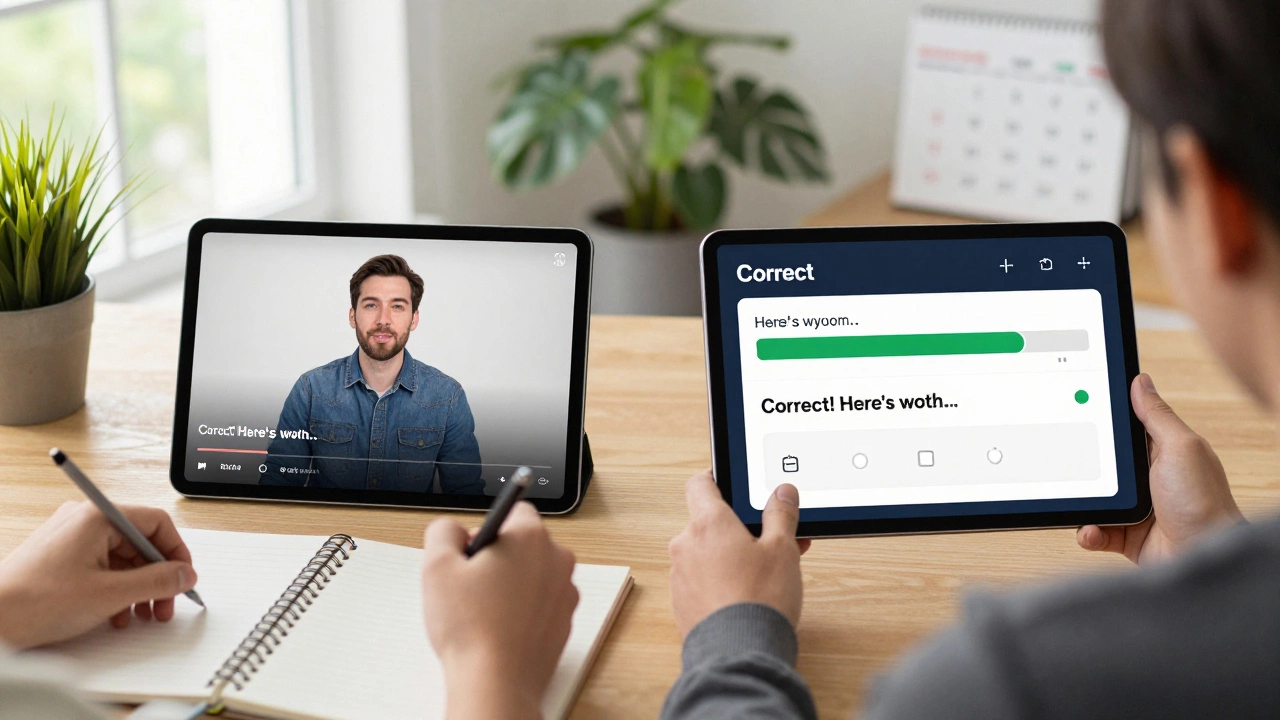
- Immediate feedback: If you answer a quiz wrong, you don’t just get a red X. You get an explanation. "The correct answer is B because..." That’s how you fix mistakes while they’re still fresh.
- Real-world projects: Instead of memorizing formulas, you build something. Maybe you create a budget spreadsheet. Or write a short program. Or record yourself speaking French. Doing beats watching every time.
Platforms that skip these? They’re just video libraries. The ones that use them? They turn passive viewers into active learners.
Who’s behind the lessons?
Not every teacher on an eLearning platform is a professor with a PhD. Some are. But many are people who actually do the job.
Want to learn Excel? You might learn from a financial analyst who uses it every day. Want to learn web design? You might learn from a freelance designer who’s built 50 websites. These people don’t teach because they’re experts in teaching. They teach because they’re experts in doing.
This matters. Real-world experience beats textbook theory every time. You learn how things work in practice-not just how they’re supposed to work on paper.
What about support and community?
Learning alone is hard. That’s why the best platforms don’t leave you on your own.
You’ll often find:
- Discussion threads where other learners ask questions
- Live Q&A sessions with instructors (sometimes weekly)
- Peer review systems where you grade someone else’s project and they grade yours
- Private groups on Discord or Slack for learners to connect
One student from Wellington told me she finished a digital marketing course because she joined the Slack group. She asked a question about Facebook ads. Someone replied within an hour. That’s what kept her going.
It’s not about the platform. It’s about the people.
Is eLearning right for you?
It works great if you:
- Want to learn something specific-not just "get smarter"
- Can set aside 15-30 minutes a day
- Don’t need to sit in a room with 30 other people
- Prefer learning by doing, not just listening
It’s harder if you:
- Need someone to check in on you every week
- Get distracted easily without a strict schedule
- Want hands-on labs with real equipment (like chemistry or welding)
For most people, though, eLearning is the most flexible, affordable way to build new skills. No travel. No uniforms. No waiting for a semester to start.
What’s next after you finish a course?
Finishing a course isn’t the end. It’s the start.
Good platforms help you go further:
- They suggest your next course based on what you liked
- They connect you to job boards or freelance gigs
- They let you add certificates to your LinkedIn profile
- They offer advanced tracks if you want to go deeper
One person I know finished a graphic design course on Udemy. Then she took a follow-up course on UI design. Six months later, she started freelancing. She didn’t have a degree. She had a portfolio-and proof she could finish what she started.
eLearning doesn’t hand you a job. But it gives you the tools to build one.
Is eLearning the same as online classes?
Not exactly. Online classes usually mean live video lessons with a teacher and real-time interaction, like Zoom classes. eLearning is mostly self-paced. You watch videos, do quizzes, and move at your own speed. Some platforms offer both, but the core of eLearning is flexibility-not scheduling.
Do eLearning certificates matter?
They don’t replace a degree, but they do show you’ve taken initiative. Employers in tech, marketing, and design often look at certificates as proof you’ve learned practical skills. A certificate from a platform like Coursera or LinkedIn Learning can get your resume noticed, especially if you link to a project or portfolio.
Can I learn a new skill without spending money?
Yes. Many platforms offer free courses with full content. Khan Academy, YouTube channels like freeCodeCamp, and OpenLearn from The Open University all give you access to quality material without payment. The catch? You won’t always get a certificate or personalized feedback. But you can still learn everything you need.
How do I stay motivated with eLearning?
Set small goals. Instead of "I’ll finish this course," try "I’ll do one lesson today." Use reminders. Join a learner group. Celebrate small wins. Most people quit because they think they have to be perfect. The truth? Consistency beats intensity. Five minutes a day, every day, is better than three hours once a month.
Are eLearning platforms safe for kids?
It depends. Platforms like Khan Academy Kids and ABCmouse are designed for children with no ads or external links. But adult-focused platforms like Udemy or Coursera aren’t filtered for kids. Always check age restrictions and supervise younger learners. Many platforms offer parent-controlled accounts for teens.