Recent POST



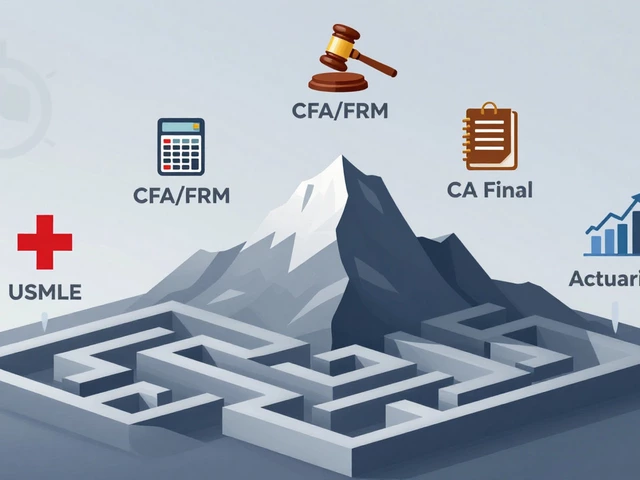

Competitive Exam Difficulty Analyzer
Select an exam from the list below to analyze its specific difficulty metrics based on selection ratios, syllabus scope, and structural challenges.
UPSC CSE
India • Civil Services
IIT JEE Adv.
India • Engineering
Bar Exam (CA)
USA • Law
Gaokao
China • University Entry
USMLE Step 1/2
Global • Medicine
NEET
India • Medical
Exam Analysis
Primary Challenge
Select an exam to view details.
Key Metrics
Difficulty Breakdown
You’ve heard the horror stories. Friends who studied for years only to miss the cut-off by a fraction of a mark. Parents holding their breath while results are announced. The question isn’t just which exam is the hardest to pass, but why certain tests break even the brightest minds. It’s not always about raw intelligence; it’s about endurance, strategy, and surviving a system designed to filter out the vast majority.
When we talk about difficulty, we have to define what "hard" actually means. Is it the volume of syllabus? The unpredictability of questions? Or the sheer number of competitors fighting for a handful of seats? Different exams attack different weaknesses. Some test your memory, others test your ability to think under extreme pressure, and some simply require you to be in the top 0.1% of an entire nation’s population.
Defining Difficulty: It’s Not Just About IQ
Before ranking specific tests, we need to look at the metrics that make an exam brutal. Most students focus on the subject matter, but the real killers are often structural.
- Selection Ratio: If 1 million people apply for 500 jobs, the math alone makes it hard. This is where exams like the Civil Services Examination (CSE) in India dominate.
- Syllabus Breadth: How much do you need to know? A test covering general knowledge from history to quantum physics requires a different kind of brain than one focused solely on calculus.
- Format Unpredictability: Multiple-choice questions can be gamed with elimination strategies. Descriptive essays or interview panels introduce human bias and subjective evaluation, adding a layer of anxiety that no textbook can prepare you for.
- Preparation Duration: Some exams demand a full-time commitment for two to three years. Burning out before you even reach the final stage is a common failure point.
Understanding these factors helps explain why a student who aces a university final might fail a national entrance test. They are fundamentally different beasts.
The Global Heavyweights: Which Exam Is the Hardest to Pass?
While thousands of exams exist worldwide, a few consistently appear at the top of difficulty rankings due to their combination of low acceptance rates and high cognitive demands. Here is a breakdown of the most notorious contenders.
| Exam Name | Region | Approx. Acceptance Rate | Primary Challenge |
|---|---|---|---|
| UPSC Civil Services (India) | India | < 0.1% | Vast syllabus + 3-stage process |
| IIT JEE Advanced (India) | India | ~1-2% | Complex problem-solving in Physics/Chem/Math |
| Bar Exam (California, USA) | USA | ~40-60% | Volume of law + time pressure |
| Gaokao (China) | China | Varies by tier | High stakes + massive competition |
| USMLE Step 1 & 2 (USA) | USA/Global | N/A (Pass/Fail) | Depth of medical knowledge |
UPSC Civil Services Examination: The Marathon Runner’s Nightmare
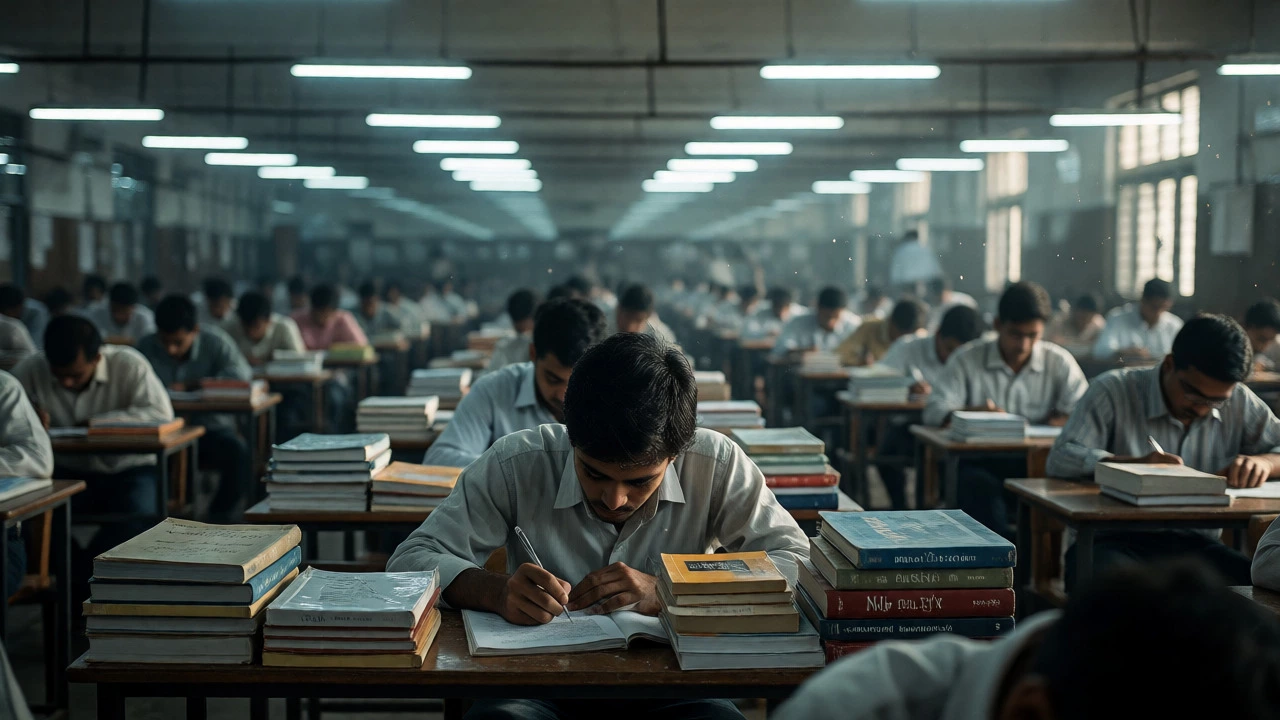
If there is one answer to "which exam is the hardest to pass" in terms of statistical improbability, it’s likely the Union Public Service Commission (UPSC) Civil Services Examination in India. Every year, roughly one million candidates sit for the Preliminary exam. Of those, only about 15,000 qualify for the Main exam. From that group, around 1,000 are selected for interviews, and finally, only about 800-900 get appointed to services like the Indian Administrative Service (IAS).
The cruelty lies in the breadth. You aren’t just tested on your degree subject. You must master General Studies papers covering history, geography, polity, economics, science, and current affairs. Then comes the optional subject, which can be anything from Anthropology to Literature. But the Prelims and Mains are just the warm-up. The Interview (Personality Test) assesses your leadership potential, ethical stance, and composure. Many brilliant academics fail here because they lack the practical temperament required for administration.
It’s not uncommon for candidates to spend five or six years preparing. The psychological toll is immense. You’re competing against peers who have dedicated their entire youth to this single goal. If you’re looking for a test that breaks you down and rebuilds you, this is it.
IIT JEE Advanced: The Brain Burner
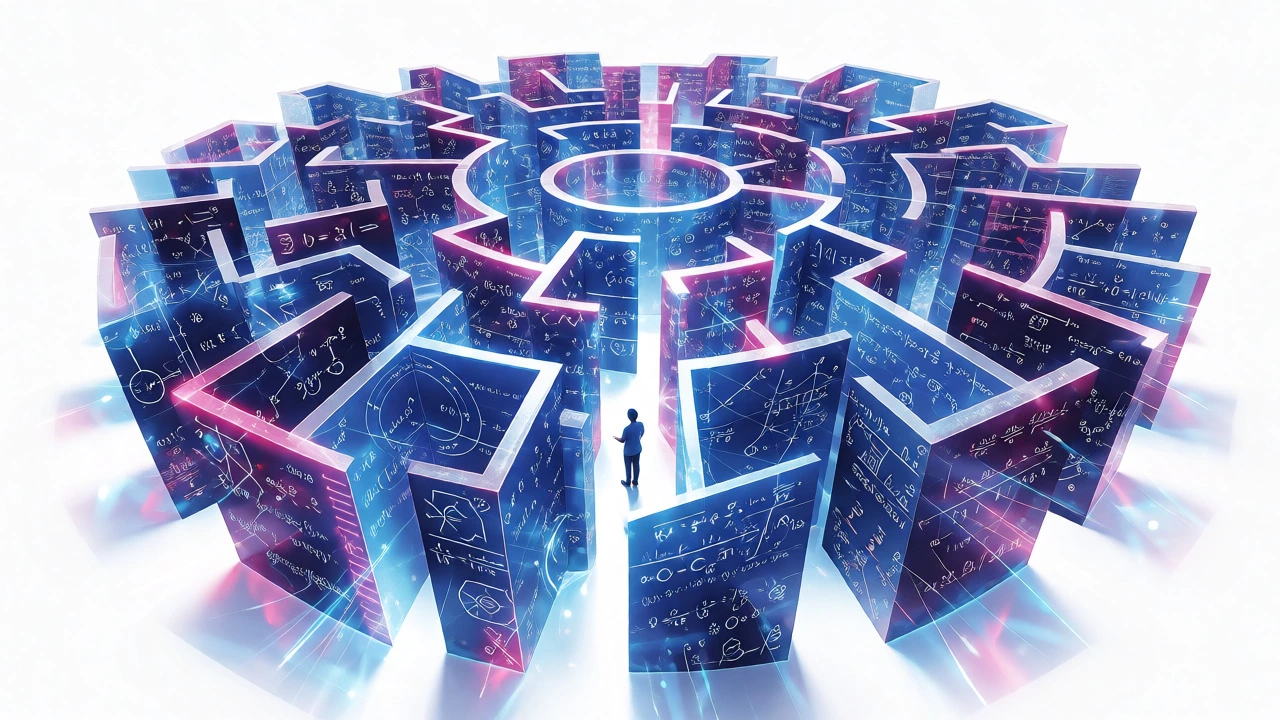
For those inclined toward engineering, the Joint Entrance Examination (JEE) Advanced is arguably the toughest academic hurdle in the world. While the acceptance rate is higher than UPSC (around 1-2% of those who take the main JEE), the intellectual depth required is staggering.
This isn’t about memorizing formulas. It’s about applying concepts in ways you’ve never seen before. Questions often combine multiple chapters-say, rotational mechanics with electromagnetism-and require creative problem-solving under strict time limits. A small error in calculation can derail an entire multi-part question.
The preparation culture in India around JEE is intense. Students attend coaching institutes starting in middle school, treating exam prep as a full-time job. The competition includes millions of students, many of whom are math prodigies. Even if you’re smart, being smarter than 99% of the country’s best students is a daunting task.
The Bar Exam: Where Intelligence Isn’t Enough
In the United States, the Bar Exam is infamous for its pass rates, particularly in states like California. Unlike entrance exams that filter for talent, the Bar filters for competence and consistency. With pass rates hovering between 40% and 60%, it’s statistically easier to pass than UPSC, yet it remains notoriously difficult for graduates.
Why? Because law school doesn’t teach you how to take the Bar. The exam tests your ability to recall specific legal principles and apply them to hypothetical fact patterns quickly. It’s a test of discipline and attention to detail. One missed exception to a rule can cost you points. For international lawyers trying to practice in the US, the cultural and linguistic nuances add another layer of complexity.
Gaokao: The National Pressure Cooker
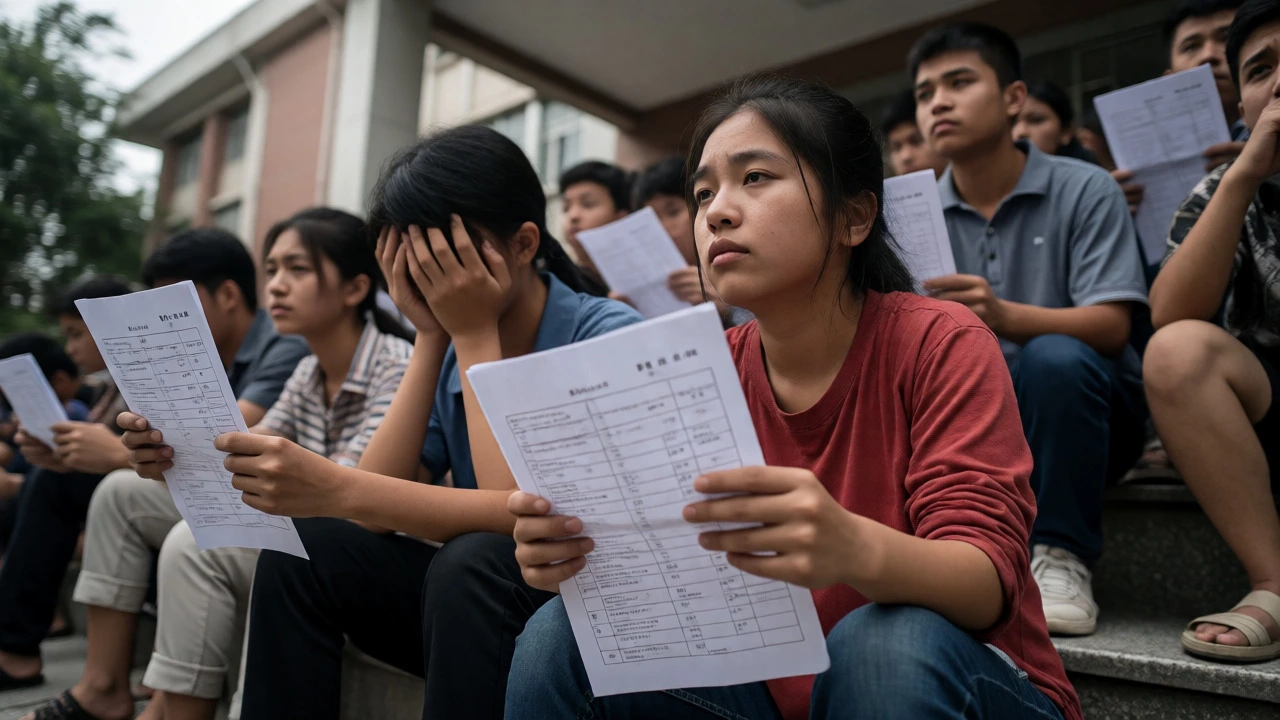
In China, the Gaokao is more than an exam; it’s a societal event. Held annually over two days, it determines university placement for over 10 million students. The stakes are incredibly high because university prestige directly correlates with future career prospects and social status.
The difficulty isn’t necessarily in the abstractness of the questions (though they are rigorous) but in the uniformity and volume. Students memorize vast amounts of information and practice thousands of past papers. The scoring curve is steep; a few points can drop you from a Tier 1 university to a Tier 2 institution. The mental health impact on students is significant, with sleep deprivation and stress being commonplace.
Medical Licensing: USMLE and NEET
Medicine offers two distinct types of difficulty. In the US, the United States Medical Licensing Examination (USMLE) is a series of steps. Step 1 was historically scored numerically, creating a "Step 1 arms race" where students studied obsessively to maximize scores for residency matching. Although it has shifted to pass/fail, the depth of knowledge required remains immense.
In India, the National Eligibility cum Entrance Test (NEET) faces similar issues to JEE but with a slightly broader scope including biology. The sheer number of applicants-over 2 million-means that securing a seat in a government medical college requires near-perfect accuracy. The biological sciences require rote learning combined with logical application, a hybrid challenge that trips up many strong math students.
How to Choose Your Battle
So, which exam is the hardest for you? It depends on your strengths.
- If you have encyclopedic memory and patience: UPSC or Gaokao might suit you better than JEE.
- If you love abstract logic and puzzles: IIT JEE or advanced math competitions will feel less painful.
- If you thrive on structure and rules: The Bar Exam or CPA (Certified Public Accountant) exams align well with legal/accounting frameworks.
- If you handle pressure well: Exams with high-stakes single-day formats (like SAT or ACT) favor those who can perform instantly.
Don’t choose an exam based on its reputation alone. Assess your own cognitive style. Are you good at synthesizing diverse topics (UPSC)? Or are you a specialist who goes deep into one field (JEE/USMLE)? Matching your natural abilities to the exam format is half the battle won.
Tips to Survive the Toughest Tests
No matter which exam you tackle, strategy beats brute force every time.
- Prioritize Past Papers: Don’t just read theory. Solve previous years’ questions. Patterns repeat. Understanding the examiner’s mindset is crucial.
- Simulate Exam Conditions: Practice under timed conditions. Anxiety management is a skill. If you panic during practice, you’ll panic on test day.
- Focus on Weak Areas: It’s tempting to study what you enjoy. Resist that urge. Spend 70% of your time on topics where you lose marks.
- Mental Health Matters: Burnout kills more candidates than lack of knowledge. Schedule breaks. Sleep is when your brain consolidates memory. Skimping on sleep lowers your effective IQ.
Remember, passing the hardest exam doesn’t guarantee happiness, but failing it doesn’t end your life. These tests measure specific skills, not your worth. Approach them with respect, but don’t let them define your identity.
Is the IIT JEE harder than the UPSC?
They test different skills. IIT JEE is intellectually harder in terms of complex problem-solving in STEM subjects. UPSC is structurally harder due to its vast syllabus, three-stage selection process, and lower acceptance rate. Statistically, UPSC is more difficult to pass.
What is the easiest major competitive exam?
There is no objectively "easy" competitive exam, but exams with higher acceptance rates like the GMAT (for MBA admissions) or GRE are generally considered less grueling than national civil service or engineering entrance tests. However, high scores still require significant effort.
Can I prepare for UPSC and JEE together?
It is very difficult. JEE requires deep conceptual understanding of Math, Physics, and Chemistry, while UPSC requires broad general knowledge. Trying to do both simultaneously often leads to burnout and mediocre performance in both. Most experts recommend choosing one path.
Does age limit affect the difficulty of these exams?
Yes. Exams like UPSC have age limits (typically up to 32 years for general category). This creates a "now or never" pressure that adds to the perceived difficulty. Exams like GMAT or professional certifications often have no age limits, allowing for flexible timing.
Is the Gaokao harder than the SAT?
Generally, yes. The Gaokao is a high-stakes, single-event determinant of university placement for millions, requiring mastery of specific curriculum content. The SAT is a standardized aptitude test used as one factor among many in US admissions, making it less singularly decisive and thus psychologically less crushing.